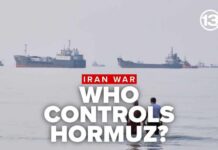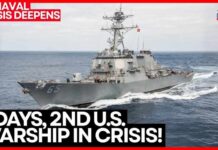

President Trump said the quiet part out loud: treat the Strait of Hormuz like American territory, and squeeze Iran until a nuclear weapon is off the table for good.
Story Snapshot
- Trump floated declaring the Strait of Hormuz a U.S. “territory,” tying it to Iran’s nuclear red line.
- Iran fired back, insisting the waterway is under Iranian command and not subject to U.S. claims.
- Trump linked reopening the strait and ending tolls to a broader deal on Iran’s nuclear ambitions.
- International law treats Hormuz as an international strait with transit passage, not ownership.
What Trump Said And Why It Landed Like A Hammer
President Trump told supporters he “likes the idea” of declaring the Strait of Hormuz a U.S. territory and said American forces control it through a blockade. He tied the message to a firm pledge: Iran cannot have a nuclear weapon in any form. The same push spilled into policy demands. He called for the strait to be open to shipping, with no tolls, as part of an outcome that locks Tehran out of the bomb path.
Iran’s reaction came fast and hard. Senior officials said the strait “has been Iranian, is Iranian, and will remain Iranian,” and mocked the idea it could be seized by tweet or speech. Statements from Tehran cast any U.S. claim as illegitimate and framed control of Hormuz as Iran’s sovereign domain. That posture pairs with Iran’s long-running claim to respect freedom of navigation while reserving authority to “maintain peace and security” in the waterway.
The Law Of The Sea Won’t Bend To Slogans
Maritime law does not care for bravado. Legal analyses describe Hormuz as an international strait. That status gives all ships a right of transit passage that coastal states cannot suspend, even though the waters sit within Iran’s and Oman’s territorial seas. This regime narrows any state’s claim to “own” the lane. It also limits how far either side can lawfully go without sliding into open conflict governed by the laws of naval warfare, where a blockade is a belligerent act, not a routine policy tool.
Tehran’s leaders also play a pressure game. Public remarks cited by global outlets show Iran’s top leadership urging use of the strait’s closure as leverage on the United States and its allies. That message clashes with its envoy’s pledge to keep the waterway open. Both claims can be true in a tactical sense: hold the door open while showing you can slam it. For shippers and markets, the signal is the same—risk stays high until one side’s leverage clearly fails.
The Oil Artery, The Nuclear Red Line, And U.S. Leverage
Trump’s through-line is simple and blunt. No Iranian nuclear weapon, period. He has said any agreement must make that crystal clear and restore free flow through Hormuz without new costs on global shipping. Skeptics question whether draft terms match the rhetoric, but the red line itself is consistent and easy to measure: uranium enrichment capped and verified, weaponization blocked, and shipping lanes open. That aligns with common-sense security: keep energy moving, deter terrorism sponsors, and avoid another forever war.
Hormuz is our territory: Trump's warning as Iran vows devastating response
Iran has warned that any fresh US threats will draw a “devastating” response after the Trump administration vowed to impose what it called the toughest financial sanctions in history in an effort to…
— IndiaToday (@IndiaToday) August 22, 2026
Tehran’s counter-claims about command over the strait run into two walls. First, international law does not let a coastal state throttle a global artery at will. Second, using Hormuz as a bargaining chip invites more U.S. and allied presence, not less. History shows that when threats rise in key lanes, insurance spikes, convoys form, and warships arrive. That dynamic tends to erode the coercer’s leverage over time while hardening U.S. resolve to keep sea lanes open.
What To Watch Next: Pressure Points That Decide Outcomes
Watch three dials. One, shipping throughput and insurance rates. They reveal whether the choke talk is real. Two, the nuclear file. A verifiable ceiling with intrusive checks is the only outcome that lowers the risk of strikes. Three, coalition shape. If Europe and key Asian buyers back freedom of navigation patrols, Iran’s leverage fades. Trump’s stance is maximalist, but its core test is practical: can tankers move, and can inspectors verify the nuclear freeze promised on paper?
Sources:
jpost.com, cnbc.com, forbes.com, theguardian.com, reuters.com, pbs.org, bbc.com