
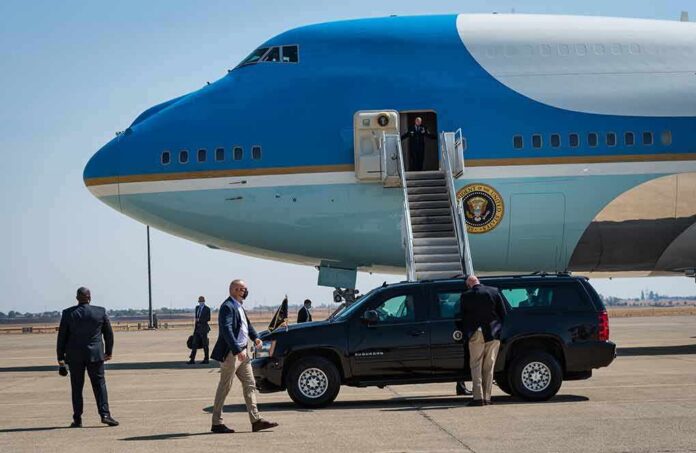
The White House organized an aggressive domestic-travel push that tracked Cabinet visits to competitive districts before the midterms, treating stops as part of a coordinated agenda rollout, according to published reports.
Story Highlights
- White House leaders directed Cabinet travel toward swing states and districts to sell policy goals.
- Reports say officials logged hundreds of stops and tracked them as part of a coordinated effort.
- The plan mirrors a long pattern in both parties of mixing official travel with political timing.
- Federal rules allow official trips but draw lines against partisan activity using taxpayer resources.
White House Strategy Focused on Competitive Ground
Politico reported that Chief of Staff Susie Wiles told Cabinet secretaries to cut foreign trips and focus on promoting the administration’s agenda across the United States during the midterm year. That directive placed attention on districts and states where races are close. The Atlantic reported the White House tracked visits and debriefed results, showing a structured push to get policy messages in front of voters in competitive places. Politico also cited heavy traffic into key House districts.
Published accounts describe a tally system and praise for appearances in swing areas, underscoring how tightly the operation managed time and travel. This effort coincided with President Trump’s own stepped-up schedule, as outlets reported he planned weekly trips to highlight economic and policy themes in the run-up to November. The combined approach aimed to put senior officials on the ground with local media, businesses, and families, while repeating the administration’s core messages.
What Federal Rules Allow and Where Lines Are Drawn
Federal rules permit official travel when the main purpose is government business, like discussing programs, grants, and services. The House Ethics Manual explains that official travelers may at times do incidental political activity if it does not add costs to taxpayers, but bans using official funds for primarily political travel. Past guidance and investigations also stress cost allocation and clear separation between official and campaign events when they occur near each other in time and place.
The Atlantic reported that White House aides told departments to comply with rules that bar partisan politicking while on official duty, and to seek approval for midterm-adjacent trips. That guidance reflects recurring guardrails: use public funds to inform the public about government work, not to aid a party or candidate. Watchdog groups have often challenged administrations of both parties over these boundaries, which can grow blurry in election years.
Both Parties Have Played This Travel Game
News coverage shows this is not new. Fox News has documented how prior administrations sent Cabinet officials to battlegrounds to tout laws and programs during midterms. Oversight reports over the years have examined the use of official resources around elections and how agencies split costs when events serve mixed purposes. These cases underline the same tension every cycle: agencies want to explain policies, and political calendars reward doing that in competitive places.
The Trump White House’s plan fits that long pattern while stating compliance with federal rules. The reported tracking of competitive stops shows message discipline and a desire to meet voters where control of Congress is decided. For taxpayers and voters, the test stays simple: are officials using time and funds to serve public business first? The rules say yes to official outreach, but no to turning government travel into campaign machinery.
Sources:
theatlantic.com, politico.com, punchbowl.news, washingtontimes.com