

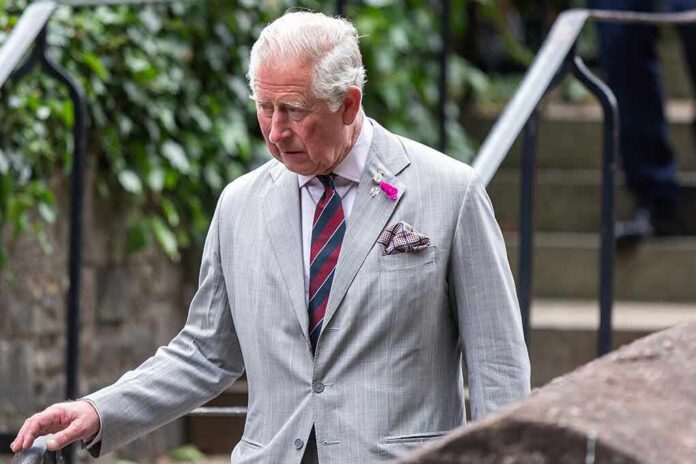
Buckingham Palace issued a rare, forceful statement rejecting Earl Spencer’s claim about King Charles, putting a spotlight on memory versus proof in a decades-old family dispute.
Story Snapshot
- Palace challenges Earl Spencer’s claim from his new memoir about a 1997 phone call.
- Statement says grief can distort memory, a rare move that signals confidence.
- Former royal communications chief says the alleged words are not language he recognizes.
- No recording or contemporaneous record of the call has been produced.
Palace Rebuts Memoir Claim With Unusually Direct Statement
Buckingham Palace responded to Earl Spencer’s book excerpt that claims King Charles said people would forget Princess Diana “soon enough.” The Palace said it does not comment on books but stressed that grief can cloud reason and color memory years later. Major outlets called the response rare and robust, showing greater pushback than normal palace practice. The dispute centers on a phone call before the September 6, 1997 funeral procession for Diana, Princess of Wales.
Earl Spencer wrote that the then-Prince of Wales made the remark during debate over whether Princes William and Harry should walk behind the coffin. The claim arrives through a memoir and serial media coverage, not a sworn statement. The Palace did not issue a word-for-word denial but instead questioned the reliability of memory under grief. That framing challenges the quote’s accuracy without repeating it or extending the fight in public.
Corroboration Gap: Decades-Old Call, No Primary Record
News reports do not cite an audio file, transcript, diary entry, or contemporaneous note that confirms the wording of the disputed call. The alleged conversation took place nearly 30 years ago, which makes hard proof difficult. That gap matters because memoir markets reward vivid lines, while institutions avoid amplifying them. The Palace’s approach aims to protect the King’s character and avoid repeating an inflammatory quote that lacks documentary support today.
Julian Payne, who served as communications secretary to the monarch, said the alleged words are “not language that I recognize.” A source close to the King described the claim as inconsistent with his nature and said he was grief-stricken at the time. Those responses support the Palace’s view that memory can misfire, especially amid shock and sorrow. They also explain why the Palace answered with more energy than usual, yet stayed away from a granular, he-said-she-said.
What The Clash Reveals About Modern Media Incentives
Reports show a familiar cycle: a memoir excerpt lands with a sharp accusation, headlines amplify the most dramatic line, and institutions must decide whether to rebut or stay silent. Here, Buckingham Palace chose to speak, signaling it views the claim as damaging enough to address. That strategy trades a short media flare for a clear public marker: the Palace disputes the reliability of this memory and rejects the quote as describing the King’s character or conduct.
Buckingham Palace has hit back at claims made by Earl Spencer, the brother of the late Diana, Princess of Wales, in a new book, with a spokesperson saying "fraternal grief can cloud reason".
It's alleged that just days after Diana's death in 1997, Charles – then the Prince of… pic.twitter.com/GdcmE19P86
— Good Morning Britain (@GMB) September 17, 2026
This fight is not just royal drama. It is a reminder to value evidence over spectacle. Americans see similar tactics when political books drop with explosive claims and thin sourcing. The smart test is simple: show records, notes, or witnesses who can stand behind the words. Until then, readers should separate fact from flourish. The Palace’s rare statement, paired with named on-the-record pushback, places the burden back on the accuser to produce something stronger than a vivid line.
Sources:
tribune.com.pk, dailymail.co.uk, bbc.com, the-express.com