
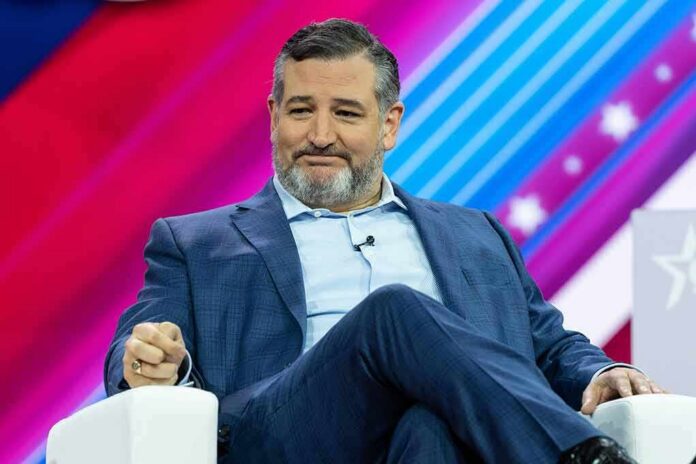
Sen. Ted Cruz called President Trump’s “Lyin’ Ted” nickname “political genius,” explaining why the hit worked and why he respects the fight.
Story Snapshot
- Ted Cruz praised Trump’s 2016 “Lyin’ Ted” tag as a smart, effective tactic.
- Cruz said the nickname targeted his core strength: voter trust.
- He compared the move to martial arts, using an opponent’s strength against him.
- Reports tie the remarks to a Sept. 1, 2026 Hannity podcast episode.
Cruz Explains Why “Lyin’ Ted” Landed
Sen. Ted Cruz said President Trump’s 2016 “Lyin’ Ted” nickname was “political genius” because it went straight at Cruz’s main strength: trust. Cruz stated that voters saw him as trustworthy, so the label worked by forcing doubt at the point of advantage. He said he did not take it personally because he “respects the fight,” framing it as sharp campaign strategy rather than a grudge. Multiple outlets reported the same quotes from the same podcast appearance.
Cruz also likened the tactic to martial arts. He said it was like jiu-jitsu, where you use an opponent’s strength against him. That image fits how fast, sticky labels can shape voter views before complex arguments do. The point, Cruz suggested, is not poetry but impact. The simpler the hit, the easier it is to remember. The reporting places these remarks on a Sept. 1, 2026 episode of Sean Hannity’s podcast, giving a clear date and setting.
Media Coverage And What Is Established
Coverage from several outlets used the same core quotes, including “political genius,” “respect the fight,” and the jiu-jitsu analogy. The through-line is consistent: Cruz acknowledged that the branding was effective and explained why. While some headlines added color, the cited quotes match across sources. The episode setting anchors the reporting in a verifiable media context, which reduces room for confusion about timing or platform. These details come through in the contemporary reports.
One outlet highlighted how the nickname targeted Cruz’s trust image and described online backlash to Cruz’s praise. That reaction fits a broader pattern: negative branding in politics often draws strong responses from partisans and the press. Still, the factual spine is clear. Cruz credited Trump’s instinct for branding and accepted the tactic as part of a hard-fought primary. The article documenting the episode date and venue strengthens the timeline and context for readers.
Why This Matters For Campaigns And Conservative Voters
Modern campaigns reward speed, clarity, and contrast. A short label can do more than a long speech. That is why negative branding remains common. It can shake trust, define the opponent, and rally a base. Cruz’s remarks describe that trade in plain terms. For conservatives focused on results, the takeaway is that hard-nosed messaging wins attention and frames the choice. Academic and media reviews of political nicknames show this is not new to Trump, but he used it well.
"The man has an instinctual genius." That's Ted Cruz – praising the nickname Trump gave him during their nastiest political feud in memory.
On the New York Post's Pod Force One podcast, host Miranda Devine asked Cruz directly about "Lyin' Ted," the nickname Trump used…— Top Stories (@TopStories77) September 18, 2026
For Trump supporters, Cruz’s explanation sounds like respect for a winning play. For critics, it may sound like capitulation. But the quotes point to something simpler: an honest read of a tactic that worked in a crowded 2016 field. Cruz’s framing also reminds the right why message discipline matters in 2026 and beyond. If the left leans on labels to smear patriots as “extreme,” the right must answer fast, define terms, and defend core values like liberty, secure borders, and safe communities.
Sources:
mediaite.com, okmagazine.com, podsized.io