

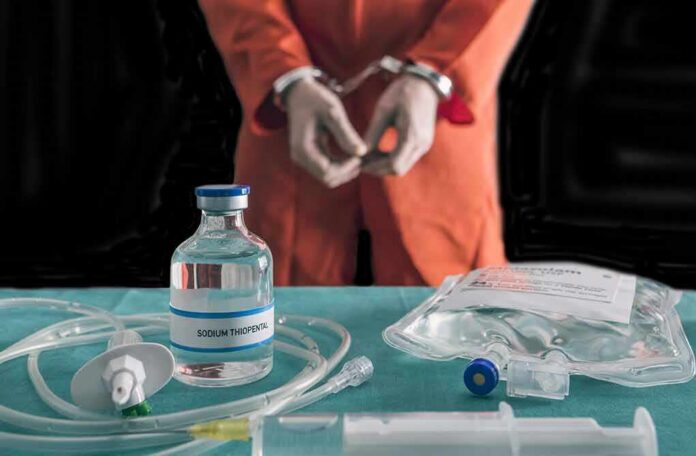
Witnesses say Tennessee gave Christa Pike two lethal injections and she was still alive, forcing officials to stop the execution and send her to a hospital.
Story Snapshot
- Media witnesses and filings say two doses of pentobarbital were given; Pike was still breathing and snoring.
- Tennessee corrections officials say they followed every step of the state’s approved execution protocol.
- Pike’s lawyers claim the attempt caused unnecessary agony and violated protections against cruel punishment.
- The state paused the execution and Pike was transported for medical treatment, her attorneys said.
What Happened In Tennessee’s Execution Chamber
Journalists who watched the execution said staff lowered and raised the chamber curtains more than once. Reporters described hearing Christa Pike breathing or snoring after two syringes of pentobarbital were administered. Her lawyers told courts she still had a heartbeat and had not lost consciousness. The filings spurred an emergency halt request as the scene unfolded. After the pause, her attorneys said she was taken to a hospital for care and life-saving measures were provided.
State accounts differ on several details, but the public record agrees on the core event. The attempt to execute Pike by lethal injection did not end her life, even after two doses. Her legal team filed motions with the United States Supreme Court and lower courts to stop the process, arguing that the state caused needless suffering. Reporters who spoke after leaving the witness area said Pike appeared “clearly very alive” as they were escorted out of the room.
What Officials Say About Protocol And Responsibility
The Tennessee Department of Correction stated that officers followed every step of the lawful, established protocol approved by the Attorney General’s Office. The department also said the protocol did not allow any extra steps beyond what was done that night. That framing seeks to show compliance and protect the method and the staff who carried it out. The department’s late-evening statement stressed protocol, not improvisation or deviation, after the attempt was halted.
This message matters for legal and political reasons. If the protocol was followed, the state can argue it acted within the law. That limits claims of negligence and focuses debate on the method itself. If the protocol is faulty, then lawmakers and courts must address it. If staff failed to follow clear rules, that would be a different story. For now, officials are on the record saying the rules were followed and that no further steps were allowed under those rules.
What Pike’s Lawyers And Witnesses Allege
Pike’s attorneys say the state “once again failed to carry out a lawful execution.” They argue the drugs may have been degraded, veins were hard to access, and no emergency care was ready when trouble hit. They also say secrecy around the protocol hides problems from the public. Their emergency motion says Pike remained alive, snoring, with a heartbeat, after both syringes were delivered. They argue the attempt violated protections against cruel and unusual punishment.
🚨BREAKING: Tennessee death row inmate Christa Pike is alive and being treated in hospital after two lethal injections were administered and her execution failed. pic.twitter.com/rva4jsPxoO
— Nick Shirley RV (@NickShirleyRV) October 1, 2026
Reporters’ accounts line up with parts of those claims. Media witnesses said they heard Pike snoring and saw the curtains lowered and raised during the attempt. Those details suggest confusion in the chamber. They also raise questions about visibility and oversight built into the process. Pike’s team says that lack of clear sightlines and public detail is part of the problem. Their filings aim to force a review and to prevent a repeat under the same conditions.
Why This Matters For Justice, Transparency, And The Rule Of Law
Conservatives back law and order. Justice for victims must be sure and swift. When an execution fails after two doses, the state owes the public clear answers. The government must show that its methods work and that trained staff can carry them out. If rules barred needed steps, lawmakers must revisit them. If process broke down in the room, managers must fix training and oversight. Either way, the system should not stumble at the final mile.
This case also fits a wider pattern. Studies show lethal injection has a higher rate of botched outcomes than older methods. Researchers estimate several percent of attempts go wrong, depending on the dataset and definition. That does not end the death penalty debate, but it does warn states to test, verify, and prove reliability before the next warrant is signed. Strong, public standards protect both the punishment’s legitimacy and the Constitution.
What Happens Next In Tennessee
Expect legal motions over medical records, drug sourcing, and training. Expect lawmakers to demand a timeline and a plan to prevent repeat failure. Families of victims deserve closure grounded in competence, not confusion. If Tennessee keeps lethal injection, it must show its protocol is sound and its supplies are stable. If it considers other methods, it must meet constitutional tests and public standards. The goal should be certain, lawful outcomes that do not drag on for years.
Sources:
theguardian.com, washingtonexaminer.com, reuters.com, nytimes.com, newschannel5.com, usatoday.com, fox5atlanta.com