

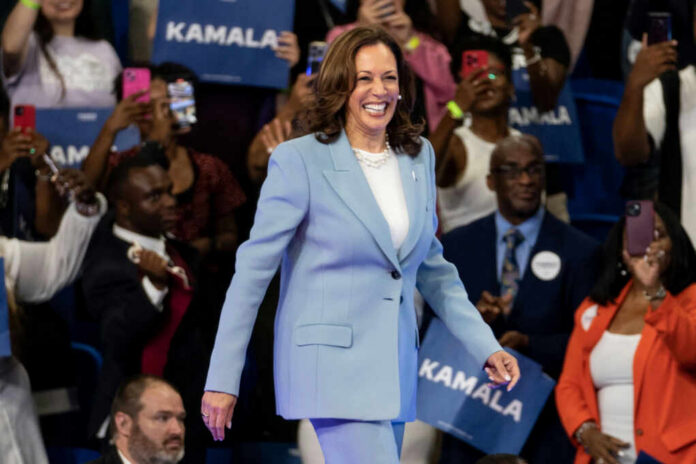
Democrats are preparing to relitigate their 2024 defeat by considering running the same losing candidate alongside a field of establishment favorites who seem oblivious to why voters rejected them in the first place.
Story Snapshot
- Kamala Harris polls at 19 percent despite losing to Trump in 2024, signaling Democrats may repeat past failures
- Gavin Newsom leads at 21 percent while California faces ongoing governance crises under his watch
- Alexandria Ocasio-Cortez dominates young voter preferences despite representing the progressive policies voters increasingly reject
- The race features a billionaire governor worth 3.9 billion dollars alongside candidates who voted for cryptocurrency legislation that could destabilize the economy
The Frontrunner Problem Nobody Wants to Acknowledge
California Governor Gavin Newsom sits atop early 2028 polling with 21 percent support despite presiding over a state hemorrhaging residents and businesses. His September 2025 lead represents everything wrong with Democratic Party thinking. Voters watched California struggle with homelessness, crime, and cost of living under his governance, yet party elites position him as their savior. Newsom plans to announce his candidacy in 2026 after the midterms, conveniently timing his entry when memories of California’s problems might fade. His response to Los Angeles protests in June 2025 supposedly boosted his prospects, though voters outside coastal bubbles might remember different details about why those protests happened.
Kamala Harris Returns Despite Voter Rejection
Former Vice President Kamala Harris trails Newsom by just two percentage points at 19 percent, demonstrating Democrats learned nothing from their 2024 defeat. Harris lost to Donald Trump decisively, yet party faithful consider giving her another chance. She told The New York Times in November 2025 that 2028 was “three years from now,” leaving the door open while establishing a super PAC called “Fight the People” to stay relevant through the midterms. Her measured approach contrasts sharply with the urgency Democrats should feel about connecting with working-class voters who abandoned them. The December 2025 Democratic National Committee gathering in Los Angeles brought Harris together with other contenders, signaling party insiders still view her as viable despite evidence suggesting otherwise.
The Progressive Wing Doubles Down on Failed Policies
Representative Alexandria Ocasio-Cortez leads among young voters according to December 2025 polling from The Hill, positioning herself as the progressive alternative to establishment candidates. She raised fifteen million dollars in the first half of 2025 while conducting a “Fighting Oligarchy” tour with Bernie Sanders, embracing rhetoric that alienates moderate voters. Her dominance with younger demographics reveals a generational divide that could fracture the party. Democrats face a choice between appealing to their activist base or winning back working Americans who shifted rightward in 2024. Ocasio-Cortez represents doubling down on progressive populism precisely when common sense suggests moderation might serve Democrats better.
Money Talks While Candidates Ignore Economic Vulnerabilities
Illinois Governor J.B. Pritzker polls at seven percent but possesses a 3.9 billion dollar personal fortune that makes him uniquely positioned to self-fund a campaign. His wealth dwarfs every other candidate except Trump, creating a structural advantage that could overcome polling deficits. Meanwhile, several candidates including Senators Cory Booker and Ruben Gallego voted for 2025 stablecoin legislation that could become a massive liability if economic instability emerges by 2028. Booker attempted raising his profile with a twenty-five hour Senate floor speech in March 2025, the longest in history, suggesting desperation rather than substance. Gallego unveiled an immigration reform plan in May 2025 after voting for the Laken Riley bill, trying to position himself as tough on borders while maintaining progressive credentials.
The Pennsylvania Governor Who Actually Governs
Josh Shapiro stands apart from other contenders by focusing on his job rather than presidential ambitions. The Pennsylvania governor prioritizes his second gubernatorial term and flipping congressional seats in his pivotal swing state. His approach demonstrates the kind of pragmatic governance Democrats need but seem reluctant to embrace. Shapiro’s Pennsylvania base offers genuine electoral college advantages unlike California’s guaranteed Democratic votes or New York’s progressive district. Former Transportation Secretary Pete Buttigieg polls at ten percent, potentially becoming the first openly LGBT major party nominee, though his appeal remains limited beyond certain demographics. The remaining speculation includes governors, senators, and bizarrely, media personality Jon Stewart, suggesting Democrats lack a deep bench of compelling candidates.
What This Means for America’s Political Future
The 2028 Democratic field reveals a party struggling to learn from defeat. Voters rejected their policies in 2024, yet frontrunners represent continuity rather than course correction. The generational divide between overall polling favoring moderates and young voter preferences for progressives suggests Democrats will spend the next two years fighting amongst themselves rather than addressing why working Americans abandoned them. Republicans will watch this internal conflict while building their own 2028 campaign, likely around Vice President JD Vance. The Democratic National Committee’s December 2025 gathering brought candidates together for networking and fundraising, but nobody seems focused on the fundamental question: what do Americans actually want from their government? Until Democrats answer that honestly, their 2028 polling numbers matter far less than their disconnect from regular voters.
Sources:
Presidential race 2028 candidates analysis – Politico Magazine
Democratic presidential contenders test the waters during midterm shadow campaign – OpenSecrets