

Iran’s missiles and drones are now testing whether Gulf allies—and America under President Trump—will draw a hard line before energy security and regional stability crack.
Quick Take
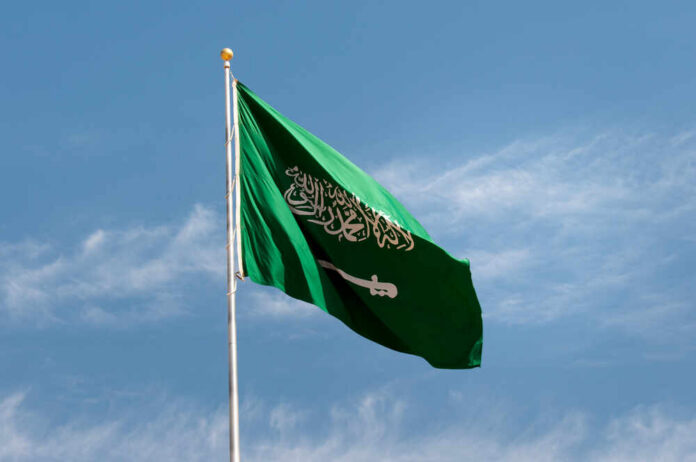
- Saudi Foreign Minister Prince Faisal bin Farhan publicly condemned Iranian attacks on Saudi territory and Gulf energy infrastructure while warning retaliation remains on the table.
- Iran’s strikes followed a major U.S.-Israel operation after nuclear talks collapsed, triggering a volatile retaliation cycle across the region.
- Saudi officials signaled diplomacy is still possible, but Riyadh also warned it could reconsider cooperation and defensive posture if attacks continue.
- Gulf states are tightening their stance as attacks hit critical facilities, with Qatar expelling Iranian officials after strikes near its gas infrastructure.
Saudi Arabia’s Warning: Diplomacy Offered, Retaliation Promised
Prince Faisal bin Farhan Al Saud used unusually blunt language after overnight drone and missile attacks hit Saudi territory and threatened energy infrastructure across the Gulf. Saudi messaging stressed two tracks at once: openness to de-escalation and mediation, paired with an explicit warning that continued strikes would trigger a review of Saudi responses, including retaliatory options. The posture reflects a government trying to deter more attacks without stumbling into a wider regional war.
Saudi communications with Iran reportedly included direct warnings delivered through diplomatic channels, reinforcing that Riyadh views the attacks as violations of sovereignty, not just “spillover” from U.S.-Iran tensions. Saudi statements also pointed to the practical danger: even limited strikes can threaten oil and gas exports, raise global energy prices, and endanger civilians and infrastructure workers. The immediate goal is stopping further launches before markets and regional security spiral.
How the Crisis Escalated After the U.S.-Israel Strike on Iran
The current escalation traces back to the late-February U.S.-Israel strike in Iran after nuclear talks collapsed, which was followed by a wave of Iranian retaliation across the region. Gulf countries hosting U.S. forces became especially sensitive targets in that response, even as several of those governments denied supporting the initial operation or granting airspace access. In that climate, Saudi Arabia’s deterrence message is partly about preventing Gulf partners from being treated as acceptable collateral.
Washington has also moved publicly, with U.S. Secretary of State Marco Rubio condemning Iran’s attacks in a call with the Saudi foreign minister as Saudi defenses reported intercepts. That matters for two reasons: it signals U.S. alignment with a key regional partner, and it suggests the Trump administration intends to keep pressure on Tehran rather than normalize “managed” attacks on allied territory. The open question is whether deterrence will reduce launches or provoke additional brinkmanship.
Iran’s Mixed Signals: Apologies, Pauses, and Competing Power Centers
Iranian officials have issued messages aimed at containing blowback from Gulf neighbors, including apologies and statements suggesting attacks on neighboring states would be suspended unless provoked. At the same time, reporting highlights internal divisions, with military-linked voices signaling continued willingness to target U.S. and Israeli interests in the region. That split complicates diplomacy because a “pause” announced by political leadership may not reliably bind commanders or aligned forces during a fast-moving conflict.
For Saudi Arabia and other Gulf governments, the practical risk is that inconsistent Iranian decision-making increases the chance of miscalculation. When missiles and drones are in the air, intent becomes less important than impact—especially around dense energy hubs and shipping routes. The strongest factual takeaway from the available reporting is uncertainty: sources describe attempts at de-escalation, but also note further strikes reported after diplomatic gestures, leaving durability in doubt.
Gulf Energy Infrastructure and the Global Stakes
Attacks near major energy facilities—combined with memories of prior strikes on Saudi oil infrastructure—keep the region on edge because even brief disruptions can ricochet into global inflation. For Americans still frustrated by the recent era of high prices and fiscal strain, the energy angle is not abstract: instability abroad can show up quickly at home in fuel costs and broader price pressure. That is why Gulf states treat drone and missile threats as more than regional politics.
Saudi Arabia’s foreign minister harshly criticizes Iran after overnight attacks https://t.co/EeWAXjiT2E
— Wuislane Colas (@wuislane) March 19, 2026
Saudi Arabia’s latest posture also underscores a broader principle: sovereign borders and critical infrastructure are not “negotiating chips.” The available reporting indicates Riyadh is trying to balance restraint with credibility—keeping mediation open while making clear that repeated attacks will have consequences. With the United Nations Security Council also condemning attacks on Gulf states and Jordan, Iran faces additional diplomatic pressure, but the next moves will likely be driven by security realities rather than speeches.
Sources:
US secretary of state condemns Iran’s attacks on Saudi Arabia in call with foreign minister
Saudi Arabia Warns Iran Against Attack, Threatens Retaliation
Saudi has told Iran not to attack it, warns of possible retaliation, sources say
Saudi welcomes UN Security Council resolution condemning Iranian attacks on Gulf states and Jordan