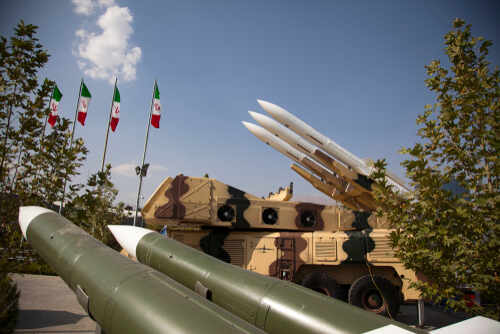
Iran’s nuclear ambitions persist despite devastating U.S. and Israeli airstrikes that set back Tehran’s weapons program by years, revealing a dangerous truth: the regime retained enough enriched uranium to break out to a nuclear weapon and is already rebuilding bombed facilities while negotiators play games at the bargaining table.
Story Snapshot
- Iran retained 409-972 pounds of 60% enriched uranium after June 2025 airstrikes destroyed major nuclear facilities, maintaining breakout capability
- Satellite imagery confirms Tehran is rebuilding Natanz, Fordow, and weapons-related sites with hardened fortifications while IAEA inspectors remain locked out
- Trump administration demands permanent dismantlement of Iran’s nuclear program, rejecting Tehran’s temporary enrichment pause proposal
- Intelligence reveals Iran’s dual-use satellite program masks ICBM development, threatening U.S. homeland security
Strikes Delayed But Didn’t Destroy Iran’s Nuclear Path
Operation Midnight Hammer in June 2025 demolished Iran’s primary enrichment facilities at Natanz, Fordow, and Esfahan, rendering them inoperable and setting Tehran’s nuclear timeline back by years. The coordinated U.S. and Israeli strikes targeted sites where Iran had advanced to 60% uranium enrichment using sophisticated IR-6 centrifuges, dangerously close to the 90% weapons-grade threshold. Defense Intelligence Agency assessments confirmed Iran had shortened its breakout time to approximately one week for producing enough fissile material for a nuclear weapon. Despite this tactical success, the strikes exposed a critical failure: Iran’s existing stockpile of highly enriched uranium survived intact, and international monitors lost track of it entirely.
Tehran Rebuilds Under Cover While Negotiations Stall
Satellite imagery from December 2025 through January 2026 reveals extensive rebuilding activity at struck nuclear sites, demonstrating Iran’s determination to resurrect its weapons program. The regime nearly completed reconstruction of Taleghan 2 at the Parchin complex, a facility linked to nuclear weapons development that Israel had previously struck in October 2024. Privacy covers now shield Natanz operations from overhead surveillance, while excavation work at Esfahan suggests efforts to build hardened underground facilities resistant to future airstrikes. Foundation for Defense of Democracies analysts warn this covert reconstruction, combined with advances in satellite launch vehicle technology that doubles as intercontinental ballistic missile development, proves Iran treats negotiations as a delaying tactic while pursuing its ultimate goal.
Trump’s Permanent Solution Versus Iran’s Temporary Tricks
The Trump administration is taking a fundamentally different approach than the failed 2015 nuclear deal by demanding permanent dismantlement of Iran’s enrichment infrastructure rather than temporary sunset clauses that allowed the regime to resume weapons development. February 2026 negotiations in Oman produced claims of “significant progress,” but Tehran’s proposal reveals the deception: a multi-year enrichment pause maintaining civilian capabilities with verification measures that fall short of comprehensive inspections. Secretary of State Rubio confirmed Iran is rebuilding enrichment capacity even during talks, exposing the regime’s bad faith. The administration rightly rejects any deal that doesn’t include complete dismantlement of Natanz, Fordow, and Esfahan facilities plus surrender of the hidden uranium stockpile, understanding that anything less guarantees a nuclear-armed Iran within years.
IAEA Lockout Creates Dangerous Intelligence Blind Spot
International Atomic Energy Agency inspectors have been denied access to four critical Iranian nuclear sites since the June 2025 strikes, creating a catastrophic verification gap that threatens global security. The IAEA cannot confirm the location, quantity, or security of Iran’s 409 to 972 pounds of 60% enriched uranium, material that could be rapidly processed to weapons-grade levels if Tehran makes the political decision to break out. This monitoring blackout emboldens Iranian hardliners and Supreme Leader Khamenei, who retain sovereign enrichment as non-negotiable regardless of sanctions pressure or military strikes. Arms control experts acknowledge the strikes achieved operational success, but without verified dismantlement and continuous inspection access, Iran’s nuclear challenge remains fundamentally unresolved and potentially more dangerous than before the Obama-era Joint Comprehensive Plan of Action.
The current standoff demonstrates why the Trump administration’s maximum pressure approach coupled with credible military action is necessary to prevent a nuclear Iran. Tehran’s strategy of asymmetric persistence—surviving strikes, hiding materials, rebuilding covertly, and negotiating in bad faith—will only be broken by unwavering American resolve that prioritizes permanent solutions over temporary political victories. The regime’s continued advancement of dual-use missile technology and fortification of nuclear sites during negotiations proves diplomacy alone cannot constrain an ideological enemy committed to obtaining weapons that threaten Israel’s existence and American interests across the Middle East.
Sources:
Did Iran’s Nuclear and Missile Programs Pose Imminent Threat – Arms Control Association
JINSA’s Iran Nuclear Talks Update
How Advanced is Iran’s Nuclear Program – WTOP
Iran Update February 26, 2026 – Institute for the Study of War
Iran Nuclear Program – Responsible Statecraft