
A closed-door Pentagon meeting with the Vatican’s top U.S. diplomat has erupted into a credibility fight that could derail a high-profile papal visit and expose how fragile America’s “soft power” has become.
Story Snapshot
- The Pentagon and Vatican officials confirm a Jan. 22 meeting between Undersecretary Elbridge Colby and Cardinal Christophe Pierre, then the Vatican’s ambassador to Washington.
- Accounts sharply conflict on tone and content: investigative reporting and outside sourcing describe a confrontational “lecture,” while U.S. officials deny that characterization.
- The dispute follows Pope Leo XIV’s Jan. 9 speech criticizing force-based diplomacy and warning that post-WWII norms against border violations are being undermined.
- Independent reporting suggests Vatican officials shelved planning for a July 2026 U.S. papal trip tied to America’s 250th anniversary, though that consequence remains unconfirmed officially.
What We Know About the Pentagon-Vatican Meeting
Pentagon and Vatican statements agree on one core fact: Cardinal Christophe Pierre met with U.S. defense officials at the Pentagon on Jan. 22, 2026, and Undersecretary of Defense for Policy Elbridge Colby was involved. The Vatican’s apostolic nunciature in Washington described the session as a discussion of “current affairs” and said such contacts are “standard practice” for the nuncio. The Pentagon also confirmed the meeting occurred while disputing how it has been portrayed publicly.
What remains disputed is the tone and substance. A report described the encounter as a “bitter lecture” and attributed hard-edged lines to Colby, including a warning that the Catholic Church “had better take” America’s side and an assertion about U.S. military power. The White House and Pentagon pushed back on that characterization, and the U.S. Embassy to the Holy See said Pierre rejected the media portrayal—though Pierre has not publicly provided a direct, on-the-record account.
Why Pope Leo XIV’s January Speech Set the Context
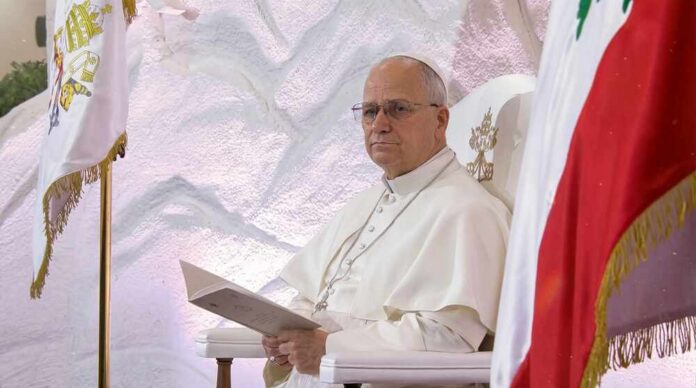
The meeting did not happen in a vacuum. On Jan. 9, Pope Leo XIV—an American pontiff from Chicago—used his annual address to the Vatican’s diplomatic corps to argue that dialogue-based diplomacy is being replaced by “a diplomacy based on force.” He also warned that the post-World War II principle against using force to violate another nation’s borders has been “completely undermined.” That worldview collides with a more assertive U.S. posture described as President Trump’s updated Monroe Doctrine—the “Donroe Doctrine”—focused on U.S. dominance in the Western Hemisphere.
For conservative Americans, that clash raises a practical question rather than a theological one: how should a superpower handle criticism from a global moral authority that also operates as a state actor? The Trump administration’s foreign-policy instincts often emphasize national sovereignty, deterrence, and leverage. The Vatican often emphasizes restraint and mediation. Neither side benefits when private diplomacy turns into a public dispute, especially when both institutions rely on public trust—one for legitimate use of force, the other for moral credibility.
Competing Narratives and a Credibility Problem
Conflicting accounts are now driving the story as much as the underlying policy disagreement. A source close to Pope Leo XIV told an NBC Chicago reporter that the meeting was “most unpleasant and confrontational,” aligning with the harsher depiction and contradicting official U.S. denials. Meanwhile, official statements from the Pentagon, the Vatican’s U.S. mission, and the U.S. Embassy to the Holy See provided minimal detail about what was said. Without a transcript, the public is left weighing anonymous sourcing against formal denials—an all-too-familiar pattern in Washington.
This uncertainty matters because it feeds a broader, bipartisan suspicion that major institutions manage narratives more than they share facts. Conservatives often see “deep state” self-protection in carefully worded denials. Many liberals see militarism and coercion in reports of pressure tactics. The limited transparency also makes it harder to judge intent: a routine diplomatic exchange can sound like intimidation when details are withheld, while a genuinely heated exchange can be laundered into bland language through official channels.
Potential Fallout: A Shelved Papal Visit and Soft-Power Stakes
The biggest practical consequence so far is also the least confirmed. Independent journalist Christopher Hale reported that Vatican officials were alarmed enough to shelve planning for Pope Leo XIV to visit the United States in July 2026 as part of the nation’s 250th anniversary celebrations. No official Vatican announcement has verified that outcome, so readers should treat it as reported but unconfirmed. Still, the mere plausibility shows how quickly diplomatic friction can spill into symbolic events that shape public perceptions worldwide.
US-Vatican Relations Extremely Strained As Pentagon Denies It Berated Pope's Diplomat https://t.co/gsUBAPFpUW
— zerohedge (@zerohedge) April 11, 2026
Even without a canceled trip, strained U.S.-Vatican relations carry strategic costs. The Vatican’s influence stretches across Catholic-majority nations and a global Church of more than a billion people, affecting humanitarian access, conflict mediation, and public sentiment toward American leadership. In a period when many Americans already believe government is failing working families at home, Washington can ill afford avoidable credibility losses abroad. Clearer public explanations—without compromising diplomacy—would serve the national interest better than dueling insinuations.
Sources:
Report that Pentagon officials lectured Vatican diplomat disputed
Vatican, Pentagon deny report of heated meeting with Vatican diplomat