
AOC’s splashy global debut in Munich turned into a viral warning about what happens when ideology outruns basic facts and clear America-first priorities.
Quick Take
- AOC drew backlash after remarks at the 2026 Munich Security Conference mixed culture-war framing with foreign-policy stumbles.
- Clips circulated of her describing “whiteness” as a social construct tied to power, reigniting divisive identity politics.
- Her halting answer on Taiwan and a geography error about Venezuela fueled questions about competence and preparedness on national security.
- Commentators argued the episode could undercut 2028 buzz by spotlighting uncertainty on major geopolitical flashpoints.
Munich remarks collide with a high-stakes foreign-policy stage
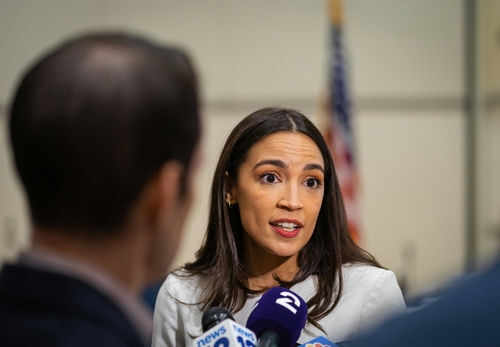
Rep. Alexandria Ocasio-Cortez appeared at the Munich Security Conference on February 13 as speculation swirled about her national ambitions and her effort to look serious on world affairs. Instead, the event produced a string of viral moments that critics say highlighted gaps in preparation. Reports describe a mix of identity-based commentary, muddled references to major U.S. trade and alliance history, and statements on Taiwan and Venezuela that prompted rapid pushback across media and political circles.
AOC’s comments landed at a time when U.S.-China tensions over Taiwan remain a defining security issue and when Americans are weary of elites treating foreign policy like a seminar rather than a responsibility. The conference itself is built for precision: allies and adversaries listen closely for signals. That is why a long, hesitant pause while addressing Taiwan policy became central to the story, and why even sympathetic observers struggled to reframe the clip as anything but uncertainty.
Taiwan ambiguity becomes a political test of seriousness
Coverage of the panel focused heavily on AOC’s response regarding Taiwan, including a reported roughly 20-second pause that went viral. Analyst Mark Halperin argued the hesitation suggested she lacked a “deeply felt position,” a problem for any politician seeking national leadership in an era when deterrence and clarity matter. The sources also note Taiwan policy has long involved “strategic ambiguity,” but the criticism here was that her delivery projected doubt rather than deliberate strategy.
For conservative voters who spent years watching the left downplay national sovereignty and project weakness abroad, the Taiwan moment struck a nerve because it touches hard power: ships, trade routes, and the risk of major-power conflict. The reporting does not show AOC issuing a detailed clarification after the backlash, leaving the public record dominated by the clip itself and by commentary framing it as a readiness issue rather than a one-off verbal stumble.
Venezuela line sparks ridicule—and revives debate over U.S. power
AOC also faced scrutiny for remarks about Venezuela and U.S. actions aimed at Nicolás Maduro, including a factual error suggesting the nation is “below the equator.” Multiple reports highlight the geography problem because Venezuela spans the equatorial region rather than sitting entirely in the Southern Hemisphere. The same segment included her criticism of U.S. conduct toward foreign leaders, language that critics interpreted as portraying American pressure tactics as illegitimate regardless of context.
The sources agree the geography mistake helped the broader narrative: international forums offer little patience for basic errors, and opponents use them to argue a politician is unprepared for complex briefings. At the same time, the reporting reflects a real policy divide. Conservatives tend to view strong U.S. leverage against authoritarian regimes as necessary to protect American interests and regional stability, while AOC’s framing emphasized constraints on U.S. action.
Identity politics export: “whiteness” framing reignites a domestic fault line
Beyond foreign policy, the Munich appearance revived America’s ongoing argument over race and identity. Reports describe AOC characterizing “whiteness” as a social construct connected to power, a framing defenders say aligns with sociological discourse. Critics, however, treated the language as another example of progressive politics sorting citizens into categories and then using government and institutions to enforce those categories. The sources describe widespread backlash and a renewed culture-war clash over language and assumptions.
For many conservatives—especially those frustrated by years of DEI mandates, speech policing, and “woke” ideological training—this mattered as much as the foreign-policy clips. The concern is not academic debate in a classroom; it is what happens when those concepts drive policy in federal agencies, schools, and workplaces. The available reporting does not provide extensive details on any policy proposals from the Munich panel itself, so the takeaway remains primarily about rhetoric and public reaction.
Political fallout: 2028 talk meets the accountability of real-world stakes
The immediate result has been a cross-platform media storm, with critics ranging from GOP figures to a Catholic bishop cited in coverage as weighing in. Fox News commentary argued that while AOC was mocked for gaffes, she also pursued progressive priorities such as advocating a wealth tax, and that critics may overlook the significance of her ideological wins. Still, the dominant theme across sources is that misstatements and hesitancy overshadowed any policy messaging she hoped would broaden her appeal.
With President Trump back in office in 2026 and the Biden era over, the political environment is less forgiving of globalist talking points and more focused on competence, deterrence, and national interest. The research provided does not include polling that quantifies damage to AOC’s standing, so any electoral conclusions would be speculative. What is clear is that Munich became a stress test—and the clips now serve as shorthand in the argument over whether progressive celebrity politics translates into steady leadership.
Sources:
Ocasio-Cortez Faces Backlash After Munich Remarks
Critics pile on after AOC’s Munich remarks, from GOP to a Catholic bishop
Critics pile on after AOC’s Munich remarks, from GOP to a Catholic bishop
Critics pile on after AOC’s Munich remarks, from GOP to a Catholic bishop
Critics pile on after AOC’s Munich remarks, from GOP to a Catholic bishop
Mocked in Munich, AOC had a much bigger success than critics realize