

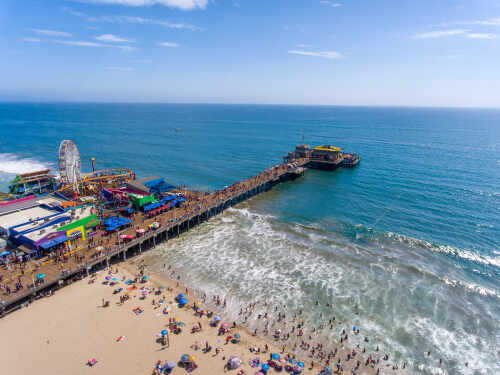
California’s mismanaged urban infrastructure is poisoning the very beaches families flock to for relief during a March heat wave, with health officials warning that elevated bacteria levels at 11 Los Angeles County beaches now pose serious illness risks to children and the elderly.
Story Highlights
- LA County issued bacterial contamination warnings for 11 beaches amid March 2026 heat wave, threatening public health
- Chronic urban runoff pollution from deteriorating infrastructure drives repeated closures at iconic coastal destinations
- Families seeking heat relief face illness risks at beaches near storm drains, creeks, and piers from Santa Monica to Malibu
- Years of inadequate infrastructure investment by previous administrations leave beachgoers vulnerable during peak visitation
Heat Wave Collides With Pollution Crisis
The Los Angeles County Department of Public Health issued urgent warnings on March 11, 2026, prohibiting ocean water contact at 11 beaches as a Southern California heat wave drove thousands to the coast. Water samples collected in early March revealed bacteria levels exceeding state health standards, creating heightened illness risks precisely when families most need coastal relief. The affected sites include heavily trafficked locations such as Inner Cabrillo Beach, Mother’s Beach in Marina del Rey, Santa Monica Pier, and Surfrider Beach in Malibu. This timing exposes a troubling pattern where government failures in infrastructure maintenance collide with public need during extreme weather events.
Urban Runoff Reflects Decades of Mismanagement
The bacterial contamination stems from urban runoff carrying contaminants into ocean waters through storm drains, creeks, and aging infrastructure spanning from San Pedro to Malibu. The LA County Department of Public Health, working alongside Sanitation Districts and Beach Cities, conducts weekly year-round monitoring that routinely detects elevated enterococci and other dangerous bacteria. These pollutants concentrate near urban outlets like the Wilshire Boulevard storm drain, Marie Canyon, Topanga Canyon Creek, and Escondido Creek. The persistence of this problem reflects chronic underinvestment in proper runoff controls and water quality infrastructure throughout years of previous administration priorities focused elsewhere. Families relying on public beaches now pay the price for governmental neglect of basic environmental protection systems.
Public Safety Compromised by Systemic Failures
Health officials warn that bacteria levels can remain dangerously elevated for up to three days after contamination events, forcing extended closures at prime recreational sites during peak heat conditions. The most vulnerable populations—children and elderly residents—face the greatest illness risks if they ignore these warnings and enter contaminated waters. Low-income communities dependent on free public beach access suffer disproportionately, as safer alternatives remain out of reach financially. The Department of Public Health maintains a hotline at 1-800-525-5662 and updates advisories at PublicHealth.LACounty.gov/Beach/, yet these reactive measures cannot substitute for proactive infrastructure improvements that would prevent contamination in the first place.
Economic and Community Impacts Mount
The beach closures deliver economic blows to coastal tourism at iconic destinations like Santa Monica Pier and Surfrider Beach, where businesses depend on consistent visitor traffic. Beyond immediate revenue losses, repeated bacterial advisories erode public confidence in Southern California’s coastal recreation industry. The social consequences extend further as urban residents lose access to natural cooling during dangerous heat conditions, exacerbating heat vulnerability in densely populated areas. These multi-agency monitoring efforts, funded through EPA and State Water Board programs under Clean Water Act mandates, demonstrate federal oversight capacity but highlight how local implementation failures undermine public health protections. The Trump administration’s emphasis on infrastructure accountability offers hope for addressing these systemic shortcomings.
Pattern Reveals Ongoing Governmental Inadequacy
This March 2026 incident follows November 2025 rain advisories that triggered 72-hour contact bans across all LA County beaches, establishing a troubling pattern of recurring contamination crises. While rain-induced runoff typically drives bacterial spikes, the heat wave context reveals how pollution persists regardless of weather conditions when fundamental infrastructure problems remain unaddressed. The multiple agencies involved—LA County Sanitation Districts handling weekly mainland sampling, Beach Cities conducting joint monitoring, and LA Sanitation performing up to five weekly tests at select sites—show bureaucratic complexity without corresponding effectiveness. What families need is not more monitoring protocols but actual solutions: upgraded runoff systems, proper drainage infrastructure, and accountability for the officials whose neglect created this preventable public health threat to begin with.
Sources:
County warns against ocean water contact as heat wave builds
LA County Department of Public Health – Beach Water Quality