

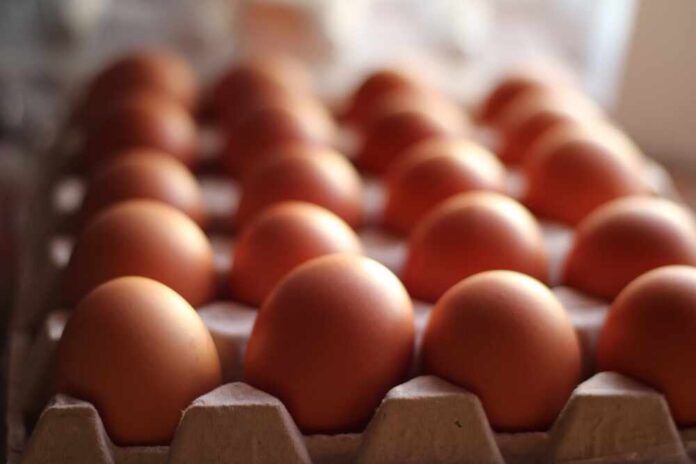
Egg prices are finally coming down for families ahead of Easter—but the claim that it’s “Trump’s doing” doesn’t hold up to the actual data.
Story Snapshot
- Retail egg prices fell sharply year-over-year, with national averages around $2.50 per dozen in February 2026 after peaking near $5.90 in February 2025.
- Multiple reports tie the drop primarily to fewer avian flu outbreaks and a rebuilt laying-hen flock, not a specific White House policy shift.
- Wholesale prices reportedly collapsed more than 90%, creating real financial stress for egg producers even as shoppers get relief.
- Breitbart’s “down 80%” framing conflicts with the math from its own numbers and with CPI-based reporting that puts the retail decline closer to 40%.
What the numbers really show heading into Easter 2026
Consumers walking into grocery stores this spring are seeing a welcome change: eggs cost much less than they did during the 2025 spike. Several outlets report a national average near $2.50 per dozen in February 2026 compared with about $5.90 in February 2025, when shortages were acute. Marketplace, citing CPI-based tracking, characterized the retail decline at roughly 40% year-over-year, which is a major drop but not an 80% collapse.
Breitbart’s celebratory headline ties the improvement to President Trump and claims an 80% decline “just in time for Easter.” The problem is straightforward: the retail numbers it highlights do not equal an 80% reduction. A move from about $5.90 to $2.50 is closer to the high‑50% range by simple arithmetic, and other reporting anchored to consumer-price data lands nearer the low‑40% range.
Why prices spiked in 2025—and why they’re easing now
Reporting across NPR affiliates and Marketplace points to the same underlying driver: the worst wave of highly pathogenic avian influenza in U.S. history hammered the supply of laying hens. Producers culled flocks, shelves thinned, and some stores rationed cartons as prices climbed over $6 in some places. As outbreaks slowed through late 2025 into early 2026, producers were able to rebuild, adding roughly nine million more laying hens.
Texas A&M livestock economist David Anderson told public-radio outlets that the market turnaround reflects that recovering flock and fewer disruptions—not a political lever. Sources also cite improved biosecurity, the possibility of viral changes, and plain luck as contributors to a calmer season. Easter demand still matters because it reliably boosts buying for baking, cooking, and dyeing, but supply is the bigger story this year.
Retail relief comes with a warning sign for farmers
Lower grocery bills are good news for families that have been battered by years of inflation and high food costs. However, the same reporting that celebrates cheaper eggs also describes a painful squeeze on producers. Wholesale prices reportedly dropped more than 90% to around 70 cents per dozen, which economists and industry voices warned can dip below the cost of production. If that persists, smaller operators may struggle to stay afloat.
This is where the political talking points can mislead conservative voters who want straight answers. A headline declaring victory may feel satisfying after years of “experts” dismissing kitchen-table economics, but the supply chain is not a campaign prop. If producers exit because margins collapse, the country can end up right back in a shortage cycle the next time avian flu returns, and families will pay for it again.
Where Trump gets credit—and where the evidence runs out
Voters can reasonably give any administration credit for a stable economy when conditions improve, especially after years of overspending and policy whiplash that drove up costs. But the research provided here does not show a direct policy action from the Trump administration that caused egg prices to fall. The sources emphasize disease dynamics, flock recovery, and market forces. When attribution goes beyond that, it becomes narrative rather than proof.
For conservatives who want accountable government, the standard should be consistent: measure results honestly, demand transparency from agencies that track food and inflation, and avoid turning every price swing into propaganda. Egg prices dropping is real relief, but it is also a reminder that food security depends on resilient production, responsible regulation, and truthful public information—not just a headline timed to a holiday.
Sources:
Just in time for Easter, egg prices drop sharply
Egg prices fall 40% as beef prices rise
Egg prices have taken a beating. What’s behind the drop?
Happy Easter: Egg Prices Are Down 80%