
European-style speech codes are spreading worldwide, but America’s First Amendment still shields even offensive speech — and that difference matters.
Story Highlights
- U.S. law protects offensive speech unless it fits narrow exceptions like true threats or incitement.
- European Union members criminalize certain hate speech across several protected traits.
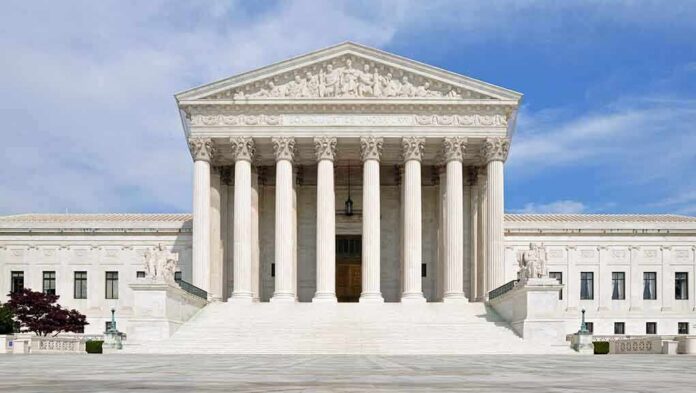
- The Supreme Court rejects banning speech just because some find it offensive, as in Matal v. Tam.
- President Trump tied free speech to American culture and national identity in his Mount Rushmore remarks.
What U.S. Law Actually Protects — And Why It Is Different
Supreme Court rulings in the United States set a bright line: government cannot silence speech just because people dislike it. In Matal v. Tam, the Court held that offensive viewpoints cannot be banned by the state simply for being offensive. American law limits speech only in narrow areas such as true threats, incitement to violence, or defamation, which keeps the focus on conduct that harms, not ideas we debate. This approach protects tough talk in politics, faith, and history.
The European Union takes a broader path. Every member state criminalizes certain forms of hate speech tied to traits like race, color, religion, descent, or national or ethnic origin under a 2008 framework law. These laws aim to stop incitement and hatred, but they also sweep in public expression that would be allowed here. That is the core split: Europeans regulate more categories of speech, while the United States defaults to letting citizens answer speech with more speech.
Why This Matters For Everyday Americans
Parents, small-business owners, and veterans all feel the cost when speech rules grow vague or political. Clear limits protect regular people from government overreach. In the United States, the baseline is liberty. If speech is ugly but peaceful, the government cannot shut it down. That shield helps whistleblowers, reformers, and believers on all sides. It keeps political debate wide open so voters, not bureaucrats, decide which ideas rise or fall.
That tradition lines up with conservative values: individual liberty, limited government, and equal rules for everyone. When speech is policed by taste, the powerful pick winners. When speech is free, citizens hold power to challenge elites, media narratives, and fashionable agendas. That is why the First Amendment matters beyond courtrooms. It shapes a culture that tolerates debate on guns, faith, borders, and schools without fear that the government will pick a side and gag opponents.
What President Trump Said At Mount Rushmore
President Trump’s Mount Rushmore remarks tied liberty to American culture and character, not just words on paper. He described the United States as the most exceptional nation and linked our success to a spirit of free people who speak boldly and defend their heritage. Supporters hear a clear theme: our strength flows from a free people, not from managers and censors. That message echoes the Supreme Court’s bar on viewpoint discrimination, which keeps debate open even when some demand silence.
The speech itself did not present a legal chart comparing countries, and Europe is not monolithic. Rules differ across nations and courts. But the main contrast still holds: European systems broadly criminalize hate speech, while American law shields offensive viewpoints unless they cross tight lines, such as incitement or true threats. For citizens, the bottom line is simple: on this side of the Atlantic, the law trusts adults to sort ideas without a speech police.
Addressing Limits, History, and Today’s Pressure Points
Free speech here is strong but not absolute. True threats, incitement, and defamation remain illegal. That balance protects safety and reputation without turning government into an arbiter of offense. Critics point to dark chapters in our past, like the Sedition Act era, as proof that America sometimes failed its ideals. Those episodes are real, but courts and culture moved toward stronger speech protection over time. Today’s standard defends sharp, even harsh, public debate.
Modern pressure often comes from outside government, including employers and platforms. European scholars argue their systems tackle private restrictions more directly, while ours focuses on state action. That debate will continue. But the core constitutional shield in America still blocks the government from punishing you for a viewpoint others hate. Conservatives should defend that shield every time new “hate speech” proposals, campus codes, or bureaucratic rules try to carve holes in the First Amendment.
Sources:
reason.com, govinfo.gov, europarl.europa.eu