
A single Senate vote could decide whether Americans must prove citizenship to get on the voter rolls—or whether “trust us” politics keeps the door open to chaos and suspicion.
Story Snapshot
- The House passed the SAVE America Act on February 11, 2026, and the bill is now headed into a high-stakes Senate fight.
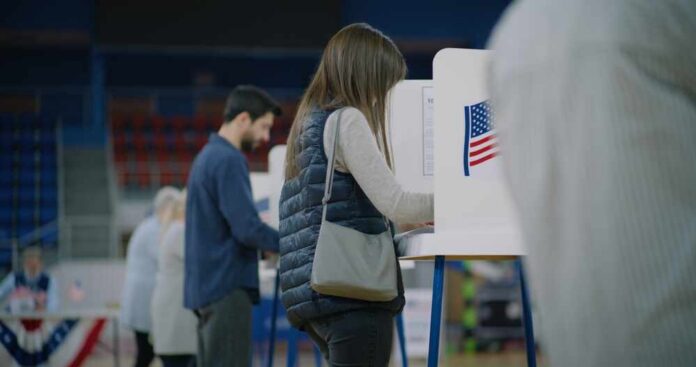
- The proposal would require documentary proof of U.S. citizenship for voter registration and photo ID for voting, including for mail ballots.
- Supporters argue it is a straightforward election-integrity safeguard that polls show most voters want.
- Opponents warn it could block or delay eligible voters who lack easy access to documents, and they argue widespread fraud has not been proven.
- Analysts say the bill’s biggest pressure point is practical implementation—especially for mail/online registration and for election workers facing new penalties.
What the SAVE America Act Would Require
The SAVE America Act is designed to tighten federal rules around voter registration and voting by requiring documentary proof of U.S. citizenship—such as a passport or birth certificate—to register, along with photo identification when voting, including on mail ballots. The House approved the bill on February 11, 2026, after a renewed push that began in late January. The proposal also directs states to use the Department of Homeland Security’s SAVE verification tool in the process.
Supporters frame these requirements as a basic “show-you’re-eligible” standard that protects the legitimacy of elections and reduces disputes after the fact. The White House has pointed to polling that claims broad public support for stricter voter eligibility checks. Critics counter that adding federal documentary mandates is not the same as routine ID checks at a polling place; they argue the bill’s structure would force many people to navigate paperwork hurdles for everyday registration tasks.
Senate Roadblock: Claims of Disenfranchisement vs. Demands for Confidence
Senate Democrats have lined up against the House-passed plan, and the debate has sharpened as the Senate considers whether to take it up. In March 2026, Sens. Mark Warner and Tim Kaine publicly opposed the legislation, calling it voter suppression and warning it could disenfranchise millions. Their criticism focuses on the gap between the bill’s intent and its real-world impact, especially for voters who are eligible but do not have ready access to specific documents.
That warning has been echoed by voting-rights groups that argue the United States already has multiple safeguards and that courts and audits after 2020 did not find evidence of widespread fraud. At the same time, conservatives point to a long-running reality: a sizable share of the country does not trust the system, and confidence is not restored by lectures. For voters who watched years of expanding mail voting and looser procedures, the appeal of a clear citizenship check is easy to understand.
Mail Voting, Verification Tools, and the Administrative Squeeze
Even analysts who do not take a partisan stance have highlighted that the bill’s effect will depend on implementation details, particularly for mail and online registration. The Bipartisan Policy Center has flagged ambiguity around how certain registration pathways would work, noting that added procedural steps could undercut the convenience of mail registration while increasing risk and confusion for election offices. The Brennan Center similarly argues the structure would block large numbers of eligible voters, especially if states struggle to process document checks quickly.
The administrative burden is not a theoretical concern. The proposal’s approach—document requirements, cross-checking with federal tools, and new compliance obligations—would land on state and local election officials already dealing with staff shortages, high turnover, and constant litigation pressure. When Washington adds mandates without clear funding or uniform implementation guidance, states tend to get blamed for the bottlenecks. That dynamic could fuel even more mistrust if eligible voters face delays or inconsistent rules across counties.
The Core Question for 2026: Integrity Rules Without Punishing Lawful Voters
Politically, the SAVE Act is landing in an election cycle where election integrity remains a top issue for the Republican base and for many independents. The White House has argued the bill is among the most popular election reforms in decades, citing strong support for requiring proof of citizenship and cleaning up voter rolls. Opponents reply that the country should not write sweeping federal rules based on rare fraud prosecutions, especially if the rules impose burdens on lawful voters.
https://twitter.com/
The strongest argument for the bill is simplicity: citizenship is a prerequisite to voting in federal elections, and a system that can verify eligibility consistently should reduce the suspicion that fuels national division. The strongest argument against it, based on the available analysis, is that “documentary proof” requirements can collide with real life—name changes, missing records, or limited access to passports—creating friction for eligible Americans. The Senate’s choice will signal whether Congress can pursue tighter integrity standards while building practical off-ramps for lawful voters who get caught in the paperwork.
Sources:
Warner & Kaine slam SAVE America Act as voter suppression measure that could disenfranchise millions
SAVE America Act saves no one: voter suppression bill explained
The SAVE America Act is the most popular election reform in decades
New SAVE Act bills would still block millions of Americans from voting
Five things to know about the SAVE Act