

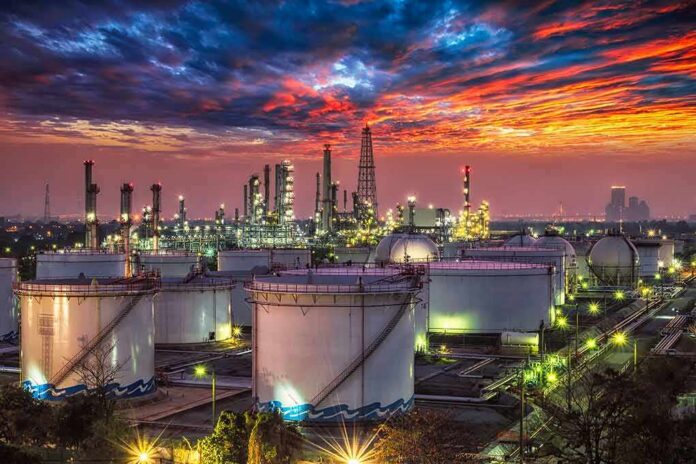
Oil pushed past $100 a barrel as U.S.-Iran clashes raised supply fears and rattled Wall Street.
Story Highlights
- Brent crude topped $100 as fighting between U.S. and Iranian forces fueled supply worries.
- Stocks slipped as investors braced for higher energy costs and renewed inflation pressure.
- Past flare-ups also sent oil sharply higher, including a six-week high on Iran strike threats.
- Geopolitical risk typically moves oil more than stocks, which react unevenly.
Oil Breaks $100 as Gulf Tensions Escalate
Reuters reported Brent crude settled above $100 a barrel while U.S. crude also jumped, after fresh clashes between U.S. and Iranian forces stoked fears of supply disruption from the Middle East. Traders priced in the risk that conflict could hit production or key sea lanes. The worry is simple and real: less oil flow means higher prices for gas, diesel, and heating. That hits family budgets and small businesses first, and it pushes broader prices higher.
The move followed a pattern seen throughout recent flare-ups. When Iran tensions rise, oil climbs fast. In one recent wave, Brent closed near $97 and U.S. crude near $93, after Tehran vowed to target energy infrastructure in the region. Markets respond before barrels go offline. The price reflects risk, not only actual outages. That is why jumps can happen even without confirmed physical losses. Investors do not wait to see tankers halted before they hedge.
Wall Street Slips as Energy Costs Feed Inflation Jitters
Stocks finished lower alongside triple-digit oil, as investors weighed the drag of higher fuel on consumer spending and company margins. Expensive energy acts like a tax. It raises costs from farm to factory to freight. Households feel it at the pump first. Companies feel it in logistics and inputs. The result can be slower growth and sticky inflation. That matters for interest rates, borrowing, and retirement accounts. It also shapes voter sentiment on pocketbook issues.
Market coverage tied parts of the selloff to Iran risk and the renewed jump in oil. But the stock reaction can vary. On other days this year, equities dipped at first, then bounced as traders focused on technology earnings or interest rate hopes. This uneven response fits a broader record: oil usually reacts more directly to geopolitical shocks than stocks do. The stock impact is smaller, more conditional, and often fades when other forces, like rates or growth data, take the wheel.
Recent Flashpoints and Price Spikes
Earlier cycles showed the same linkage. Oil surged nearly three percent after the killing of a Hamas leader in Iran raised fears of wider conflict, with U.S. West Texas Intermediate posting its biggest daily gain since October 2023. Another episode saw oil jump as tensions over the Strait of Hormuz resurfaced, a reminder that threats to key chokepoints can move prices quickly even without confirmed pipeline or shipping losses. Each event added a premium for risk.
As summer turned to fall, pressure built again. Reuters recorded sessions where oil neared or topped $100 as Iran-related fighting intensified and supply fears grew. These moves also came with warnings that higher energy costs could flow into broader inflation, squeezing families and small firms. That squeeze is why energy independence and secure supply lines matter. When America produces and transports energy reliably, middlemen and hostile regimes have less leverage over our wallets.
What This Means for Families, Business, and Policy
Higher oil raises gasoline, diesel, and jet fuel costs within weeks. Trucking, farm equipment, airlines, and delivery fleets all pay more, and pass some of it along. Households see it at the pump and in grocery aisles. Small manufacturers face tighter margins. The risk is a feedback loop: energy costs feed inflation, which pressures interest rates, which cool growth. That is why officials watch oil so closely when conflicts involve major producers or transit routes.
No1: Oil: WTI ~$100 on the screen, physical grades at $120-127 – the gap stops pretending
JustDario lists the spread side by side: Murban ~$120, Urals ~$121, China ~$122, Dated Brent ~$126, against WTI ~$100 and Brent ~$103.
KarelMercx independently puts high-quality Western…
— ₦₳V𝚜𝚝é𝚟𝚊 🇷🇺 ᴢ (@Navsteva) September 18, 2026
The record shows a clear lesson. When geopolitical risk spikes, oil jumps first and most. Stocks can wobble, but their path depends on many other forces. For Americans, steady, abundant domestic energy is the best shield. Strong production, more refining capacity, and clear rules for pipelines and export routes reduce the risk premium built into every gallon. That protects working families, farmers, truckers, and small businesses from price shocks driven by distant conflicts.
Sources:
english.nv.ua, finance.yahoo.com, nbcnews.com, reuters.com