
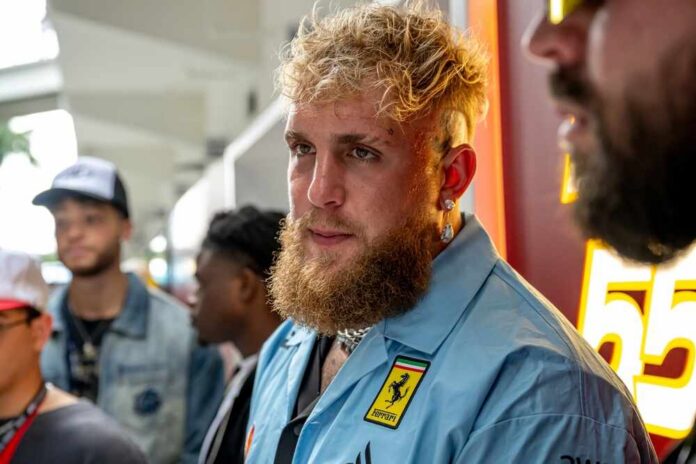
Jake Paul’s blunt praise for the late Charlie Kirk—paired with his own fear of assassination—highlights how political violence is reshaping who’s willing to lead in America.
Quick Take
- Jake Paul told Theo Von that TPUSA co-founder Charlie Kirk was “clearly” on track to become president before his 2025 killing.
- Paul said he never met Kirk, but followed him closely online and viewed politics as Kirk’s “purpose.”
- President Donald Trump publicly encouraged Paul to run for office, underscoring the GOP’s interest in celebrity-driven politics.
- Paul’s remarks centered on the personal cost of public life, including a stated fear of assassination and collateral impact on family.
Jake Paul’s Tribute Reopens the Kirk Legacy Debate
Jake Paul used an April 5, 2026 appearance on Theo Von’s podcast to mourn Turning Point USA co-founder Charlie Kirk and to frame Kirk’s rise as almost predetermined. Paul said Kirk was “clearly going to be the next president,” describing Kirk’s ambition as a job-like calling rather than a casual political interest. Kirk was shot and killed on September 10, 2025, while speaking at Utah Valley University, ending a fast-building career in conservative activism.
Paul’s comments were striking because he acknowledged he never met Kirk personally. Instead, he said his view was formed by watching Kirk’s work and messaging through social media, a modern pathway by which political reputations are built at scale. That detail matters in 2026 because the right and left increasingly sort reality through online narratives, while trust in legacy institutions continues to slide. Paul’s tribute shows how digital influence can turn political figures into cultural symbols overnight.
Trump’s Endorsement Signals GOP Interest in Outsider Messengers
Paul’s Kirk remarks arrived weeks after President Donald Trump publicly teased a political future for the boxer-influencer. At a March 13 rally in Hebron, Kentucky, Trump offered what was described as a “complete and total endorsement” if Paul decided to seek office. With Republicans controlling the House and Senate, the political incentives are clear: candidates with massive online followings can bypass hostile media filters, fundraise rapidly, and mobilize voters who feel ignored by the professional political class.
That dynamic also feeds a broader bipartisan frustration: many Americans believe government is run for insiders, not citizens, and that career incentives often override problem-solving. Conservatives see that failure in spending, energy costs, border breakdowns, and cultural overreach; liberals point to inequality, social service cuts, and discrimination concerns. Paul’s rising political chatter fits a moment where “outsiders” are valued less for résumé credentials and more for perceived independence from entrenched bureaucracies—the same bureaucracy critics often label the “deep state.”
Political Violence as a Deterrent to Public Service
The most concrete theme from Paul’s podcast discussion wasn’t ideology; it was danger. Paul pointed to assassination risk as a real factor weighing on whether he would ever run for office, and he spoke about leadership as something that can consume not just a candidate’s life but also the lives of those around them. The research provided does not include investigative findings about Kirk’s killing, but the fact of the assassination itself has become a central reference point in how supporters discuss the costs of political participation.
What’s Known—and What Can’t Be Claimed—About “The Next President”
Paul’s claim that Kirk would have become president is, by nature, unverifiable. The available sources do not provide polling, electoral plans, fundraising metrics, or party infrastructure showing a defined path to a presidential nomination, much less the White House. What can be reported, however, is that Kirk had become a nationally recognized conservative organizer through TPUSA, and Paul’s comments reflect a belief—shared in some conservative circles—that Kirk’s trajectory was accelerating before his death.
https://twitter.com/TheoVon/status/1910000000000000000
Theo Von also raised the idea that “outside forces” might have opposed Kirk’s rise, a suggestion that can resonate with audiences already skeptical of powerful institutions. But the research set provides no evidence establishing who, if anyone, acted beyond the identified shooter, nor does it document official conclusions about motive or coordination. Given the country’s frayed trust environment, the responsible takeaway is narrower: high-profile political murders predictably fuel suspicion, and that suspicion becomes political energy—sometimes regardless of proof.
Sources:
Influencer Jake Paul says Charlie Kirk would have been ‘The Next President’
Influencer Jake Paul says Charlie Kirk would have been ‘The Next President’
Entertainment Celebrity News Today – 2 Min News: The Daily News Now (episode)