
California lets people register to vote without a driver’s license or Social Security number, then accept non-photo papers for first-time ID checks, raising real security questions backed by the state’s own rules.
Story Highlights
- State guidance says you can register without a license, state ID, or Social Security number.
- Officials assign a unique identifier when no standard ID exists.
- First-time voters who lacked those numbers may be asked for non-photo papers at the polls.
- A verified Social Security number counts as identity verification under state regulation.
California’s Registration Rule Allows No-License, No-SSN Sign-ups
California’s own voter-registration pages say an eligible citizen can register without a driver’s license, state ID, or Social Security number. The instructions explain that if an applicant lacks those numbers, they can still register and will receive a unique identifier tied to their record. This policy matches the Help America Vote Act structure, which asks for those numbers if available. It means access first, then back-end checks, instead of a hard photo ID gate at registration.
State compliance documents and training manuals reinforce the same point. When a person has no driver’s license or state ID, officials record the last four digits of a Social Security number if provided, or assign a state-generated unique number if not. The unique number serves to track the voter in the statewide database and is used for future administration steps. These rules are not rumor. They appear in official guidance that counties follow during each registration cycle.
How Identity Is Supposed To Be Verified In The System
California’s regulation says a verified Social Security number counts as identity verification under the rule. If the affidavit includes the last four digits and they match, the voter’s identity is considered verified for registration purposes. VoteCal, the statewide database, records whether identity matched driver’s license records, matched Social Security records, or required assignment of a unique identifier instead. That data trail shows how each record was handled during intake.
Officials also describe what happens when information cannot be verified but the person otherwise qualifies. The Elections Code provides that the registrant gets a unique identification number and the conditional registration becomes effective, keeping the process moving while tracking the case. Supporters call this access. Critics worry it opens the door to error or abuse if checks are weak. The documents confirm the process exists but do not report how often verification fails or later succeeds.
First-Time Voter ID At The Polls Can Be Non-Photo Papers
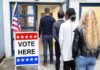
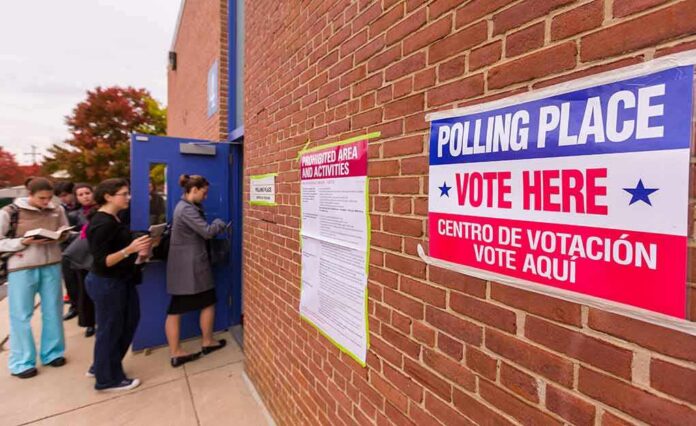
California guidance says most voters do not need to show ID at the polls. But first-time voters who registered by mail and did not provide a driver’s license number, state identification number, or last four of a Social Security number may be asked to show identification when they vote the first time. The list includes non-photo items, like a recent utility bill, a sample ballot booklet, a bank statement, a paycheck, or official mail from a government agency. That is a light check compared to photo ID rules in other states.
California doesn't require voter ID; you don’t need to show it to register or to vote. The state passed a law banning voter ID; local governments, cities, and counties can't set their own rules. And the liberal morons living there claim there is no possibility of cheating.
— Steve Houser (@Stephen_Houser) August 28, 2026
This is where the friction rises. The state’s examples prove that a non-photo paper can meet the first-time check, but they do not say any card at all will work. The record shows government mail and common bills count as acceptable. It does not prove that a random gym card is always accepted statewide. Still, the framework is permissive. It relies on paper trails many households can print or bring, instead of a secure photo card that ties to a live person.
Why This Matters For Election Integrity In 2026
Conservatives see a wide gap between California’s system and simple safeguards most Americans expect. Registration can proceed with no license, no state ID, and no Social Security number, using a unique identifier instead. Poll checks for some first-time voters can be satisfied with non-photo papers. Those are established facts in state materials, not speculation. What we do not have are hard counts showing how often these fallback paths are used, or how often they fail.
California leaders themselves are floating tighter identification ideas, including a measure that would require government-issued ID at the polls, or the last four digits of a government-issued identification number for mail voting. That move admits the current setup has holes. Voters want both access and trust. President Trump’s supporters expect basic identity checks that do not bend to politics. California’s own documents show the door is open; now the state must prove it is locked when it counts.
Sources:
thegatewaypundit.com, sos.ca.gov, elections.cdn.sos.ca.gov, codes.findlaw.com, law.justia.com