
France’s president just called the online free-speech argument “pure bullshit,” and it’s a flashing warning light for Americans watching Europe slide toward top-down control of what people can say—and what they’re allowed to see.
Quick Take
- Emmanuel Macron made the remark in New Delhi on Feb. 18, 2026, arguing that opaque platform algorithms distort what users see and can steer people toward hateful content.
- Macron’s framing targets “free speech” as practiced on major platforms, while pushing for “transparent algorithms” that would effectively invite regulatory oversight.
- The comments land amid rising U.S.-EU friction, with the Trump administration publicly positioning itself against foreign-style digital speech policing.
- Macron’s earlier anti-disinformation push in late 2025 drew “ministry of truth” accusations from domestic critics, even as he denied government censorship plans.
Macron’s New Delhi Remark and What He Said He Meant
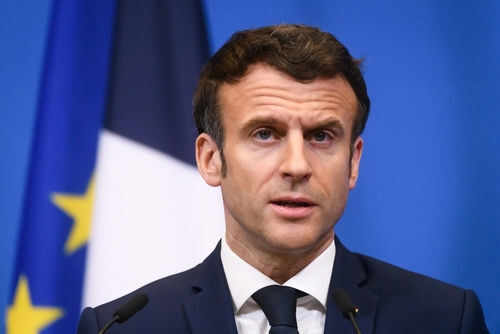
Emmanuel Macron delivered the headline-making line during a speech in New Delhi on February 18, 2026, calling the familiar “free speech on social media” defense “pure bullshit.” Reporting on the address indicates his complaint was less about the abstract right to speak and more about how undisclosed algorithms steer users without telling them, including toward hateful content. Macron argued that “free algorithms” should mean transparency, not black-box curation.
Macron’s distinction matters because it reshapes an old argument into a new lever: if the “problem” is algorithmic distribution, then the “solution” becomes forced disclosure, mandated ranking rules, or government-approved standards for what platforms may amplify. The research available does not spell out specific enforcement mechanisms Macron would adopt, and that lack of detail is itself important. Vague slogans about transparency can become broad authority once regulators start defining “acceptable” content outcomes.
Europe’s Disinformation Campaigns and the “Ministry of Truth” Backlash
Macron’s New Delhi remarks did not come out of nowhere. In December 2025, he launched a campaign against online disinformation, touring France and warning about fake news, algorithm-driven manipulation, and foreign-backed narratives. That effort referenced a Reporters Without Borders initiative tied to voluntary “labeling” of news outlets, but it still triggered a predictable political fight. Right-wing critics, including voices in Vincent Bolloré’s media sphere, warned it resembled a government “ministry of truth.”
Macron publicly denied that France should police truth by decree, saying it is not the government’s role to decide what is news in a democracy. His office later posted messaging pushing back on the “ministry of truth” framing, arguing that discussion of disinformation had itself sparked disinformation about his intentions. Those denials are real and should be acknowledged. At the same time, the recurring European impulse—fighting “harm” by shaping information flows—keeps raising the same constitutional red flags Americans recognize on sight.
Trump Administration Pushback: Digital Freedom Versus EU-Style Controls
The research indicates the remarks are landing in an already tense transatlantic environment. The Trump administration has been signaling resistance to European digital-service approaches that Washington views as de facto censorship, and U.S. officials have framed parts of the European regulatory ecosystem as a “global censorship-industrial complex.” Within that context, Macron reportedly anticipated conflict with the U.S. over European rules, including proposals tied to restricting minors’ access to social media in some countries.
A scheduled visit to Paris by a senior U.S. State Department official was described as an effort to reaffirm the Trump administration’s commitment to freedom of speech and “digital freedom.” That posture draws a bright line conservatives tend to prefer: open debate first, and skepticism toward bureaucracies—foreign or domestic—that promise “safety” and “information integrity” while gaining leverage over what citizens can read, share, and argue about. The available sources focus on rhetoric and diplomatic positioning more than finalized policy text.
Why “Algorithm Transparency” Can Become a Censorship Back Door
Macron’s pitch centers on algorithmic opacity, and many Americans agree that Big Tech can manipulate feeds, hide viewpoints, and pressure speech. The conservative concern is who gets to fix it. When a government demands algorithmic “transparency,” it often moves quickly from disclosure to direction—pressuring platforms to down-rank lawful speech because it is labeled “hate,” “misinformation,” or socially unacceptable. The research notes uncertainty about how broad Macron’s critique is and whether it targets all curation or specific harms.
That ambiguity is why Macron’s “pure bullshit” line matters beyond France. It frames speech itself as a problem when it is mediated by private platforms and “guided” by software, inviting regulators to treat the flow of information like a public utility. Europe’s political culture already tolerates more speech policing than Americans do, and the U.S. Constitution rejects government favoritism in political debate. Conservatives watching this fight should track the concrete proposals that follow the rhetoric, not the rhetoric alone.
For now, the core verified facts are straightforward: Macron used inflammatory language in New Delhi; he argued that opaque algorithms undermine authentic expression; he has a recent history of anti-disinformation campaigning that drew “ministry of truth” criticism; and the Trump administration is positioned to resist European-style regulation that looks like censorship. What remains unclear from the provided material is exactly what Macron would compel platforms to do, how penalties would work, and where Europe would draw the line between transparency and control.
Sources:
Watch: Macron Calls Free Speech Online ‘Pure Bullshit’
Macron denies plans for ‘ministry of truth’ amid far-right outcry
Macron’s campaign to fight fake news meets resistance from right-wing media