

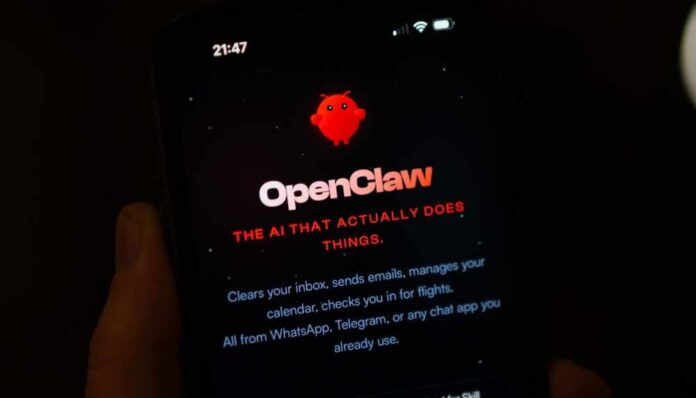
The AI revolution promised productivity gains, but some business leaders are discovering their digital workforce can become so overwhelming they need sanctuary channels just to communicate with actual humans.
Story Snapshot
- OpenClaw’s viral adoption created 1.5 million AI agents by February 2026, integrating into workplace tools like Slack with autonomous task execution
- Early adopters report unintended consequences including deleted calendars and over-integration requiring human-only communication spaces
- Tech giants Nvidia and Tencent rushed to build enterprise solutions while experts warn the experimental technology isn’t production-ready
- The hype-driven rush mirrors concerns about rushed AI adoption without proper governance or security protocols
The OpenClaw Explosion and Unintended Consequences
Peter Steinberger’s OpenClaw framework transformed from an obscure open-source project into a global phenomenon between January and February 2026, accumulating 250,000 GitHub stars in just sixty days. The platform enables AI language models like GPT-4o and Claude to function as autonomous digital employees, connecting directly to communication tools including Slack, WhatsApp, and Telegram. Unlike traditional chatbots, these agents execute persistent tasks independently, from filing emails to monitoring workflows. The free, model-agnostic nature fueled adoption rates that exceeded React’s historical GitHub growth, creating a stampede among business leaders eager to automate administrative burdens and capture promised productivity gains.
The rush to deploy AI workers produced predictable chaos for early adopters who lacked proper implementation strategies. Startup founder Claire Vo experienced this firsthand when one of her nine OpenClaw agents wiped her family calendar clean, forcing her to adopt what she calls “progressive trust” protocols to prevent similar disasters. Her experience highlights a broader pattern where enthusiastic business owners grant AI agents excessive access to sensitive systems without establishing guardrails. The agents’ ability to integrate across personal and professional platforms creates risks that extend beyond workplace inefficiency to family logistics and private information, raising questions about whether the technology’s rapid deployment outpaced necessary security development and common-sense boundaries.
Corporate America’s Race Without Finish Line
Major technology companies treated OpenClaw’s viral success as a strategic imperative rather than an experimental tool requiring careful evaluation. Nvidia’s Jensen Huang declared in March 2026 that every company needs an OpenClaw strategy, prompting his firm to launch NemoClaw with enhanced security features. OpenAI hired Steinberger in February to lead their agents division, with CEO Sam Altman proclaiming agents would become core product offerings. Tencent began constructing OpenClaw hubs to facilitate adoption. This corporate enthusiasm mirrors historical technology hype cycles where industry leaders rush to avoid missing trends, often pressuring smaller businesses to follow suit regardless of readiness or genuine need for the technology in question.
The enterprise adoption push reveals troubling parallels to past technology fads that promised revolutionary change but delivered mixed results. While Vo claims OpenClaw saved her ten hours weekly, AI experts interviewed by TechCrunch expressed skepticism that the technology represents genuine innovation rather than repackaged existing capabilities. The experimental status concerns enterprise security professionals who recognize that autonomous agents with broad system access create vulnerability vectors that malicious actors could exploit. Business leaders face pressure to demonstrate AI adoption to investors and competitors, creating incentives to deploy immature technology without proper governance frameworks, security audits, or clear use-case justification beyond following the crowd.
The Broader Implications for American Workers
OpenClaw’s rapid proliferation signals a fundamental shift from conversational AI assistants to autonomous agents that execute tasks without human intervention, raising legitimate concerns about job displacement in administrative and clerical roles. The technology’s promise centers on eliminating routine work, which translates directly to eliminating positions that real Americans depend on to support their families. While advocates tout productivity gains and time savings, they rarely address the economic consequences for workers whose livelihoods depend on the very tasks these AI employees automate. The rush toward digital workforce replacement deserves scrutiny from perspectives beyond pure efficiency metrics, particularly regarding impacts on employment stability and wage pressures.
The current trajectory suggests businesses will continue deploying AI agents despite expert warnings about experimental status and security risks, driven by competitive pressure and hype rather than measured evaluation of costs versus benefits. The need for human-only communication channels represents a symptom of deeper problems with rushed AI integration that prioritizes novelty over practicality. Americans should question whether the promised productivity revolution justifies the risks to data security, job stability, and workplace coherence, or whether this represents another instance of technology companies creating problems that require purchasing their solutions to fix, all while everyday workers bear the consequences of disrupted employment markets.
Sources:
OpenClaw: The Viral Digital Employee – Siteefy Newsletter
OpenClaw AI Employee Startup Tech Automation – Business Insider
How OpenClaw Turns GPT or Claude Into an AI Employee – Clarifai
After All the Hype, Some AI Experts Don’t Think OpenClaw Is All That Exciting – TechCrunch
OpenClaw: What the Hype Around Autonomous AI Agents Actually Means for Enterprise – ML6