
A rare public clash between a sitting U.S. president and an American-born pope is now colliding with a fragile Iran ceasefire—and exposing how quickly foreign policy can turn into a domestic cultural brawl.
Story Snapshot
- President Trump publicly criticized Pope Leo XIV after the pope condemned rhetoric that implied strikes on Iranian civilian infrastructure.
- Pope Leo responded that he has “no fear” of Trump and said his anti-war stance is rooted in the Gospel, not politics.
- A two-week ceasefire and Pakistan-hosted talks with Iran remain in motion, but the feud adds pressure to an already unstable moment.
- U.S. Catholic leaders have echoed the Vatican’s warning against targeting civilians, complicating the politics for both parties in 2026.
Trump’s attacks turn a policy dispute into a personal feud
President Donald Trump escalated tensions with Pope Leo XIV on Sunday night, April 12, using social media and comments to reporters to argue the pontiff is “not doing a very good job,” “weak on crime,” and “terrible for foreign policy.” Trump also suggested the pope caters to the “radical left” and downplays Iran’s nuclear threat. The broadside widened a dispute that began as a clash over the moral limits of war.
Trump’s critics will treat the episode as another example of abrasive leadership, while supporters may view it as refusing to take lectures from global institutions. The available reporting shows Trump’s criticism wasn’t limited to Iran policy; it expanded into character judgments and insinuations about the pope’s motives. What’s not established in the sources is Trump’s claim that the pope’s election was aimed at countering him, leaving that as assertion rather than verified fact.
Pope Leo’s response: “No fear,” and a renewed anti-war message
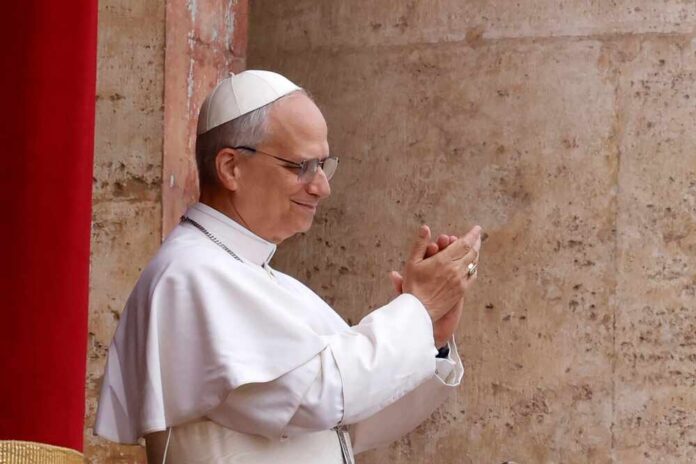
Pope Leo XIV, the first U.S.-born pontiff, answered the president’s criticism by saying he has “no fear” of Trump and will continue advocating against war. The pope framed his position as a matter of Christian teaching and a defense of peace, rather than a partisan attack on Washington. In the Vatican’s telling, the dispute is about rhetoric that can normalize destruction—and the moral responsibility of leaders to pursue an off-ramp.
Earlier, on April 7, Pope Leo condemned language describing the destruction of “an entire civilization” as “truly unacceptable,” urging diplomacy. The U.S. Conference of Catholic Bishops also condemned the targeting of civilian infrastructure. Those interventions coincided with a pause in military escalation: Trump announced a two-week delay and a conditional ceasefire as negotiations moved to Pakistan. The sequence matters because it links moral pressure to real-time diplomatic decisions, even if causation can’t be proven from the reporting alone.
Ceasefire diplomacy continues as energy stakes remain high
The feud is unfolding against the backdrop of a U.S.-Iran confrontation that has fed instability across the Middle East and intensified a global energy shock. With the Strait of Hormuz at the center of supply fears, the administration’s hawkish posture has been paired with negotiation windows that depend on restraint by both sides. As of April 13, the ceasefire was described as holding, with talks underway in Pakistan and rhetoric still driving headlines.
Why the conflict resonates at home: authority, limits, and legitimacy
Trump holds the legal power of the state—military force, sanctions, and alliances—while Pope Leo wields moral influence over a worldwide Church. That mismatch is why the argument can feel like two Americas talking past each other: one focused on deterrence and preventing an Iranian nuclear breakout, the other focused on civilian protection and the spiritual costs of modern warfare. The reporting also shows the pope condemning “idolatry of self” and boasting about force, without always naming Trump directly.
For conservatives frustrated with elite institutions, the optics are complicated. Many will resist foreign or religious scolding of U.S. sovereignty and national defense decisions. At the same time, the bishops’ warning about civilian infrastructure underscores a traditional concern conservatives often share: war should be bounded by clear aims, lawful conduct, and accountability. With Democrats positioned to obstruct and media ecosystems eager to inflame, this dispute risks becoming another proxy battle—rather than a sober debate about how to end a dangerous conflict.
Pope Leo responds to Trump’s comments against him in feud over Iran war https://t.co/ozlRbuIeQB
— The Algiers Herald (@AlgiersHerald) April 13, 2026
The political takeaway is not that either side “won” the argument, but that public trust in institutions keeps eroding when leaders trade barbs instead of clarifying goals. If Pakistan-hosted talks move toward a durable settlement, the feud may fade into a footnote. If negotiations fail, the president and the pope have now staked public positions that could harden their camps—at the exact moment Americans want competence, stability, and an honest accounting of costs.
Sources:
Trump lambasts Pope Leo XIV in ongoing feud with Catholic Church leader over Iran war
Trump criticizes Pope Leo XIV in fiery remarks over Iran war
Pope Leo offers latest rebuke on Iran war
Pope Leo calls out Trump’s Iran rhetoric before last-minute ceasefire emerges