

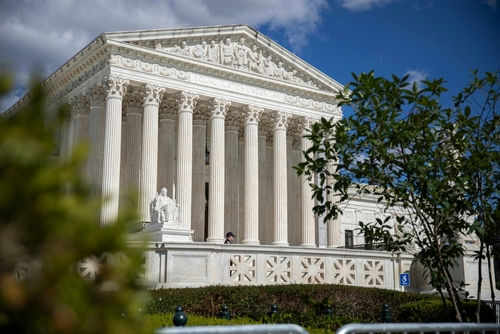
Speculation is building that President Trump could secure another Supreme Court appointment this summer, potentially cementing conservative dominance on the nation’s highest court for decades to come.
Story Snapshot
- Prediction markets show 61% probability of at least one Supreme Court vacancy occurring in 2026
- Several aging justices, including conservatives Thomas and Alito, could strategically retire before midterm elections
- Republicans hold a 53-47 Senate majority, providing Trump a clear path to confirm replacements before potential electoral shifts
- A summer vacancy would allow confirmation before midterms that could alter Senate control
Political Calculus Behind Summer Timing
President Trump’s opportunity to reshape the Supreme Court hinges on timing and Senate arithmetic. Republicans currently hold 53 Senate seats, providing sufficient margin to confirm nominees without Democratic support. The 2026 midterms threaten this advantage, creating urgency for any justice contemplating retirement. Conservative justices Clarence Thomas, approximately 78, and Samuel Alito, around 76, represent the most likely candidates for strategic departure. Their retirements before November would guarantee ideologically aligned replacements, potentially shifting the court to a 7-2 conservative majority that could endure through the 2030s.
Historical Precedents Shape Current Speculation
Strategic Supreme Court retirements are nothing new in American politics. Justice Anthony Kennedy’s 2018 retirement under Trump’s first term enabled the appointment of Justice Brett Kavanaugh, solidifying conservative control. Similarly, Justice Stephen Breyer’s 2022 departure during Biden’s presidency allowed Democrats to replace him with Justice Ketanji Brown Jackson, maintaining ideological balance. Trump already appointed three justices during his first term, establishing the current 6-3 conservative majority. However, his second term faces fewer lower-court vacancies as judges have grown reluctant to retire amid ongoing political attacks on the judiciary, complicating broader court-reshaping efforts.
Judicial Vacancy Creates High Stakes for Both Parties
A summer 2026 vacancy would trigger intense political warfare in Washington. Senate Republicans, led by allies of Mitch McConnell, would move swiftly to confirm Trump’s nominee before midterms. Democrats, powerless as the minority party, would leverage public pressure and advocacy groups to oppose any nomination they view as extreme. Progressive organizations have already begun circulating preferred shortlists, anticipating potential openings. The confirmation battle would dominate national headlines and likely influence midterm campaigns, with Senate races becoming referendums on court composition. This dynamic mirrors 2016, when Republicans blocked Obama’s Merrick Garland nomination, preserving the seat for Trump’s appointment of Neil Gorsuch.
Long-Term Constitutional Implications
A Trump appointment this summer would have profound implications for constitutional law and American governance. The Court’s docket includes pivotal cases on environmental regulations, election law, and presidential powers. A strengthened conservative majority could expand Second Amendment protections, curtail regulatory overreach by federal agencies, and reinforce traditional constitutional limits on government power. These decisions would shape American life for generations, as Supreme Court justices serve lifetime appointments. For conservatives who endured years of activist liberal rulings, this represents an opportunity to restore constitutional fidelity and limit federal intrusion into state affairs and individual liberties.
No official retirement announcements have emerged from any justice as of mid-February 2026. The speculation remains driven by prediction markets, political analysis, and strategic considerations rather than confirmed intentions. Yet the combination of aging justices, favorable Senate composition, and impending midterm risks creates compelling incentives for conservative justices to act. Whether this summer produces one vacancy, two, or none will significantly impact Trump’s judicial legacy and the constitutional landscape for decades ahead.
Sources:
Polymarket – Supreme Court Vacancy in 2026
Brookings Institution – Paucity of Vacancies Slows Trump’s Effort to Reshape Courts
UNC – Supreme Court Vacancy: How Will It Be Filled?
Horvitz & Levy – The Effects of a Prolonged Supreme Court Vacancy
State Court Report – State Supreme Court Races to Watch 2026
SCOTUSblog – Presidential Rhetoric and Supreme Court Nominees
Alliance for Justice – 2025-2026 Supreme Court Term Preview
Demand Justice – Supreme Court Shortlist