

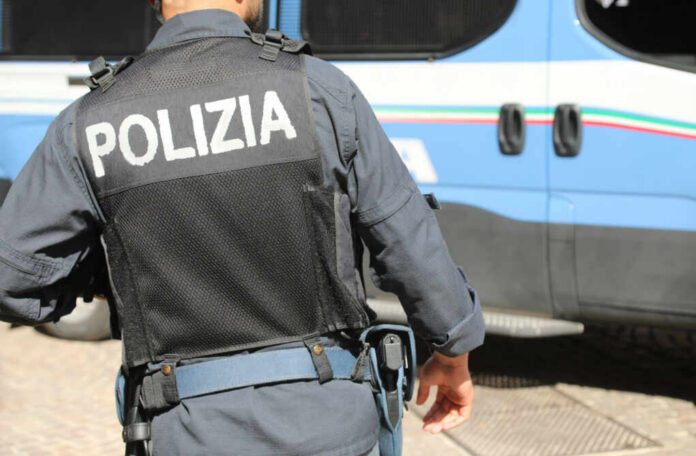
Italian police say they cracked a crypto-fueled underground bank in Prato, exposing how criminals dodge borders and anti-money-laundering rules.
Story Snapshot
- Investigators in Prato found crypto wallets, cash, and forged ID materials tied to an underground bank [1].
- Officials link similar hawala-style systems to drug money and tax fraud across Europe [2][3][4].
- European raids show unregulated channels move hundreds of millions beyond normal oversight [2].
- The case shows why strong borders, tough policing, and financial vigilance still matter.
Police Findings in Prato Point to a Covert Crypto Network
Italian investigators in Prato reported an underground bank that used cryptocurrency and forged IDs to move money outside checks. Officers said they seized two “Token Pocket” wallets tied to more than 10.7 million in stablecoins over a three-month span in 2025, plus equipment for fake biometric IDs and some cash. Authorities said the operation was run by a Chinese national and coordinated by the local prosecutor’s office. These details fit a pattern of covert banking that launders illicit funds [1].
Officials described flows that passed through a platform in Cambodia flagged as high risk by the United States Financial Crimes Enforcement Network. The method is simple at its core. Bad actors convert dirty funds into stablecoins, bounce them through offshore nodes, and cash out where controls are weak. Each hop hides the trail. Each fake document helps move people and money faster. Police say that mix lets criminals fuel wider schemes in Europe’s cash-heavy sectors [1].
Hawala-Style Systems Help Criminals Evade Oversight
European cases show how underground networks mimic banking without records. Europol reported a Western Europe ring that ferried drug cash to Morocco through unregulated channels after collection in several countries. Officers seized cash, gold, and weapons and estimated over three hundred million euros laundered. The intent was to outrun audits, dodge taxes, and keep drug revenue moving. The core tactic was to skip formal wires and use brokers who settle off the books [2].
Italian financial police also accused a large group of enabling nearly two billion euros in tax evasion by cycling money through false invoices and Chinese shadow bankers. Investigators said companies sent money to accounts in China for fake imports, then brought it back to Italy through covert channels. Police seized firms and assets and named dozens of suspects. These cases show how underground banks do more than remittances. They grease the wheels for fraud and criminal proceeds [3].
Why This Matters for Borders, Policing, and the Rule of Law
Informal value transfer networks cut around “know your customer” checks and bank reporting. Analysts and law enforcement say that makes them hard to stop. The model relies on trust between brokers and leaves little paper trail. Italy’s own summaries describe hawala as a parallel circuit that evades control and can support other crimes when used for illegal funds. That threat rises when crypto adds speed and global reach to an already hidden system [4].
Conservatives know this story well. Weak controls invite cartels, tax cheats, and traffickers to move fast and hide. Families pay through higher prices, lost jobs, and unsafe streets. Honest shop owners cannot compete with networks that dodge taxes and launder profits. When fake IDs and shadow banks thrive, the rule of law bends. Every country that values borders and order should want these networks cut down to the root, not patched with half measures [2].
What the Prato Bust Shows—and What Remains Unclear
The Prato case shows police can track stablecoins, seize gear, and link phones to wallets. It also shows that local prosecutors and financial units can coordinate across borders. That is good news for citizens who want safe streets and clean markets. But some claims seen in public talk—like exact yearly volumes or direct links to every type of crime—need official case files to confirm. The strongest public details are the wallets, amounts, and forged ID tools [1].
Here is the bottom line. Underground banks exist because crime adapts faster than rules. The fix is not more bureaucracy. The fix is targeted policing, strong borders, fast data sharing, and tough penalties that hit profits. Italy’s actions show resolve. The United States should back partners who strike at shadow financiers. That protects honest work, lowers the pull of illegal immigration, and helps restore faith that the law still has teeth [2][3][4].
Sources:
[1] Web – Italy busts clandestine bank used by drug traffickers
[2] Web – The Chinese Underground Bank in Prato – Crypto-Based Money …
[3] Web – Hawala money laundering ring dismantled by joint investigation team
[4] Web – Italian police uncover more than $2 billion tax fraud scheme …