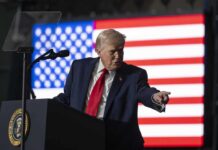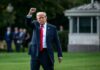

Trump’s “maximum pressure” push on Cuba is tightening the screws—yet the evidence suggests it could harden Havana’s regime, deepen civilian suffering, and still fail to deliver real political change.
Quick Take
- President Trump’s 2026 Cuba strategy relies on sanctions and oil restrictions meant to trigger rapid political and economic liberalization.
- Cuba’s immediate crisis is real—fuel shortages and nationwide blackouts—but experts say regime collapse is not guaranteed.
- Analysts argue Cuba’s political system is more entrenched than Venezuela’s, while the domestic opposition remains fragmented.
- Some reporting warns U.S. pressure may push Cuba closer to Russia and China, undercutting Washington’s long-term goals.
Maximum Pressure Meets a Hard Reality on the Ground
President Trump’s second-term Cuba policy has centered on “maximum pressure,” pairing economic sanctions with measures that restrict energy flows to the island. The administration’s timeline includes a January 29, 2026 emergency order framing Cuba as a national security concern, followed by tightened oil constraints after Venezuela’s leadership change cut off Havana’s primary supplier. By March, Cuba reported nationwide blackouts and months without oil shipments, amplifying hardship for ordinary citizens.
Secretary of State Marco Rubio publicly argued in mid-March that Cuba’s economic model “doesn’t work” and that the governing system “can’t fix it,” underscoring the administration’s view that outside pressure can force dramatic change. The problem for policymakers is that breakdowns in electricity and fuel access can create desperation without producing an organized, effective pathway to reform. Limited authorization for certain Venezuelan oil resale to private Cuban firms has been described as insufficient to cover the island’s needs.
Why Venezuela-Style Outcomes Don’t Automatically Translate to Cuba
Analysts cited in the reporting draw a sharp distinction between Cuba and Venezuela, warning against treating recent U.S. success elsewhere as a blueprint. Cuba’s political culture and governing architecture are described as deeply rooted in revolutionary identity and long-standing internal networks. Expert commentary emphasizes that even removing a top leader would not necessarily unwind the system underneath. That matters because “regime change” narratives often overestimate how quickly institutions and security services fracture.
Foreign policy specialists also point to a practical obstacle: the alternative to the current leadership is not clearly organized. Multiple sources describe Cuba’s opposition as divided and lacking a plan, which limits the odds that street-level anger over shortages translates into a coherent transition. From a governance perspective, that vacuum can create instability without delivering liberty or markets. For Americans who value limited government and predictable outcomes, the lack of a credible successor framework is a red flag for unintended consequences.
Humanitarian Pressure Can Backfire Without Producing Reform
Cuba’s energy shortages are not just a headline—they ripple into refrigeration, hospitals, transport, and basic commerce. Reports describing blackouts and food scarcity highlight how quickly an energy squeeze becomes a humanitarian strain. That reality creates a moral and strategic dilemma: punishing a hostile regime is one thing, but the lever being pulled often lands hardest on civilians. The available research supports the presence of acute hardship, but it does not show that hardship alone produces democratic breakthroughs.
Even if Washington’s goal is to force concessions, unpredictability cuts both ways. One expert characterization suggests the administration may be keeping Cuban counterparts guessing, which can create negotiating leverage. Yet ambiguity also increases miscalculation risk—especially when the United States is managing other global flashpoints. If the objective is a freer Cuba aligned away from adversaries, the research indicates the current approach could instead prolong crisis conditions while the regime adapts, rations, and tightens internal controls.
Geopolitics and Legality: The Constraints Behind the Rhetoric
Some analysis argues U.S. pressure has historically failed to produce political change while encouraging Cuba to deepen ties with rivals like Russia and China—the opposite of what Washington wants. That point matters in 2026 because great-power competition is no longer theoretical; it shapes shipping, intelligence cooperation, and regional influence. If Havana leans further into Moscow or Beijing for fuel, financing, and security support, maximum pressure becomes harder to sustain and easier to evade over time.
Military intervention remains the most explosive question, and the research highlights legal concerns raised by experts who say there is no clear legal basis for an invasion under international law. The sources also describe uncertainty about whether the administration is aiming for negotiated compliance, internal collapse, or something more forceful. With the U.S. already engaged in other major security commitments, the available reporting suggests a Venezuela-style takeover is not assumed, even if rhetoric sometimes gestures in that direction.
NEW from @antiwarcom @antiwarnews
Why Trump’s Cuba Plan Won’t Workhttps://t.co/v8aiGLWJTA#IndieNewsNow— IndieNewsNow (@IndieNewsNow_) April 10, 2026
The bottom line from the compiled research is not that the Cuba policy lacks leverage—it clearly has leverage—but that leverage does not equal control. Sanctions and energy restrictions can degrade an already fragile economy, yet Cuba’s entrenched system, limited opposition capacity, and external geopolitical options complicate any neat timeline to reform. For Americans skeptical of “forever strategies,” the data points toward a familiar risk: a hardline policy that escalates suffering, invites global counter-moves, and still falls short of its stated political endgame.
Sources:
Big mistake: Why President Trump’s plan to “take Cuba” may be a major miscalculation
Cuba’s Economic and Energy Crisis, Explained
Move on from Washington’s outdated Cuba policy
Trump’s “Maximum Pressure” Campaign on Cuba, Explained