
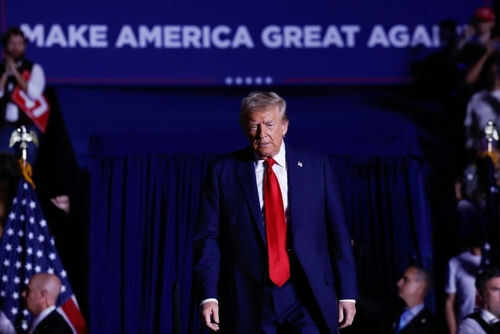
President Trump’s 2026 State of the Union address revealed a troubling shift from optimistic promises to defensive ranting, raising alarm about voter suppression schemes and executive overreach that threaten the constitutional balance of power conservatives hold dear.
Story Snapshot
- Trump delivered his 2026 State of the Union at a political low point, with 40% approval and GOP midterm losses looming
- The speech pushed the SAVE Act under false voter fraud claims while boasting about a slumping economy
- GOP governors privately expressed frustration over tariff and immigration policies hurting their states
- Media critics warned against normalizing lies and threats, noting Trump’s defensive posture signals policy failures
Presidential Address Exposes Deep GOP Divisions
President Trump addressed Congress in late February 2026 on shakier political ground than any previous State of the Union. His approval rating stood at 40%, with Republican pollster Whit Ayres warning that presidents below 50% approval historically lose an average of 32 House seats in midterms. The speech came amid agency shutdowns, tariff backlash affecting farmers and oil producers, and immigration policies GOP governors described as “off the rails.” Rather than unifying the nation, Trump used the platform to taunt political enemies and push controversial legislation based on debunked conspiracy theories about voter fraud.
SAVE Act Push Built on False Election Claims
Trump devoted significant speech time promoting the SAVE Act, requiring proof-of-citizenship documentation for voting. This legislation stems directly from false claims about widespread non-citizen voting in 2020, claims repeatedly debunked by election officials and courts. The requirement would disproportionately disenfranchise minorities and women who lack specific documentation, creating barriers to constitutional voting rights. Republican governors Kelly Armstrong and Kevin Stitt voiced concerns privately about the political costs, with Stitt publicly warning the party is “racing towards a cliff.” Trump’s pollster Tony Fabrizio had briefed aides that voters prioritize economic issues like housing costs and drug prices, not election integrity legislation based on conspiracy theories.
Economic Reality Contradicts Presidential Boasting
Despite Trump’s self-congratulatory economic claims during the speech, data reveals a slumping economy that contradicts his narrative. The administration’s tariff policies have imposed costs on American producers, particularly in agriculture and energy sectors that form the conservative base. Housing affordability and drug costs remain unaddressed while Trump blamed Democrats for “affordability” concerns, ignoring that voters punished both parties in 2025 for rising costs. GOP strategist Kevin Madden emphasized the speech needed to address “affordability reality” ahead of midterms, but Trump chose braggadocio over substantive policy solutions. This disconnect between rhetoric and economic facts frustrated Republican governors seeking electoral survival.
Backdoor Abortion Restrictions Threaten States’ Rights
Beyond the speech’s immediate content, Trump’s administration signals plans to enforce the 1873 Comstock Act as a nationwide abortion ban without Congressional action. Anti-abortion strategist Jonathan Mitchell, architect of Texas’s restrictive SB8 law, advises Trump on using this dormant obscenity statute to restrict abortion access everywhere, bypassing state sovereignty. This executive overreach contradicts conservative principles of limited federal government and states’ rights that followed the Dobbs decision overturning Roe v. Wade. The ACLU warns such enforcement would enable pregnancy monitoring and prosecutions, threatening reproductive freedom nationwide. Trump publicly waffles on abortion policy while his advisors plan decisive backdoor restrictions, undermining the federalist framework conservatives fought to restore through judicial appointments.
Constitutional Balance Under Assault
Media watchdogs urged journalists to stop normalizing Trump’s threats to constitutional governance revealed in the address. Press Watchers documented how Republicans have ceded Congress’s coequal branch authority, enabling what critics describe as “dictator-like powers” despite some Supreme Court tariff rulings limiting executive reach. The speech emphasized division over unity, with Trump signaling expanded executive authority through enforcement of century-old laws never intended for modern application. Democratic strategist Neema Tanden identified tariffs and immigration as signature policy failures, while Democrats gained a five-point advantage on generic congressional ballots. The fundamental question raised extends beyond partisan politics to whether constitutional checks and balances can withstand executive branch overreach when the president’s own party controls Congress but lacks willingness to constrain unconstitutional power grabs.
Sources:
Trump’s State of the Union is the ideal time for journalists to stop the normalizing
A defensive posture: Trump speaks to Congress on shakier ground than last year