

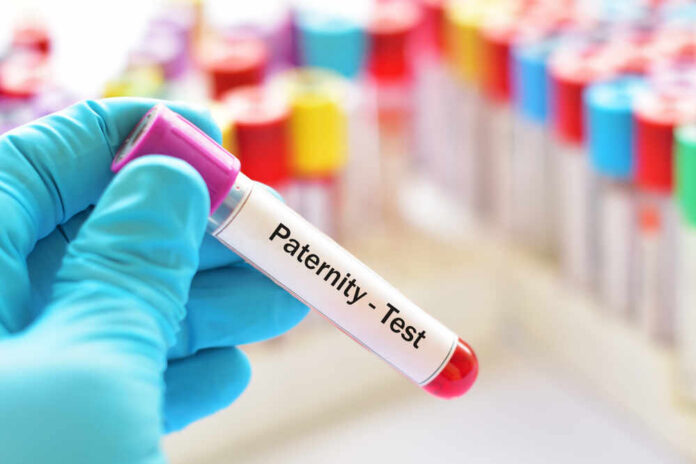
A tabloid-sounding paternity fight in New Jersey exposed a real problem for families and courts: modern DNA can prove “two dads” for twins—but it can’t fix a system that still runs on confusion and cash-first incentives.
Story Snapshot
- A 2013 New Jersey child-support case concluded that twin girls had different biological fathers after DNA testing.
- The phenomenon, called heteropaternal superfecundation, can happen when a woman releases two eggs and has sex with two men within the same fertile window.
- The case involved fraternal twins, not identical twins—identical twins come from one fertilized egg and can’t have two fathers.
- A judge ordered the identified father to pay support for only one child, reflecting the DNA results and the limits of the legal claim.
What the New Jersey DNA Test Actually Proved
Passaic County, New Jersey, became the setting for an unusual but scientifically straightforward ruling in 2013. A mother identified as T.M. sought child support from a man identified as A.S. for twin girls born in January 2013. The Passaic County Board of Social Services ordered DNA testing during the welfare-related support process. The results showed the twins were fraternal and did not share the same father.
Superior Court Judge Sohail Mohammed ultimately ruled that A.S. was responsible for child support for only one of the twins. According to the reporting, T.M. acknowledged having intercourse with A.S. and another man during the same week, and the second man was not identified in the proceeding. The court’s outcome reflects a narrow principle: paternity obligations track biology when the evidence is clear, even when the situation is messy.
The Biology Behind “Twins With Two Fathers”
The science at the center of the case is called heteropaternal superfecundation. It can occur when a woman ovulates more than one egg in a single cycle and sperm from different men, introduced close together in time, fertilize separate eggs. Because sperm can remain viable for several days, sex with different partners within the same fertile window can produce fraternal twins with different fathers. This is impossible with identical twins.
That distinction matters because viral headlines often mash together “identical twins” and “can’t tell who the father is,” even though those are separate issues. If a woman becomes pregnant by one of two identical twin men, the child’s DNA can be extremely difficult to attribute to one brother versus the other using standard methods because the twins share nearly identical genetic profiles. The New Jersey case, however, was not about identical twin fathers; it involved fraternal twins with two different fathers.
How Rare Is It, and Why Courts Still Run Into It
Researchers and experts have offered different ways to describe how uncommon this is, largely because it’s usually discovered only when paternity is disputed and testing is ordered. One estimate cited in coverage is about 1 in 13,000 paternity cases, while other research suggests it appears in a small but meaningful share of twin paternity disputes. Fertility specialists have also said many cases likely go unnoticed unless there is a reason to test.
A later, peer-reviewed case report from Colombia described a similar scenario confirmed with genetic methods, again demonstrating that the phenomenon is real and verifiable when the right evidence is collected. The practical takeaway for American families is not that this is common, but that family law systems increasingly depend on DNA certainty to allocate responsibilities. When testing becomes routine, rare outcomes stop being “urban legends” and start becoming court files.
What This Means for Child Support, Accountability, and Taxpayers
The New Jersey ruling also highlights a hard truth that many working families already understand: the child support system is built to secure payments quickly, especially when welfare dollars are involved, and that creates pressure to name a paying party even before every fact is nailed down. In this case, the county agency ordered testing, and the court followed the evidence. Still, the unidentified biological father was not pursued in the public account.
Conservatives who care about limited government and basic fairness can reasonably ask for two things at once: rock-solid verification before the state attaches legal obligations, and equal effort to identify the actual responsible parent when public benefits are at stake. DNA testing can protect men from being wrongly tagged, protect children from years of uncertainty, and protect taxpayers from picking up the tab when a responsible parent is simply never found.
How Viral “Identical Twin Father” Claims Confuse the Public
Online culture regularly turns paternity into entertainment, but the underlying topics are different: fraternal twins with two fathers is one scenario; a child conceived with one of two identical twin men is another. The first is solved by testing the children and the alleged father(s). The second can be far harder with typical tests because identical twins share nearly the same DNA profile, and the “not possible” claim often stems from that limitation.
The New Jersey case remains a clean example of why precision matters. When the facts show fraternal twinning and two conceptions in the same cycle, the law can separate responsibility. When social media blurs the categories, the public walks away thinking science is “guessing” or that courts are powerless. The record here shows the opposite: DNA clarified the case, and the judge tailored support to the proven paternity.
Sources:
The Science of How Women Can Have Twins With 2 Different Fathers
The strange case of twins with two different fathers
A rare case of heteropaternal superfecundation in dizygotic twins: a case report