
California’s governor is pushing a 100% state tax on payments tied to Trump’s January 6 “anti-weaponization” fund, daring courts to decide whether Sacramento can punish political opponents through the tax code.
Story Snapshot
- Gavin Newsom proposes a 100% California tax on payouts linked to Trump’s Jan. 6 “anti-weaponization” fund, inviting immediate legal challenges [8].
- Newsom has a record of using budget and tax levers to advance political objectives, including large targeted programs and revenue maneuvers [2][12].
- Analysts warn California’s history of targeted or wealth-style taxes raises severe constitutional and administrative risks [11][4].
- Critics call the move political retaliation that weaponizes taxation against a defined group, not a neutral revenue policy [9].
What Newsom Is Proposing And Why It Matters
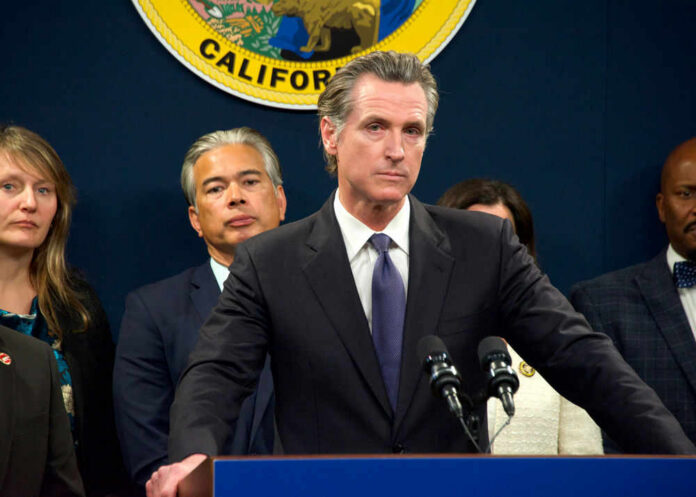
California Governor Gavin Newsom is advocating a 100% state tax on payments connected to former President Donald Trump’s January 6 “anti-weaponization” fund, a pot of money widely discussed as aiding those targeted by prosecutions and investigations tied to January 6 and related controversies [8]. The measure would effectively confiscate such payments from California residents, raising immediate questions about whether a state can single out politically associated transfers for punitive taxation. Statehouse reaction signaled fast-moving legislative exploration and near-certain litigation [8].
The proposal follows a well-established pattern in California politics where revenue tools double as policy weapons. Newsom has repeatedly used fiscal design to send signals and steer outcomes—signing a budget with broad tax refunds and targeted relief, while framing spending and revenue as levers for policy priorities [2]. Budget reporting shows personal income taxes dominate California’s general fund and that governors can shift policy using caps, timing, and carve-outs that move billions at the margins.
Pattern: California Uses Taxes To Advance Battles Beyond Revenue
Budget documents and fiscal analyses show California’s recent plans rely on tax-policy changes to achieve non-revenue goals, including proposals to increase general fund revenues through targeted measures outlined in official summaries [12]. Independent analysts tracking the 2026-27 plans also described lasting caps on certain business tax breaks and other structural maneuvers to shape behavior, not merely raise dollars [10]. This history provides context for a one-hundred-percent tax aimed at deterring flows from a politically charged fund rather than funding basic state services [12].
California’s appetite for narrow, high-profile levies has repeatedly triggered constitutional and administrative warnings. Legal commentators evaluating wealth-tax concepts flagged retroactivity risks, residency tests, and valuation burdens that invite lawsuits and complicate enforcement [11]. Media coverage of a proposed “billionaire tax” underscored how such targeted designs demand extraordinary compliance mechanisms and face steep political headwinds, further previewing the courtroom fate of any policy that resembles a penalty more than a tax [4].
Critics: Punitive Targeting And First Amendment Landmines
Opponents frame the one-hundred-percent tax as political retaliation masquerading as revenue policy. California Senate Republicans previously urged vetoes of measures they characterized as anti-Trump “slush fund” bills, arguing that Sacramento was using lawmaking to punish ideological rivals rather than craft neutral statewide rules [9]. Watchdogs similarly criticized Newsom’s earlier move to bankroll a legal war chest to “Trump-proof” the state, contending the state’s machinery is being conscripted for partisan fights. Those critiques now extend to a confiscatory tax keyed to political association, not income or consumption [9].
JUST IN: Gavin Newsom says California will slap a 100% tax on payments tied to Trump’s Jan. 6 “anti-weaponization” fund.
— Jack (@jackunheard) May 27, 2026
The “anti-weaponization” fund itself gained national attention during federal budget wrangling, with reporting tying its origins to a backlash against federal data leaks and perceived selective prosecutions [8]. That framing fuels dueling narratives: supporters say the fund counters government abuse, while California’s leaders deride it as a conduit for extremism. Either way, a state attempt to seize one-hundred-percent of such payments seems certain to meet First Amendment and due process challenges that question whether the tax code can be used to suppress specific political spending [8].
What To Watch: Courts, Compliance, And Spillover Risks
Legislative drafting details will determine how the tax defines covered payments, who is liable, whether residency or source rules apply, and how the state verifies compliance without invasive data demands that trigger privacy and federal preemption fights [11]. Lawsuits are likely to seek immediate injunctions, citing viewpoint discrimination and excessive-fines concerns. Businesses, donors, and recipients may pause activity, anticipating audits and penalties, mirroring prior California episodes where ambitious tax designs chilled transactions before courts weighed in [11][12].
For conservatives, the stakes center on whether a blue-state government can weaponize taxation to punish ideological adversaries and starve lawful association. The Trump administration in Washington can remind states that constitutional protections for speech, association, and equal treatment do not evaporate at a state line. Californians already burdened by high taxes and regulatory excess may see this as one more warning sign that politics is displacing neutral law. Expect a swift legal response and a nationwide debate over the limits of tax power [12].
Sources:
[2] Web – What’s in Gavin Newsom’s $323 billion California budget plan?
[4] YouTube – Gov. Gavin Newsom unveils California’s revised budget | Full Video
[8] Web – How is Gavin Newsom’s $50M Legal Slush Fund to ‘Trump-Proof …
[9] Web – Disagreements over Trump’s ‘anti-weaponization’ fund delay the ICE …
[10] Web – Senate Republicans urge veto of anti-Trump slush fund bills
[11] Web – First Look: Understanding the Governor’s 2026-27 May Revision
[12] Web – [PDF] California’s New Wealth Tax Proposal: Are They Serious?