
Spain has rushed troops to its tiny African enclave of Ceuta after thousands of migrants from Morocco crashed through border defenses, overwhelming police and leaving at least nine dead.
Story Snapshot
- Spain is deploying military forces to Ceuta after thousands of migrants overwhelmed border police and reception centers.
- Local officials describe “absolute chaos” and asked Madrid to declare a national emergency, which the central government refused.
- The surge echoes earlier European border crises and shows how weak enforcement invites mass illegal crossings and human tragedy.
- European leaders now debate tighter travel rules with Spain, underscoring growing backlash against uncontrolled migration.
Mass Illegal Crossing Overwhelms Ceuta’s Border
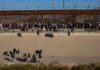
Spanish authorities say thousands of people from Morocco forced their way into Ceuta, a small Spanish territory on the North African coast, in a matter of hours. Many swam around breakwaters or used inflatable devices to reach Tarajal beach, while others rushed or climbed sections of the border fence. Local police and Civil Guard officers quickly became overwhelmed, with one union leader saying the situation at the frontier had “totally collapsed” as crowds poured through. Reception centers were already strained from earlier arrivals, so hundreds of migrants ended up sleeping on streets and open areas, turning a border failure into a wider security and humanitarian crisis.
Officials in Ceuta warned for days that rising numbers were pushing local services past the breaking point. Ceuta’s regional president, Juan Jesús Vivas, declared a “complete humanitarian and social emergency” and stressed that facilities for unaccompanied minors were packed many times beyond normal capacity. After the latest surge, he urged Madrid to declare a national emergency on national security grounds, asking for more police and army units to protect the frontier and restore order. His plea reflects a familiar pattern conservatives know well: local communities sounding the alarm about illegal immigration while central governments are slow to act, bound up in legal and political worries instead of focusing on basic border security.
Spain Deploys Military Forces But Rejects Emergency Status
The government in Madrid announced it would send the Armed Forces to Ceuta to support the Civil Guard and help “maintain security in the city of Ceuta.” Interior Minister Fernando Grande-Marlaska said troops, extra police, a naval ship, divers, and a helicopter would reinforce the enclave’s usual border contingent. Reports describe platoons of soldiers deployed along the beach and near main entry points to back up stretched border officers. At least nine migrants drowned during the crossings, showing how dangerous this kind of mass movement can be when smugglers and activists treat borders as obstacles to be swarmed instead of laws to be respected.
Despite the scale of the crisis, Spain’s Interior Ministry said migration flows do not fit the legal definition needed to declare a national emergency under civil protection rules. That decision kept formal emergency powers off the table, even as thousands entered a territory with only about 80,000 residents and limited capacity to house or process new arrivals. Prime Minister Pedro Sánchez promised an “immediate response” and announced he would travel to Ceuta with the interior minister, signaling political attention but not yet a full reset of Spain’s migration policy. For many conservative observers, this looks like the same pattern Europe has followed for years: rushed security moves when cameras are rolling, but no lasting change to stop the next surge before it starts.
International Fallout and Lessons for Border Security
The Ceuta breach did not only shake Spain; it is now rippling across Europe. Italian officials are reported to be weighing a temporary suspension of the Schengen travel rules with Spain, worried that illegal migrants entering Ceuta could later move deeper into the continent. Spain and Morocco quickly agreed on urgent returns for those who crossed illegally, and they pledged better coordination to speed removals in future cases. This shows that when borders finally fail, governments can move fast to toughen enforcement—but only after local communities have already paid the price in chaos, strain on services, and lives lost at sea.
𝗦𝗣𝗔𝗜𝗡'𝗦 𝗟𝗘𝗚𝗔𝗟 𝗝𝗨𝗦𝗧𝗜𝗙𝗜𝗖𝗔𝗧𝗜𝗢𝗡 𝗙𝗢𝗥 𝗥𝗘𝗙𝗨𝗦𝗜𝗡𝗚 𝗔 𝗖𝗘𝗨𝗧𝗔 𝗘𝗠𝗘𝗥𝗚𝗘𝗡𝗖𝗬 𝗗𝗢𝗘𝗦 𝗡𝗢𝗧 𝗛𝗢𝗟𝗗 𝗨𝗣
31 July 2026
Spain's Interior Ministry estimates roughly 49,000 people crossed from Morocco into Ceuta in a single 24-hour period. Ceuta is… pic.twitter.com/4yyfwjmyJa
— OSINT Intuit™ (@UKikaski) July 31, 2026
The Ceuta episode also echoes a similar mass crossing in 2021, when thousands entered the enclave in a short span and Spain responded with security reinforcements and pushbacks. That history matters for Americans watching today’s crisis at our own southern border. When foreign governments signal weak enforcement or allow large groups to test fences and patrols, word spreads quickly and more people follow. Strong, clear border rules and real consequences are not cruel; they prevent both disorder and deadly journeys. Spain’s decision to send troops shows that, in the end, even governments that talk softly about migration still turn to hard power when unchecked flows threaten security and sovereignty.
Sources:
youtube.com, g1.globo.com, dw.com, moroccoworldnews.com