
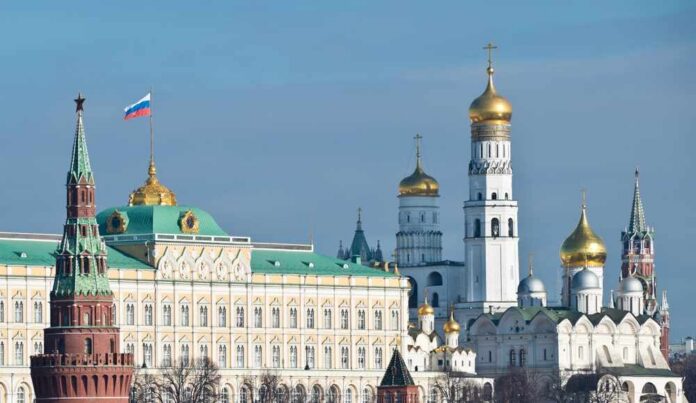
Russia claims it faced one of the largest overnight drone barrages to date, a reminder that modern wars can spill into capitals and disrupt civilians without warning.
Story Snapshot
- Russian officials reported hundreds of incoming drones and widespread interceptions overnight [1][4].
- Moscow’s mayor confirmed drones headed toward the capital and debris response at multiple locations [4].
- Airport operations around Moscow were disrupted before resuming, with reports of suspended flights [1][4].
- Conflicting casualty and damage tallies highlight unsettled early reporting [1][6].
Russian Officials Describe Scale And Intercepts
Russia’s Defense Ministry stated that its forces intercepted at least 427 drones overnight, while other reporting cited a ministry claim that more than 550 Ukrainian drones were shot down across multiple regions [1][4]. The wide range underscores the volume Russia says it confronted and the early uncertainty in counting. Coverage repeatedly framed the event as a major Ukrainian drone attack, reflecting the official Russian position on attribution during the hours after the incident [1][4]. The figures remain unverified by independent technical evidence in the provided materials [1].
Moscow Mayor Sergei Sobyanin publicly acknowledged drones flying toward the capital and said at least 50 were shot down en route, adding that emergency services responded to multiple sites for debris-related incidents [4]. These statements placed city agencies on record and confirmed civil defense activity inside the metropolitan area. The mayor’s account aligned with the Defense Ministry’s framing of a wide-area defense effort. However, neither statement included radar logs, debris inventories, or air-defense telemetry to substantiate specific intercept counts in the sources provided [4].
Disruption To Civil Aviation And City Life
Reporting described suspensions affecting hundreds of flights at Moscow’s airports following the overnight attacks, with operations mostly resuming thereafter [1]. The available excerpts did not include airport operator logs, notices to air missions, or a flight-by-flight audit, leaving the exact duration and scope of shutdowns unclear in the supplied record [1]. Even so, the described pauses fit the known pattern of drone warfare creating outsized disruption to civil aviation and urban routines, where short suspensions can ripple across schedules and affect thousands of travelers [1].
Accounts also cited damage across residential and industrial sites in and around Moscow, with imagery and social media references circulating in parallel coverage [1][3][4]. The reporting referenced drones striking residential buildings and industrial facilities, while a number of residential buildings were said to be damaged [1][3][4]. These claims, as presented, rely on on-the-record officials and secondary reporting rather than independently verified structural assessments. The materials provided do not include engineering surveys, geolocated before-and-after imagery, or municipal damage ledgers [1][3][4].
Casualties, Attribution, And Evidence Gaps
Death and injury figures varied across outlets, with at least three fatalities reported in one account and at least four plus additional injuries in another, reflecting a fluid and unsettled picture typical of early wartime reporting [1][6]. The divergences counsel caution when drawing firm conclusions about the human toll before hospital, emergency services, and civil registry records are reconciled. Absent standardized casualty reporting, initial tallies can shift as authorities identify victims, de-duplicate incidents, and verify locations [1][6].
Market News: Drone Attack on Moscow Hits Refinery, Oil Supply at Risk
Record drone strike on Moscow targets oil refinery, disrupting airport operations.
– Moscow's oil refinery was directly hit in the attack.
Watch crude oil prices for spike on supply disruption fears.— snipy.in (@snipy_in) May 17, 2026
Attribution throughout the coverage points to Ukrainian drones, echoing Russian official statements and broadcaster narration; however, the excerpts do not present chain-of-custody debris analysis, launch-site evidence, radio-frequency telemetry, or serial-number tracing that would independently confirm origin [1][2][3][4][6]. For readers who value clear accountability and truth in warfare, independent verification matters. Reliable attribution helps policymakers calibrate responses, deters propaganda, and reduces the risk of escalation driven by misinterpretation rather than proven facts [1][2][3][4][6].
Sources:
[1] YouTube – Ukraine targets Moscow in ‘one of largest ever’ drone attacks, killing …
[2] YouTube – Ukraine pounds Moscow in blistering drone attack in huge blow for …
[3] YouTube – Ukraine launches one of its biggest-ever drone strikes on Russia
[4] Web – Dozens of Ukrainian drones target Moscow, mayor says, amid …
[6] YouTube – Ukraine launches over 500 drones at Russia, killing at least four