
A new Homeland Security proposal could choke off international flights into sanctuary cities, forcing blue-state politicians to finally confront the real costs of ignoring federal immigration law.
Story Snapshot
- DHS Secretary Markwayne Mullin is weighing cutting or halting customs processing at major sanctuary-city airports, which would effectively stop most international flights.[1][2][3]
- The plan is designed to use federal control over border processing as leverage on cities that refuse to cooperate with immigration enforcement.[1][2][3]
- Travel and airline industry leaders are sounding alarms about “enormous” disruption and “devastating” economic fallout.[2][4]
- No final decision has been made, but DHS has told industry leaders it is serious about moving forward on at least a limited basis.[1][2]
DHS Floats Using Airports As Leverage On Sanctuary Cities
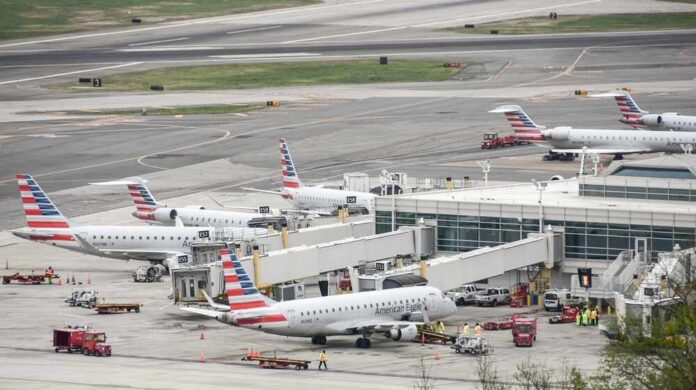
Homeland Security Secretary Markwayne Mullin has publicly raised the possibility of scaling back or even halting federal customs processing at airports located in sanctuary jurisdictions, a step that would cripple international arrivals at some of the nation’s largest hubs.[1][2][3] Because only federal officers can clear foreign arrivals, pulling that staffing would mean international flights could no longer be processed in those cities, functionally shutting down that traffic.[1][2] Airports mentioned include major facilities in New York, Los Angeles, Chicago, San Francisco, and Portland.[1][2]
In a recent interview, Mullin framed the issue in blunt terms: if a jurisdiction chooses sanctuary policies and refuses to help enforce immigration law once people leave the airport, the federal government must “have a hard look” at whether it should keep funneling international arrivals through that city.[2][3] He asked directly whether a sanctuary city should “really be processing customs into their city,” tying access to global air travel to cooperation with federal immigration authorities.[2][3] The remarks made clear the proposal is intended as a pressure tool, not simply an operational tweak.[1][2][3]
How The Plan Would Work — And Why It Matters To Ordinary Travelers
Under the concept described by Mullin and summarized by legal analysts, the Department of Homeland Security would direct Customs and Border Protection to reduce or stop processing international travelers at airports in sanctuary jurisdictions, while maintaining or increasing resources at airports in cooperative areas.[1][3] Because every arriving international passenger must clear federal customs, even partial staffing cuts at targeted airports could trigger long delays, diversions, or outright suspension of certain routes.[1][2] That reality gives the department a powerful lever over local governments that depend on global connectivity.[1][2][3]
Critics of sanctuary policies have long argued that cities cannot demand the benefits of federal infrastructure while openly undermining federal law, and Mullin’s idea embodies that argument.[1][3] However, travelers and even residents of non-sanctuary areas could be caught in the middle, because many international passengers merely connect through cities like New York or Chicago on their way elsewhere.[2] An analyst noted that a business traveler headed to a conference in Ohio may transit a sanctuary-city airport even though the economic benefit of that trip goes somewhere else, complicating who ultimately gets punished.[2]
Industry Backlash And Legal Questions Around Federal Authority
Airline and travel executives who met with Mullin were reportedly warned that the economic consequences of such a move would be “enormous,” with chaos at targeted airports and ripple effects across the broader system.[2] A leading airline trade group told Travel Weekly that reducing customs staffing at major international airports “would have a devastating effect on the airline and tourism industries,” underscoring how dependent global commerce is on predictable border processing.[4] These warnings came even as DHS signaled it was “really serious” about testing the idea, potentially on a limited basis after a major international sports event.[2]
Attorneys observing the situation emphasize that the plan is still only under consideration and that no formal directive, legal memo, or implementation order has been released to the public.[1] The Department of Homeland Security clearly controls federal customs officers at ports of entry, but the precise statutory basis for using staffing levels as a coercive tool against particular jurisdictions has not been fully laid out in available documents.[1] Sanctuary-city officials and opponents argue that the measure would exceed federal authority by punishing local policies through travel disruption, but they have not yet produced a court ruling or detailed legal analysis squarely rejecting DHS’s claimed power over customs staffing.[1][3][4]
What Is Known, What Is Not, And How Sanctuary Cities Are Responding
Public reporting so far rests on Mullin’s televised statements and on summaries by news outlets and legal commentators rather than on leaked orders or internal memos.[1][2][3] Jeelani Law, which reviewed the issue, notes that Homeland Security has acknowledged the idea as a “potential measure” but stresses that “DHS has not made any final decision” and that international travel continues as normal for now.[1] That gap between rhetoric and signed policy leaves room for both genuine enforcement experimentation and political signaling aimed at pushing cities back to the negotiating table.[1][2]
Holy smokes, this is a boss move. 🤯
The leverage Trump is about to assert over sanctuary cities via his DHS is truly next-level catastrophic for them.
The sanctuary city airports that would lose International Flights are:
✈️ Los Angeles (LAX)
✈️ Chicago (O’Hare, Midway)
✈️… https://t.co/Ma04xG8s6F— AwakenedOutlaw⚒️ (@AwakenedOutlaw) May 27, 2026
Sanctuary-city leaders and their allies highlight the risk of broad collateral damage, arguing that ordinary travelers and local economies would bear the brunt of a federal–local standoff over immigration.[2][4] They emphasize that international passengers who never set foot outside the airport, or who are simply changing planes en route to non-sanctuary states, would be swept into the disruption if customs staffing were slashed.[2] At the same time, the controversy underscores the central constitutional clash: whether jurisdictions that refuse to cooperate with immigration enforcement should keep enjoying frictionless access to the full benefits of a federally controlled border system.[1][3]
Sources:
[1] Web – DHS floats plan to block international flights into sanctuary cities
[2] Web – Could International Travel Be Halted in Sanctuary Cities?
[3] YouTube – DHS secretary threatens to pull customs officials from ‘sanctuary city …
[4] Web – DHS Chief Floats Idea of Closing Air ‘Ports of Entry’ in Sanctuaries