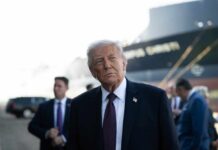

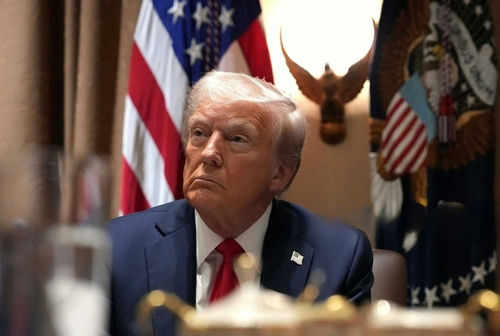
Donald Trump wants to swap America’s 250th birthday concert for a giant Make America Great Again rally—and he says the country will thank him for it.
Story Snapshot
- Trump proposed canceling pricey concerts for a massive Make America Great Again rally, citing cost and lack of interest [1].
- Multiple artists had already withdrawn, weakening the original concert plan and creating an opening for a rebrand [2].
- Trump pitched an “America is Back” theme with a major speech to rally the country forward [1][2].
- This fight mirrors a recurring tug-of-war over whether national ceremonies should be civic-neutral or political-mobilizing [5].
Trump’s Proposal Reframes a Stalled Celebration
Donald Trump publicly urged organizers to cancel musical performances for the United States’ 250th anniversary and replace them with a Make America Great Again rally, criticizing the artists as “overpriced” and unwanted. He added that he would headline with a major speech championing an “America is Back” message. Reports documented his comments after multiple musicians pulled out, compounding doubts about the initial concept and providing political room for a hard pivot to a rally format [1][2].
The timing matters. Artists’ withdrawals created a visible vacuum that any skilled political marketer would rush to fill, and Trump understands venue politics. A large rally needs less curation than a star-studded concert, carries lower reputational risk if more talent bails, and guarantees a core audience. Trump’s calculation suggests the commemoration could shift from a taste-policed entertainment product to a mobilization event with a clear protagonist and a singular visual narrative centered on him [2][3].
The Cost-And-Audience Argument Plays To Populist Instincts
Trump’s jab that the performers were “overpriced” and unwanted targeted a soft underbelly of big-ticket public spectacles: budgets, taste, and who decides “worthy” culture. Organizers did not present a point-by-point accounting to rebut that claim in the cited coverage, leaving cost optics to fester. For many taxpayers, “pay less, hear a leader” sounds more practical than “pay more, please the critics.” That frame aligns with conservative skepticism toward elite gatekeepers and subsidized pageantry [1][3].
Critics argue that a partisan rally hijacks a unifying national milestone and risks souring a once-in-a-quarter-millennium moment. That concern holds emotional weight but runs into the reality that several acts had already exited. Without a credible replacement lineup and budget transparency, defenders of the concert posture struggle to prove the original vision still works at scale. A commemoration cannot inspire if it cannot fill the stage or persuade people to show up [2][3].
America 250 As A Battle Over Meaning, Not Just Music
This clash fits a long-running pattern: high-visibility civic ceremonies are magnets for political redefinition. The faction with the loudest draw often captures the venue and sets the frame—neutral celebration versus mission-driven rally. Political scientists label this “venue capture,” and it predictably appears around national holidays and milestone anniversaries because they concentrate attention and symbolism. Trump’s proposal follows that script by transforming a wobbly entertainment schedule into a powerfully branded movement moment [3][5].
Trump is calling to replace the musical performances with a MAGA rally. McBride was right all along. It’s wild that you think it’s ok for the Govt to fund a 250th celebration in a partisan manner.
— Pawlie Pockets (@PaulDon09592081) June 1, 2026
Common sense suggests two viable outcomes. If the goal is a guaranteed crowd, a Make America Great Again rally will likely deliver, because it taps an activated base with proven turnout. If the goal is a broad, unifying spectacle, organizers must publish a sustainable plan—lineup, costs, logistics—that reassures skeptics and neutralizes the “overpriced and unwanted” critique. Absent that, the path of least resistance is the option that prints bodies on the Mall and gives cameras a coherent story [1][2][3].
What A Conservative-Led Commemoration Could Look Like
A conservative approach does not require a monoculture rally or a fragile celebrity pageant. It can stage a patriotic program anchored by veterans, Gold Star families, small-town marching bands, faith leaders, historical reenactors, and Medal of Honor recipients, with the president delivering a policy-tinged but unifying address about national renewal. That kind of event lowers costs, widens participation, and honors the country without outsourcing meaning to fickle performers. Trump’s team gestured at this by promising a major speech; execution will determine credibility [1][2].
The decisive test is not ideology, but stewardship. Can leaders translate a milestone into shared pride while spending responsibly and avoiding cultural hostage-taking? If Trump’s rally emphasizes service, sacrifice, economic revival, secure borders, and constitutional fidelity, it will resonate with millions who want seriousness over spectacle. If opponents prefer concerts, they need to produce receipts, talent that shows up, and a story big enough to compete. Anniversaries reward clarity; ambiguity gets booed off the stage [1][2][5].
Sources:
[1] Web – MAGA RALLY TO TAKE OVER AMERICA’S 250TH BIRTHDAY
[2] Web – Trump suggests canceling all musical performances at the Great …
[3] Web – Trump floats MAGA rally instead of concert after musicians drop out …
[5] YouTube – Trump Considers Replacing ‘Great American State Fair’ With Rally …