

A new Iran deal that Trump says will stop Tehran’s nukes and reopen vital oil lanes is now at the center of a high‑stakes G7 showdown in France.
Story Snapshot
- Trump and Macron hail a U.S.–Iran agreement they say will block an Iranian nuclear weapon and reopen the Strait of Hormuz.
- The deal promises toll‑free shipping lanes and a 60‑day window for deeper nuclear talks and sanctions decisions.[2][3]
- Critics compare the still‑secret text to the old Obama nuclear deal, which had detailed, published inspection rules.
- Key details and enforcement terms will not be public until after the strait is fully reopened later this week.[7]
Trump, Macron Tout Iran Deal as Nuclear and Energy Breakthrough
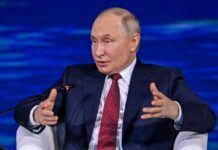
Standing beside French President Emmanuel Macron at the G7 summit in France, President Donald Trump described a freshly inked agreement with Iran as a “very important” peace deal that will ensure Iran “will not have a nuclear weapon” and reopen the Strait of Hormuz to global shipping.[6] Macron echoed that the accord “will fix the nuclear issue” and called it a crucial step for world peace and the global economy, signaling rare alignment between Washington and Paris on Iran.[6]
Trump told reporters the deal is “all signed” and said ships are already moving through the strait as mines are cleared, with full reopening expected by Friday.[6] He stressed that Iran has “fully agreed” not to pursue a nuclear weapon and claimed the agreement includes “strong policing powers” to enforce that pledge, although he did not spell out inspection schedules or legal triggers during the on‑camera remarks.[6] For many conservatives, the key point is simple: no nukes for Iran and cheaper, steady energy supplies at home.
What Is Actually in the New Agreement?
Reporting on the negotiations describes the accord as a memorandum of understanding that reopens the Strait of Hormuz without tolls, restores pre‑war shipping levels within about 30 days, and pairs that with staged sanctions relief if Iran follows through.[2] A television segment on Trump’s trip notes that the deal was more than 100 days in the making and is tied to extending a cease‑fire and demining the waterway so commercial traffic and energy flows can resume safely.[6] In exchange, Iran reportedly reaffirms it will not produce nuclear weapons and accepts a 60‑day window for deeper talks.[3]
Iranian state media, as summarized in U.S. coverage, describes a 14‑point framework that includes the strait’s reopening, the U.S. ending its blockade, limited sanctions exemptions for oil sales, and the unfreezing of some Iranian funds once initial steps are verified.[3] A diplomat who saw the draft told one outlet that both sides agreed on the text but that Iran’s supreme leadership still needed final sign‑off at the time, underlining how fragile any understanding with Tehran can be.[2] That uncertainty is exactly why many on the right insist that any relief must remain strictly conditional and quickly reversible if Iran cheats.
How This Differs from Obama’s Iran Nuclear Deal
Conservatives remember the 2015 Iran nuclear deal under Barack Obama as a one‑sided bargain that gave Tehran sanctions relief while letting it keep enrichment and sunset clauses. That Joint Comprehensive Plan of Action required Iran to cap enrichment at 3.67 percent and limit its uranium stockpile for a period, and it set up broad inspection rights for the United Nations atomic watchdog in exchange for billions of dollars in relief. Trump withdrew the United States from that deal in 2018 after blasting it as weak on missiles, regional terror, and long‑term nuclear restrictions.[4]
The new agreement is not yet public, so outside experts cannot compare line‑by‑line limits on enrichment, stockpile size, or snapback sanctions to the old framework. Trump insists this text is a “very powerful document” and “not like the Obama document,” but says it will only be released sometime after the Strait of Hormuz is fully reopened and mines are cleared later this week.[7] That delay feeds media complaints about transparency, yet it also reflects the administration’s focus on first securing real‑world leverage: open sea lanes, lower energy prices, and a weaker Iranian economy before any long‑term concessions are locked in.
Unanswered Questions and What Conservatives Should Watch
At the G7, Trump said enforcement would be “really a behavioral thing,” where benefits for Iran only start “if they do what they’re supposed to do,” and he stressed the strait would be “toll free” to keep shipping costs and energy prices down.[7] European leaders have already welcomed the chance to stabilize oil flows and avoid a broader Middle East war, and coverage of the summit suggests the United States, Europe, and partners will play an “active role” in shaping and enforcing the deal’s architecture going forward.[4] For American families still squeezed by years of inflation and high fuel costs, a secure, toll‑free Hormuz matters as much as any speech in Geneva.
US President Donald Trump has said the agreement with Iran is 'all signed', adding that the Strait of Hormuz will be ‘completely open’ by Friday.
Trump was speaking alongside French President Emmanuel Macron ahead of the G7 meeting in France.
— CHA$ER (@CHASER712002) June 15, 2026
Yet serious gaps remain in the public record. Critics note that, unlike the Obama‑era accord, there is still no published verification protocol, no clear challenge‑inspection process, and no visible snapback mechanism if Iran violates the terms. Other analysts warn that both Washington and Tehran have a long history of hyping “breakthrough” moments before the ink is dry, and that Iran’s regime has often used talks to buy time for its nuclear and regional ambitions. For conservatives, the test is straightforward: does this deal make America safer, protect our troops and allies, lower energy prices, and avoid another blank‑check giveaway to a terror‑sponsoring regime that hates our values and our freedoms.
Sources:
[2] Web – Macron sees Trump dropping Iran nuclear deal – BBC
[3] Web – What’s in the Iran deal Trump says he’s ready to sign – Axios
[4] YouTube – President Trump turns 80, closes deal with Iran before G-7 Summit
[6] YouTube – WATCH: President Trump and Macron Speak on Recent Iran Deal …
[7] YouTube – Trump lands in Switzerland for G7 Summit as world awaits details on …