
As tens of thousands of migrants stormed Spain’s Ceuta enclave, Spain’s left‑wing prime minister raged at European leaders who dared tighten their own borders in response.
Story Snapshot
- About 60,000 migrants crossed from Morocco into Spain’s tiny Ceuta territory in barely 24 hours, triggering both a security and humanitarian crisis.
- Spanish Prime Minister Pedro Sánchez branded the surge “an attack” and “a violation of Spain’s territorial integrity,” then demanded solidarity from the European Union.
- When some European Union states restored border checks and even floated suspending Spain from Schengen, Sánchez blasted them as “selfish, polarising and unlawful.”
- The clash exposes a deep split inside Europe over mass migration, national sovereignty, and how far nations can go to defend their borders.
Ceuta Flooded As Spain Calls It An “Attack” On Its Territory
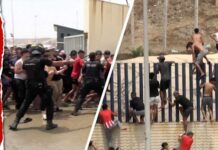
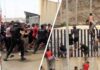
Spanish officials say roughly 60,000 migrants crossed from Morocco into the North African enclave of Ceuta within about 24 hours, equal to around 70% of the city’s normal population. Most arrivals were young men who either swam around a small sea barrier or went over and around border fences, overwhelming local police and reception centers. Spain deployed military troops and extra national police to back up the civil guard and regain control of the border, treating the incident as a major security emergency.
Ceuta’s local president described the situation as a “total humanitarian and social emergency,” noting that dozens of people died trying to make the crossing. Spanish media and international outlets reported at least several dozen deaths in the water and along the shore, as migrants attempted the dangerous swim in large groups at night. Rescue teams, soldiers, and border guards worked side by side to pull people from the sea, manage overcrowded facilities, and stop further mass crossings as chaos unfolded around the tiny territory.
Sánchez Demands EU “Solidarity” While Slamming Border Clampdowns
From Ceuta, Prime Minister Pedro Sánchez told residents “the whole of Spain stands with them” and insisted the surge was “an attack, a violation of Spain’s territorial integrity” that deserved the strongest condemnation. He blamed what he called trafficking “mafia” for misleading migrants about Spain’s rules after a court ruling limited fast returns for sea arrivals, saying criminal networks triggered the border run for profit. That framing allowed his government to present the crisis as both a security assault on Spanish soil and a humanitarian tragedy needing European help.
At the same time, Sánchez fired off a sharply worded letter to top European Union leaders attacking other governments’ reactions. He complained that, while many countries offered support, others “chose to attack Spain” and even called for its temporary exclusion from the Schengen free‑movement zone over fears of spillover into continental Europe. He branded those responses “selfish, polarising and unlawful,” claiming they were driven by “prejudice, fake news, ignorance, or political interest” instead of European law and solidarity.
EU Leaders Move To Protect Their Borders And Push Back On Spain
Italy reacted quickly by temporarily restoring border controls with Spain, suspending normal Schengen travel and citing the breakdown of border security at Ceuta as a direct risk to the rest of Europe. Some Italian leaders went further and called for Spain’s suspension from the Schengen area until it could guarantee control of its external frontier, a step that deeply angered Madrid. Spain’s foreign minister condemned those comments as partisan demagoguery and said he would summon the Italian ambassador, accusing Rome of exploiting the crisis for politics.
European Commission President Ursula von der Leyen stressed that no irregular migrants had reached mainland Spain or other European Union states, praising fast Spanish actions while also backing strong external border protection. She called the scenes in Ceuta “unacceptable” and said Europe cannot allow people to enter the union without following the rules. Other European Union leaders echoed concerns about migration and security, as interior ministers prepared an emergency meeting at Spain’s request to argue over Schengen, solidarity, and who should bear the costs and risks of sudden mass crossings.
Security Crisis Or Humanitarian Emergency? Europe’s Deeper Divide
The Ceuta surge fits a wider pattern where migration shocks at frontier territories, islands, or enclaves are seen at the same time as sovereignty threats and as humanitarian disasters. For Spain, describing the event as a violation of territorial integrity reflects how dramatic it looked: tens of thousands of people rushing a small border zone in just hours, forcing the state to send soldiers and emergency teams. Yet operationally, Spain handled it as a border‑control and rescue mission, not as an armed attack or formal act of war, even while using war‑like language.
#NOW
Hundreds of residents in #Spain 's North #African enclave of #Ceuta gathered to OPPOSE a planned #FarRight anti-migrant rally, forcing organisers to CANCEL the event amid heightened tensions following a temporary influx of #migrants crossing from #MoroccoAlJazeera
— Maqsood Asi (@MaqsoodAsi) August 2, 2026
The clash over Ceuta exposes a fault line that American readers will recognize from the U.S. southern border debates. Some leaders demand firm border walls, clear rules, and real enforcement, arguing that without them, mass crossings become tools to pressure or punish nations. Others focus mostly on humanitarian language and accuse any tough response of selfishness or fear‑mongering. In Europe, this divide now runs not just between left and right, but between countries that feel directly exposed and those who lecture from a distance.
Sources:
redstate.com, reuters.com, lemonde.fr, bbc.com, time.com, nytimes.com, france24.com, theguardian.com, pbs.org, facebook.com, yahoo.com, washingtonpost.com, dw.com