

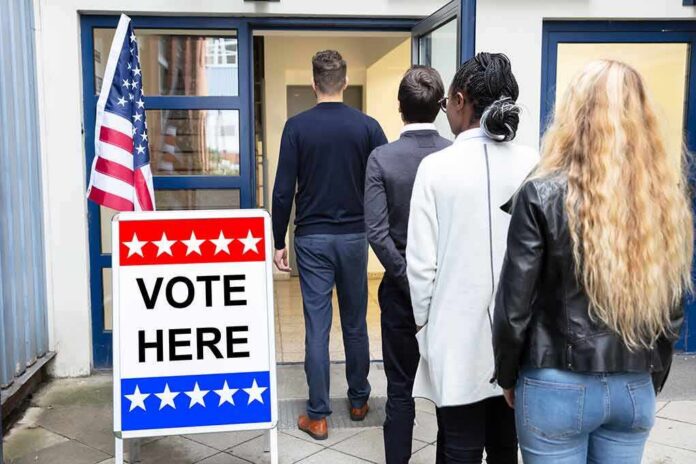
Federal prosecutors say a man used Massachusetts’ online portal to impersonate a noncitizen and cast an early ballot in 2024, exposing a real gap in the system’s citizenship check.
Story Highlights
- Prosecutors allege an October 2024 online registration used a stolen identity to trigger a ballot.
- The ballot was allegedly cast in person at Malden City Hall weeks later.
- Massachusetts says its online system blocks noncitizens without verified records.
- The case tests whether identity theft can bypass the state’s citizenship gate.
Federal Case Alleges Online Impersonation Led to a Counted Ballot
Federal prosecutors charged Yupeng Sun with voter fraud tied to Massachusetts’ online registration system. The complaint says Sun used another Chinese national’s identity on October 10, 2024, to register through the Secretary of the Commonwealth’s website. Investigators say the same identity was then used to submit an early ballot at Malden City Hall on October 31, 2024. The government describes the victim as a lawful permanent resident, not a United States citizen, and therefore not eligible to vote.
The charging documents detail the identifiers allegedly used: the victim’s name, date of birth, former address, and driver’s license number. Prosecutors also allege Sun later filed anonymous tips to immigration authorities claiming the victim had voted despite being a noncitizen. Investigators say those tips came in April and May 2026, months after the 2024 ballot was submitted, and frame them as part of the alleged scheme’s cover story.
State Rules Promise a Citizenship Gate in the Online Portal
Massachusetts election guidance says noncitizens cannot register to vote. The state’s online portal ties eligibility to records held by the Registry of Motor Vehicles. The guidance says the Registry of Motor Vehicles cannot verify a user for online voter registration until it has proof of citizenship. The state’s eligibility pages also state that if you are not a United States citizen, you cannot register or pre-register through the online system.
Reporting on state regulations in effect since June 2023 says the online workflow relies on reliable citizenship information in Registry of Motor Vehicles files. If that information is missing, the applicant cannot submit an online application. Those details matter because the federal complaint alleges a registration and ballot happened using a noncitizen’s identity. That makes this case a direct test of whether identity theft can slip past that gate.
What the Allegations Show—and What They Do Not
The case, if proven, shows one path: steal a real person’s data and impersonate them to register and vote. The complaint does not explain how the identity data was obtained or which specific step failed. The public record does not include the portal’s transaction logs or the Registry of Motor Vehicles’ underlying citizenship file for the identity used. Without those records, the public cannot see which control broke in this alleged incident.
This remains a single criminal case. It does not measure how often the online system stops or misses fraud. Massachusetts officials have long said voter fraud is rare, and academic reviews have found voter impersonation rates to be extremely low across elections. Those findings do not excuse any breach, but they set scale: even rare fraud matters when it exploits a core safeguard like citizenship verification.
Why It Matters for 2026 and Beyond
Every illegal ballot cancels a legal one. Conservatives care because citizenship is the bright line that protects our voice. This case targets the online front door for voter rolls, where fast service must still mean strong checks. A secure system should catch stolen identities, flag bad data, and stop ballots from being issued. When an alleged impersonation gets through, leaders should demand full logs, audits, and fixes that restore trust.
Massachusetts Citizenship Rule At Center Of Alleged Voter-Impersonation Case https://t.co/5yi90U4lLe #Money #Finance #Economics #Market
— Alen Karabegovic (@AlenKarabegovic) August 25, 2026
Practical steps are clear. First, publish the portal’s full transaction record for the October 10, 2024 submission, including match results and flags. Second, review the Registry of Motor Vehicles citizenship source documents for the identity used. Third, trace how the Malden ballot was issued and verified, from poll-book entry to signature review. These steps respect lawful voters, protect noncitizens from identity abuse, and strengthen guardrails before the next election.
Sources:
zerohedge.com, justice.gov, foxnews.com, lwvma.org, sec.state.ma.us, theepochtimes.com, mass.gov, wgbh.org