
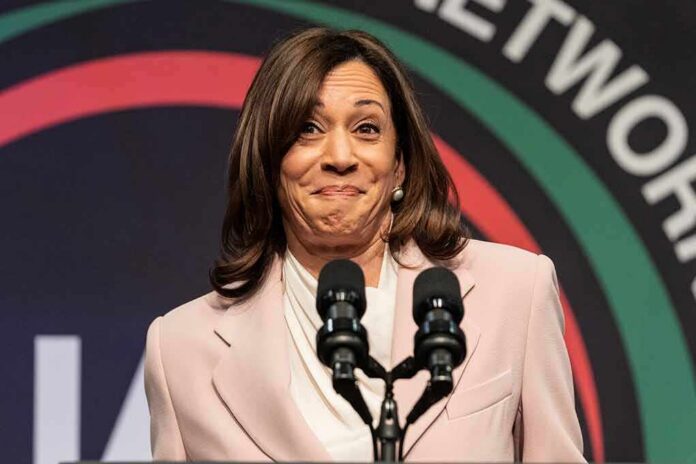
Kamala Harris and Gavin Newsom shared a Los Angeles stage to boost Xavier Becerra, signaling a united Democratic machine heading into California’s election.
Story Snapshot
- Harris and Newsom campaigned together in Los Angeles to back Xavier Becerra.
- Several hundred supporters gathered as top Democrats rallied in unity.
- National coverage highlighted 2028 speculation but showed no clear signals.
- Press access questions from a separate Sacramento stop linger over Harris events.
High-Profile Democratic Unity Behind Xavier Becerra
The Washington Post and The New York Times reported that former Vice President Kamala Harris and California Governor Gavin Newsom appeared together at a Los Angeles rally to support Xavier Becerra’s bid for governor. Reporters described a full show of party strength. Harris and Newsom addressed the crowd, stood with Becerra, and raised hands in celebration. The event’s purpose was clear: lift Becerra in the final stretch by putting the state’s most famous Democrats on the same stage.
CNN framed the gathering as a unity push by top California Democrats, with several hundred attendees at the Hollywood Palladium. Coverage also identified senior figures like United States Senators Adam Schiff and Alex Padilla among participants, underscoring coordinated party support for Becerra. The visual was unmistakable: California’s Democratic leadership wanted voters to see a tight team behind their candidate as the election neared, a classic display of establishment muscle in a safe blue stronghold.
Speculation About 2028, Without New Signals
The New York Times noted that Harris and Newsom are often mentioned as possible 2028 presidential contenders, which made their joint appearance newsworthy beyond California. The report, however, said their onstage actions gave little hint about long-term plans. They avoided anything that looked like a coordinated national message. The focus stayed on Becerra and the immediate election. That balance suggests the rally served its stated goal while leaving future ambitions offstage for now.
That split meaning—clear support today, possible implications tomorrow—tracks with how modern campaigns stage events. Research on “pseudo-events” shows political teams often craft set pieces that drive positive coverage without changing policy or plans that day. These events can shape headlines and images, even for polarizing figures, by controlling the setting and message discipline. The Harris–Newsom turn for Becerra fit that playbook: strong pictures, simple message, few loose ends.
Press Access Questions From a Separate Sacramento Event
While the Los Angeles rally drew broad coverage, a separate Harris appearance in Sacramento with Richard Pan raised access issues. KCRA reported that its journalists and The New York Times were not approved to cover that stop, and that credentialing was directed by Harris’s office. That was a different event from the Becerra rally, but it matters for media transparency. Limited access can shrink independent questioning and leave gaps in the public record.
For readers, the picture is twofold. In Los Angeles, Democrats showed unity and organizational strength behind Becerra with Harris and Newsom front and center. In Sacramento, selective access highlighted how campaigns can gatekeep coverage. Both threads point to a careful media strategy: drive the images they want and narrow the moments they do not. For conservatives, that is a reminder that message control—not open debate—often guides how the left presents power.
Why This Matters Under President Trump’s Second Term
Democrats are working to project stability in California while President Trump leads nationally. Harris and Newsom used the rally to energize their base and reinforce a policy brand that brought high living costs, heavy regulation, and soft-on-crime politics to California. Republican leaders will counter with a record focused on border security, cheaper energy, and lower inflation. Voters should expect more set-piece events like this as Democrats try to defend a model many families believe failed them.
Sources:
washingtonpost.com, nytimes.com, us.cnn.com, lamag.com, kcra.com, journals.shareok.org