

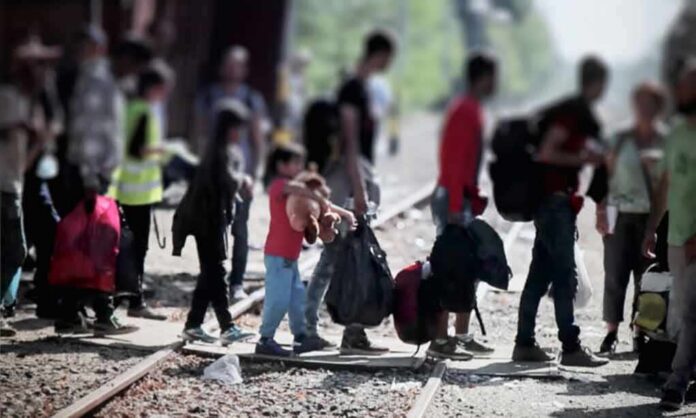
Federal watchdogs say the government lost track of many released migrant children and failed key safety checks, reviving urgent questions about who is protecting these kids and who is accountable.
Story Highlights
- Health and Human Services auditors found missing sponsor safety checks and weak follow-up for released children.
- Homeland Security inspectors reported that Immigration and Customs Enforcement cannot always monitor children after release.
- Senate oversight cited claims that the Office of Refugee Resettlement resisted trafficking probes by withholding key data.
- Evidence of risk inside the system does not prove that return to home countries is generally safer.
Federal Audits Flag Missing Safety Checks and Gaps
Health and Human Services inspectors reviewed case files and found real gaps in the sponsor vetting process. Sixteen percent of reviewed cases lacked one or more required sponsor safety checks. Nineteen percent of children released while Federal Bureau of Investigation checks or state abuse registry checks were still pending had no later update showing the results. Those missing records raise obvious safety concerns for children placed with adults who were not fully cleared.
Auditors also urged stronger post-release contact. They recommended a mechanism to track children who did not receive timely follow-up calls or whose files lacked results from pending checks. That step aims to close the loop so a child does not fall off the grid due to paperwork gaps. The findings show process failures, not proof of abuse in every case. But the lapses do create risk and make it harder to tell which children need help fast.
Homeland Security Says Monitoring Falls Short After Release
The Department of Homeland Security’s inspector general reported that Immigration and Customs Enforcement cannot always monitor the location and status of unaccompanied children once they leave federal custody. The report pointed to system limits that make it hard to keep current contact details and to confirm wellbeing. That gap leaves children outside the government’s view, which weakens both child safety checks and immigration court compliance efforts.
Without reliable address data and timely updates, agencies cannot run basic welfare checks. Missed mail, outdated phone numbers, and unclear transfer records all add friction. When that happens at scale, predators and exploiters can take advantage. Conservatives have warned for years that a fast-release model without tight verification invites harm. The inspector general findings give those warnings a factual backbone and a roadmap for fixes.
Congressional Pressure Highlights Cooperation Conflicts
Senate oversight amplified concerns about agency cooperation in trafficking probes. A September 2024 statement said the Department of Homeland Security told Senator Chuck Grassley’s office that the Office of Refugee Resettlement failed to comply with about two of every three subpoenas and information requests tied to suspected trafficking rings. The statement said investigators did not receive last-known addresses or names of other adults in sponsor homes, hampering efforts to find at-risk children.
Those claims describe process breakdowns that matter. Investigators need addresses and household rosters to run door knocks, verify safety, and build cases. If records sit in silos, children pay the price. The government must share data quickly, while guarding privacy by law. Congress can press for clean, auditable handoffs between Health and Human Services, the Department of Homeland Security, and local law enforcement so predators do not slip through procedural cracks.
What The Evidence Shows—and What It Does Not
The watchdog reports prove missing safety checks, weak follow-up, and poor monitoring. Those are fixable failures with clear steps: complete every check before release, log the results, confirm contacts after placement, and keep addresses current. However, the record does not prove that every missing child was trafficked, or that sending children back to home countries is generally safer than U.S. placement. The audits do not compare risks across destinations or outcomes.
Policy Path Forward That Puts Children First
Agencies should finish all sponsor checks before release and record outcomes in one shared system. Field teams should complete rapid post-release calls and in-person visits for red-flag cases. The Department of Homeland Security and Health and Human Services should create a joint dashboard for addresses, court dates, and welfare checks. Congress should require time-bound responses to law enforcement subpoenas in trafficking cases, with penalties for noncompliance and privacy-safe data sharing.
Why This Matters for Border Security and Rule of Law
Every missing record weakens trust, fuels illegal immigration chaos, and endangers children. Tight screening, fast verification, and real monitoring support both child safety and immigration enforcement. This is common sense: verify first, then release. When government agencies coordinate, predators have fewer openings. When they delay or withhold, children carry the risk. President Trump’s team has the mandate to close these gaps and prove that compassion and control can work together.
Sources:
npr.org, oig.hhs.gov, congress.gov