

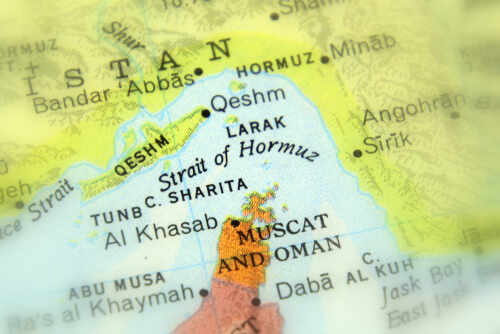
Iran tested U.S. resolve in the Strait of Hormuz—and the Trump administration answered by knocking fast-attack boats out of the fight while pushing commercial shipping through a global energy choke point.
Quick Take
- President Trump said U.S. forces destroyed seven Iranian “fast boats” after Iran fired missiles and drones at ships transiting the Strait of Hormuz.
- The strikes occurred during “Project Freedom,” a U.S. effort to guide merchant vessels through the strait after months of disruptions and stranded ships.
- U.S. officials reported successful defense of two U.S.-flagged commercial transits; Iran denied losses and disputed that transits happened.
- Reports differ slightly on the number of boats destroyed (Trump said seven; CENTCOM’s Adm. Brad Cooper cited six), underscoring fog-of-war limits.
Project Freedom puts U.S. naval power behind commercial trade
President Donald Trump announced on May 4, 2026, that U.S. forces destroyed Iranian fast boats in the Strait of Hormuz after Iranian forces attacked ships with missiles, drones, and small craft. The episode unfolded as “Project Freedom” began moving commercial vessels through a passageway critical to global energy markets. U.S. reporting described minor damage to a South Korean cargo ship and no major losses among U.S. or allied vessels.
U.S. accounts also highlighted the operation’s scale: guided-missile destroyers, aircraft, unmanned systems, and thousands of personnel supporting merchant traffic without necessarily providing classic “convoy-style” escorts. That distinction matters politically and legally because it frames the mission as restoring freedom of navigation rather than claiming a new, permanent policing role. Iran, meanwhile, has insisted the strait is closed without its permission, a position Washington rejects.
What happened during the transit—and what remains uncertain
U.S. officials said two U.S.-flagged commercial vessels and U.S. Navy destroyers transited while under attack, with U.S. helicopters engaging Iranian small boats as part of layered defenses. Adm. Brad Cooper described the response as defeating each threat, while Trump publicly emphasized the destruction of seven boats. Iran’s state-linked messaging disputed both the damage and the underlying narrative, including claims that no transit occurred.
The boat count discrepancy—six reported by CENTCOM’s commander versus seven claimed by Trump—may be a simple difference in timing, assessment, or rounding during a fast-moving engagement. No independent, third-party verification was cited in the provided research for the precise number of boats destroyed, and Iran’s denial is not easily resolved from public information alone. What is clear is that U.S. leaders are treating the incident as part of an ongoing campaign, not a one-off exchange.
Why the Strait of Hormuz still drives American kitchen-table costs
The Strait of Hormuz is not an abstract map problem for Americans; it is a chokepoint tied to oil flows and shipping costs that ripple into domestic prices. The crisis that began in late February 2026 stranded large numbers of ships and contributed to market anxiety. For conservatives who have long argued that energy security and strong deterrence keep inflation pressures in check, this episode reinforces the link between global stability and what families pay at home.
A ceasefire in name, a conflict in practice
A ceasefire took effect April 8, 2026, but the May 4 barrage shows how fragile that pause has been. Iran’s reliance on asymmetric tactics—drones, missiles, and fast boats—fits a familiar pattern in maritime harassment, while the U.S. response leaned on air and naval superiority to keep traffic moving. The risk is escalation by miscalculation: one successful hit on a U.S. ship or mass-casualty commercial strike could rapidly widen the conflict.
U.S. strikes 7 Iranian boats, Trump says, amid operation to move ships through Strait of Hormuzhttps://t.co/XfBk76cQ0t
— newstabs (@newstabs_online) May 4, 2026
Politically, the clash also lands in a moment when many voters—left and right—doubt the federal government’s competence and motives. The administration is presenting “Project Freedom” as both a security mission and a practical effort to relieve disruption to global commerce. Critics can still question oversight, rules of engagement, and end goals, but the immediate test is measurable: whether ships can transit safely without dragging the U.S. into a larger war.
Sources:
Trump announced the destruction of seven Iranian boats in the Strait of Hormuz
Iran war live updates: Trump, Strait of Hormuz ship attack, threat, peace proposal
2 U.S. Navy destroyers transit Strait of Hormuz after dodging Iranian onslaught