

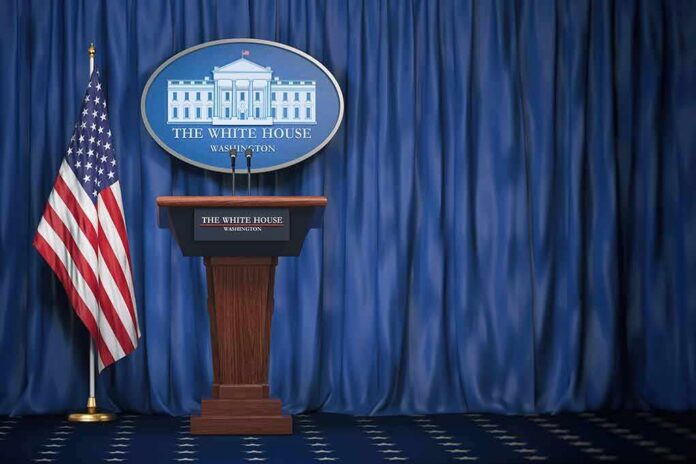
The White House’s top lawyer warned Democrats that “blatant criminality” could follow if investigations stray beyond the Constitution’s limits, signaling a hard line to protect separation of powers.
Story Highlights
- White House Counsel Will Scharf sent a dated, three-page warning to Rep. Robert Garcia outlining legal red lines.
- The letter cites limits on congressional probes that lack a “legitimate legislative purpose” and intimidate citizens.
- Attorney General Todd Blanche said threatening rhetoric from lawmakers “could be” criminal if it crosses legal lines.
- Democrats say oversight is constitutional and vow to proceed; no court has ruled on these new disputes yet.
White House Letter Sets Constitutional Boundaries for Hill Probes
White House Counsel Will Scharf sent a three-page letter on November 9, 2026, to Rep. Robert Garcia, the incoming House Oversight chair. Scharf wrote that Democrats had shown a “clear intent to transgress” constitutional limits and warned that some proposed actions could be “blatant criminality.” The letter drew a sharp line around investigations that lack a “legitimate legislative purpose,” that rely on “abusive and capricious threats,” or that use subpoenas to strip citizens of rights, arguing those acts may merit scrutiny.
Scharf’s position rests on well-known Supreme Court guidance that Congress must tie demands to real legislative aims, not law enforcement or harassment. Courts have said Congress’s power to investigate is broad, but not boundless, and must serve valid legislative tasks. That framework, set out in cases like Trump v. Mazars, supports the White House view that purpose and scope matter when Congress targets the executive, especially a sitting president’s inner circle and personal records.
Justice Department Signals Concern Over Threatening Rhetoric
Attorney General Todd Blanche told CNN that there “could be” a crime to investigate if rhetoric by lawmakers becomes threatening. He also said some Democrats had “done nothing but threaten everything” happening inside the administration, linking words to potential unlawful pressure. His comments backed Scharf’s warning that aggressive tactics untethered from clear legislative needs could invite legal review. News reports highlighted the exchange as part of a larger clash over oversight boundaries.
Bloomberg Law reported that a senior Justice Department official urged federal prosecutors to prepare for a “wartime footing,” according to people briefed on a call. The Department of Justice disputed the framing and said the phrase concerned public safety and local resistance to federal law enforcement. The mixed accounts show the temperature rising across institutions, but they do not settle how far Congress plans to go or how the Department will respond in practice.
Democrats Claim Broad Authority; Courts Will Police the Edges
Rep. Garcia answered the warning by citing Article I and calling congressional oversight a core duty. He said Democrats will not be deterred by threats from the administration and described the letter as a strike at a co-equal branch. He argued that voters demanded action to curb abuse and corruption, and that oversight helps write and refine laws to protect the public purse and check power inside the executive branch.
Courts have long said Congress holds a wide power to seek information when it connects to lawmaking and appropriations. That said, courts also push back on demands that do not show a clear legislative purpose or that look like pure law enforcement. The Supreme Court in Mazars told lower courts to balance needs, burdens, and separation of powers when Congress seeks sensitive executive information. Those rules will likely shape any subpoena fights that follow.
What This Fight Means for Voters and the Constitution
The White House message is simple: real oversight is welcome; political fishing trips are not. Taxpayers deserve laws made on facts, not threats. If Congress uses subpoenas to chill speech, damage families, or smear for headlines, courts can step in. The administration is betting that clear, written limits and a focus on “legitimate legislative purpose” will keep partisan warfare from turning into abuse of process that erodes core rights.
White House Counsel Will Scharf sent a warning letter this week to incoming House Oversight Committee Chairman Robert Garcia claiming that Democrats' planned investigations could "cross the line into blatant criminality", right alongside Trump claiming Democrats should "go to…
— Gabby Mane (@faith79472) November 15, 2026
Democrats reply that sunlight curbs corruption and that the Constitution protects robust inquiries. Both claims can be true at once. The line comes down to purpose, fit, and burden. So far, no judge has ruled on these new threats or any specific subpoena in this round. Until that happens, expect a standoff: Democrats plan probes; the White House vows a vigorous, lawful defense; and citizens should demand oversight that informs laws, not vendettas.
Sources:
thegatewaypundit.com, abcnews.com, nbcnewyork.com, pbs.org, congress.gov