
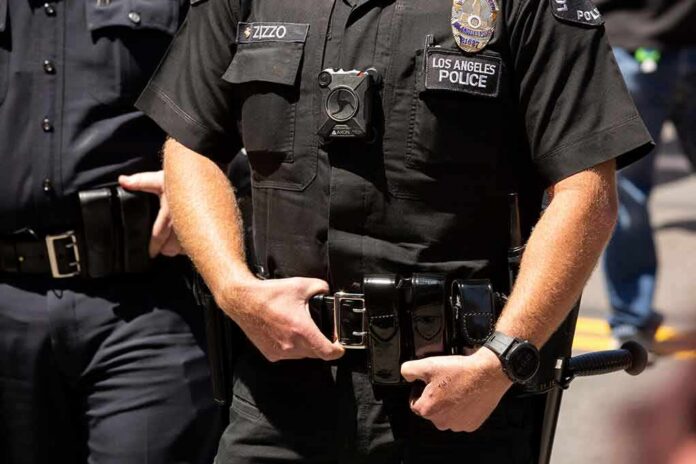
Los Angeles leaders plan to shift many 911 mental health calls away from armed officers and toward civilian clinicians and unarmed teams.
Story Highlights
- LAPD chief and mayor-elect agree on expanding civilian mental health response and 911 staffing
- About one-third of 1.45 million annual LAPD calls involve mental health, the chief says
- Plan backs clinician–police teams for higher-risk calls, unarmed teams for low-risk calls
- Specific staffing, budget, and dispatch rules are not yet published
LAPD and Mayor-Elect Find Common Ground on 911 Mental Health Calls
Los Angeles Police Department Chief Jim McDonnell said he and mayor-elect Nithya Raman are aligned on expanding civilian mental health response and easing the burden on police. McDonnell said the city should increase “civilianization and expertise” to handle people in crisis. He highlighted mental evaluation teams that pair an officer with a clinician as a model with better results. Raman’s plan also calls for more 911 operators to route calls to the right help faster.
McDonnell said about one-third of the department’s 1.45 million annual calls involve someone in a mental health crisis, which strains limited patrol resources. He argued that trained clinicians can de-escalate many situations so officers can focus on violent crime and immediate threats. He supported sending clinician–officer pairs when safety risks are present and reserving unarmed teams for calls that do not need an armed response, keeping public safety at the center.
How The Proposed Response Would Work on the Ground
Raman’s first-100-days agenda includes scaling unarmed crisis-response teams citywide and integrating them into 911 so they can take calls that do not require armed police. Calls that show higher risk, such as threats, weapons, or fast-changing danger, would still get an officer on scene, often with a clinician partner. The plan aims to match the right tool to the right call and cut response times by adding and training more call-takers.
The approach mirrors a national trend that uses dispatch-based triage, mobile crisis teams, and clinician–police co-response for behavioral health needs. Many 911 centers can access officers with crisis training, but fewer have full mobile crisis teams available at scale. That gap slows deflection from police to clinicians, even when a call clearly does not need an armed response, which can delay care and tie up officers.
What We Know and What Is Still Unclear
Public reports confirm the shared goal, the one-third call-share claim by the chief, and the broad outlines: more civilian specialists, more 911 operators, and a mix of clinician–officer pairs and unarmed teams. However, the city has not released a formal implementation plan. The reporting does not show a published budget, staffing targets, dispatch screening rules, citywide coverage maps, or a timeline for rollout. Those details will decide whether the model works at scale.
Evidence on outcomes is mixed across cities. Some research finds benefits when mental health professionals lead nonviolent calls, including reduced use of force and better linkage to care. Other studies find little difference in same-day outcomes compared with usual police response. Results often depend on call type, training, and how well 911 triage separates low-risk from higher-risk incidents.
Safety, Accountability, and Conservative Priorities
Public safety stays paramount in the Los Angeles plan. Armed officers remain the lead for dangerous or fast-changing scenes, while clinicians and unarmed teams focus on calls that do not need a gun and badge. Clear dispatch rules, fast backup, and direct radio links are essential. Conservative voters should watch for firm standards, strong data reporting, and transparent oversight to prevent mission creep and protect frontline officers and families.
LAPD chief sounds alarm over city's mental health crisis, pitches plan to take burden off cops pic.twitter.com/dZElkZ01F6
— StandupSpeakOut🇺🇸 (@StndupSpekup) November 14, 2026
Taxpayers also deserve clarity on cost and value. The city should publish call volumes, response times, safety incidents, and outcomes like hospital transports and repeat calls. Regular public reports would show if the approach frees officers to fight crime, reduces wait times, and keeps the public safe. If leaders deliver those basics, Los Angeles can treat illness like illness, keep cops on crime, and honor both compassion and order.
Sources:
nypost.com, police1.com, link.springer.com, pew.org