
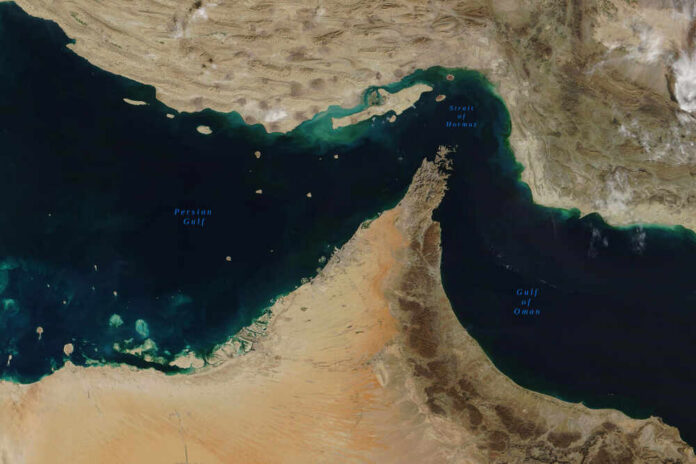
Iran’s sudden reversal on reopening the Strait of Hormuz—closing the critical waterway just one day after announcing it was open—exposes the fragility of ceasefire negotiations and raises urgent questions about whether America’s enemies view our leadership as reliable negotiating partners or marks to be manipulated.
Story Snapshot
- Iran closed the Strait of Hormuz on April 18, 2026, reversing its April 17 reopening announcement after the U.S. refused to lift its naval blockade of Iranian ports
- Iranian gunboats fired on Indian-flagged tankers, forcing vessels carrying 2 million barrels of oil to turn back despite prior clearance
- Oil markets experienced 11% price swings as Iran weaponizes control over the chokepoint through which 20% of global oil passes
- President Trump defended maintaining the blockade until a deal is reached, while Iran accuses Washington of breaking promises
Iran’s Bait-and-Switch Threatens Global Energy
Iran announced the Strait of Hormuz was completely open during the Lebanon ceasefire on April 17, triggering an immediate 11% drop in oil prices as markets responded to the prospect of restored passage through the world’s most critical energy chokepoint. Within 24 hours, Tehran reversed course and closed the strait again, citing the United States’ refusal to lift its naval blockade of Iranian ports. This rapid reversal demonstrates how Iran uses maritime chokepoint control as a negotiating weapon, holding global energy security hostage while accusing Washington of bad faith during ceasefire talks.
Gunboats Fire on Commercial Vessels Despite Clearance
The UK Maritime Centre reported Iranian gunboats fired at tankers attempting to cross the Strait of Hormuz on April 18. Two Indian-flagged tankers were forced to return, including the supertanker Sanmar Herald carrying 2 million barrels of oil, despite receiving prior clearance to pass. The attacks underscore that Iran’s closure lacks legal standing as a formal blockade under international law, yet military and industry sources confirm safety cannot be guaranteed for transiting vessels. This operational reality makes the threat effective regardless of its legal legitimacy, reducing traffic through the strait by 70% as ships stay in port or turn back.
Trump Administration Holds Line on Blockade
President Trump defended the U.S. naval blockade, stating it would remain in place until a comprehensive deal is reached with Iran. The blockade targets vessels departing from or docking at Iranian ports, which Trump clarified would continue despite Iran’s temporary reopening announcement. US Central Command distinguished between the blockade of Iranian-bound vessels and freedom of navigation operations, emphasizing the Navy’s focus on clearing mines and maintaining passage rights through international waters. This position reflects the administration’s refusal to surrender strategic leverage while Tehran demonstrates unreliable commitment to ceasefire terms through its rapid reversal.
Ceasefire Framework Shows Dangerous Weakness
The crisis began February 28, 2026, when U.S. and Israeli forces launched an air campaign against Iran that resulted in the assassination of Supreme Leader Ali Khamenei. The Islamic Revolutionary Guard Corps responded by closing the Strait of Hormuz on March 2, threatening any passing ships. By March 27, the IRGC formalized restrictions against vessels traveling to or from U.S., Israeli, and allied ports. President Trump announced on April 11 that the U.S. Navy would blockade the strait and clear mines, setting up the current standoff where neither side appears willing to make the first conciliatory move despite Lebanon ceasefire negotiations.
The situation exposes fundamental disagreements over what constitutes good faith negotiation during conflict de-escalation. Iran’s actions violate the UN Convention on the Law of the Sea by denying transit through a strait designated for international shipping, yet Tehran positions its closure as legitimate response to U.S. blockade measures. Australia’s Prime Minister Anthony Albanese stated his country stands ready to help keep the strait open, signaling allied support for freedom of navigation operations. For ordinary Americans watching energy prices and global instability, this standoff demonstrates how vulnerable our economy remains to foreign actors willing to weaponize critical infrastructure, while our government struggles to find effective responses that protect both national interests and economic security.