
Iran is weaponizing cheap, expendable drone boats disguised as fishing vessels to swarm U.S. naval forces in the Strait of Hormuz, turning America’s technological superiority into a costly liability that threatens global energy security.
Story Snapshot
- Iran deploys explosive-laden suicide skiffs disguised as fishing boats to target U.S. Navy ships and commercial vessels in the Strait of Hormuz
- Swarms of 10+ unmanned boats, costing pennies compared to U.S. defenses, overwhelm naval capabilities while disrupting 20% of global oil supply
- Six vessels attacked and 12 mines deployed in 48 hours as Iran escalates asymmetric warfare following Operation Epic Fury strikes
- Defense experts warn U.S. air superiority proves ineffective against low-cost swarm tactics exploiting the strait’s narrow geography
Iran Exploits Low-Cost Swarm Tactics Against Superior U.S. Forces
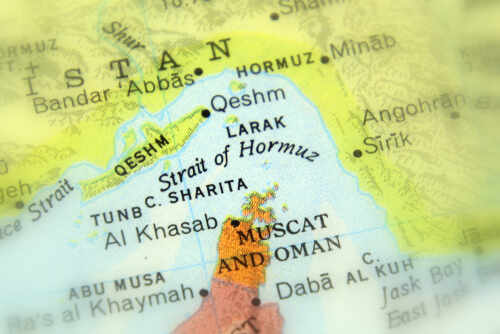
Iran’s Islamic Revolutionary Guard Corps Navy has unleashed a devastating asymmetric strategy in the Strait of Hormuz using explosive-laden drone boats disguised as ordinary fishing vessels. These 12-to-30-foot unmanned surface vehicles operate in swarms of 10 or more, controlled remotely via radio and GPS, to ram and detonate against U.S. Navy ships and commercial tankers. Defense analyst Behnam Chell warns these cheap weapons exploit the strait’s 21-mile width and line-of-sight geography, making traditional U.S. air superiority virtually useless against small boat swarms that cost a fraction of American defense systems.
Escalating Attacks Threaten Global Energy Chokepoint
Following U.S. Operation Epic Fury strikes on February 28 that killed Supreme Leader Ali Khamenei, Iran launched a massive retaliation campaign. On March 1, Iran fired 1,206 strikes including 867 drones and 339 missiles targeting Gulf state energy infrastructure. The focus shifted to the Strait of Hormuz by mid-March, with attacks intensifying dramatically. On March 11, suspected Iranian drones struck at least three ships while two oil tankers were hit by remote-controlled explosive boats and a fuel depot in Oman caught fire. The following day saw six vessels attacked and approximately 12 mines deployed, paralyzing shipping traffic through a waterway handling roughly 20 percent of global oil supplies.
Cost-Imposition Strategy Strains U.S. Naval Defenses
Iran’s approach represents a calculated “cost-imposition” strategy designed to exhaust American defenses through sheer volume rather than technological sophistication. The campaign integrates disguised suicide skiffs with mines and low-altitude Shahed drone variants, including the Shahed-136, Shahed-107, and Shahed-238, with possible Russian Geran-2 involvement. Analysis from the Center for Strategic and International Studies identifies a two-phase operation: an initial shock wave followed by sustained attrition targeting U.S. and coalition forces. This hybrid maritime warfare challenges the fundamental assumptions of American naval dominance, forcing expensive defensive responses to threats costing pennies on the dollar to produce and deploy in overwhelming numbers.
Trump Administration Responds to Iranian Aggression
Defense Secretary Pete Hegseth has pledged to degrade Iran’s naval capabilities while Treasury Secretary Scott Bessent announced plans for military escorts to protect commercial shipping. The attacks have already caused oil prices to surge as shipping remains stalled and fires rage at Iran’s Bandar Abbas naval headquarters. New Supreme Leader Mojtaba Khamenei has vowed to continue targeting U.S. bases and ships in the strait, asserting Iran’s “security rights” while officially denying plans to formally close the waterway. Experts warn that countering swarms of 50 or more cheap drone boats may ultimately require ground operations to secure Iranian coastal launch sites, raising the stakes considerably for American forces already stretched thin dealing with this low-tech, high-volume threat.
‘Swarm’ the U.S. Navy: Iran’s Strategy to Use Cheap Drones to Hold the Strait of Hormuz Hostagehttps://t.co/1zDX2FfYON
— 19FortyFive (@19_forty_five) March 16, 2026
Strategic Implications for American Energy Security
The disruption of Strait of Hormuz shipping carries catastrophic implications for American consumers and allies dependent on Gulf energy supplies. Tanker crews have been evacuated, insurance rates are spiking, and global fuel prices continue climbing as Iran demonstrates its ability to weaponize geography against technologically superior forces. This asymmetric warfare model threatens to reshape modern naval doctrine, exposing critical vulnerabilities in America’s ability to protect vital strategic chokepoints. The conflict underscores the dangers of allowing hostile regimes to develop cheap, proliferable drone technologies that can neutralize billions of dollars in advanced military hardware through simple swarm tactics, potentially forcing a fundamental reassessment of U.S. naval strategy in contested waters worldwide.
Sources:
Iran deploys explosive suicide skiffs disguised as fishing boats in Strait of Hormuz – Fox News
Unpacking Iran’s Drone Campaign in the Gulf: Early Lessons for Future Drone Warfare – CSIS
Missile Attacks Define Strait of Hormuz Risks, Officials Say – USNI News
Iran Official on Strait of Hormuz Situation – Iran International