

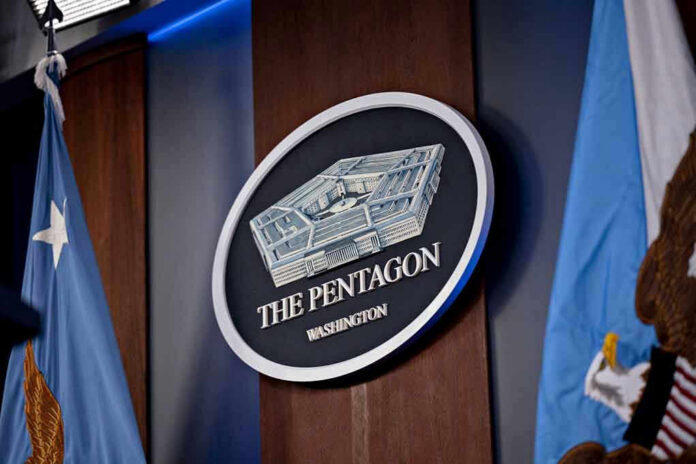
A Republican lawmaker filed eight impeachment articles against Defense Secretary Pete Hegseth, setting up a rare clash over war powers and executive authority.
Story Snapshot
- Rep. Thomas Massie filed a privileged impeachment resolution with eight articles against Hegseth.
- The core charge alleges violations of the 1973 War Powers Resolution tied to Iran hostilities.
- President Trump and senior officials publicly defended Hegseth and the Iran campaign.
- A House vote is expected, but broad bipartisan support is not established in current reports.
What Massie Filed and Why It Matters
Rep. Thomas Massie introduced a privileged impeachment resolution on November 9, 2026. The filing contains eight articles, focused on Iran, Yemen, alleged drug-boat strikes, retaliation against Sen. Mark Kelly, suppression of speech, and the seizure of Nicolás Maduro. Massie argues the Iran actions broke the War Powers Resolution. He claims the Pentagon continued hostilities past the statutory window without congressional approval. The resolution forces the House to consider the question on the floor.
Massie’s central legal claim points to the War Powers Resolution’s timeline. He alleges United States forces engaged in hostilities with Iran for more than 90 days without a declaration of war or specific authorization. He cites June 26, 2026, as a key continuation date. The Congressional Record reflects the dispute and references 50 U.S.C. § 1544(c). These assertions frame impeachment as a constitutional test of Congress’s power to check unilateral war. Official adjudication has not resolved this dispute.
How Rare This Is—and What Comes Next
Impeaching a Cabinet secretary is extremely rare. The House has impeached only two Cabinet officials in American history. A vote to impeach Hegseth would test a high constitutional bar and the House’s political will. Current reporting does not show a vote count, a bipartisan bloc, or completed committee findings. That means the outcome in the House remains uncertain, even with a privileged resolution moving the question to the floor quickly.
Supporters of the resolution say the point is accountability, not policy preference. They argue Congress must guard its sole power to declare war. They stress that process matters, even when operations target a dangerous regime. The narrow question is whether the executive crossed the legal line on duration and authorization. Without a clear record of authorization, members may view impeachment as a tool to defend constitutional limits on war powers.
Hegseth and the Administration Push Back
Secretary Hegseth rejects the charges as political. He argues the Iran campaign was necessary to confront Iran’s nuclear pursuit. He says critics dispute success, not law, and calls the effort a sham. President Trump publicly backed Hegseth and praised battlefield gains. Secretary of State Marco Rubio called the impeachment push unfair. A Pentagon spokesperson labeled the articles vindictive and pledged an aggressive defense. These responses frame the clash as results versus partisanship.
Donald Trump has said he will “stand by” his defense secretary, Pete Hegseth, after a Republican lawmaker filed an impeachment resolution yesterday.
The President said that Representative Thomas Massie, who lost his primary to a Trump-backed opponent, is a “loser”.
Massie… pic.twitter.com/Tylz9AMBoI
— Channel 4 News (@Channel4News) November 10, 2026
For conservatives, two stakes stand out. First, Congress’s war power protects the people’s voice on life-and-death uses of force. If the executive can wage war past legal limits, future leaders could bypass debate. Second, fair process protects the troops and the mission. Clear authorizations shield warriors from legal gray zones and secure public backing. Lawful wins last; rushed wins unravel. Members should demand the timeline, the notices, and any authorization text before voting.
What to Watch: Evidence, Timeline, and Vote Math
Key gaps remain in public view. The record provided in reports outlines Massie’s claims, but not every operational order or legal memo tying Hegseth personally to each action. The Iran timeline is central and needs a precise accounting of notifications, dates of hostilities, and any claimed statutory basis. The House will also test whether appropriations or briefings count as authorization. Finally, the vote count is unknown, so the path to passage is unclear at this stage.
Bottom Line for Readers
This fight is about constitutional guardrails as much as it is about Iran policy. The House must decide if the executive crossed the legal line on war powers. The administration says the operations were necessary and lawful. Massie says the law and the clock rule the day. Voters should expect Congress to secure and publish the timeline, the legal basis, and any authorization. Sunshine and the Constitution should lead before politics decides the outcome.
Sources:
npr.org, bbc.com, nbcdfw.com, nebraska.tv, govinfo.gov, amp.dw.com, detroitnews.com