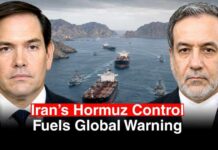

U.S. forces have disabled a defiant tanker in the Strait of Hormuz after repeated warnings, underscoring how President Trump’s blockade is testing Iran’s aggression and protecting global energy flows.
Story Snapshot
- U.S. Central Command says the tanker ignored multiple clear warnings before its engine room was disabled to stop it reaching Iran.
- President Trump’s naval blockade aims to counter Iran’s attacks on tankers and keep the vital Strait of Hormuz open for lawful trade.
- The disabled tanker is one of several Iran-linked vessels stopped or turned back for trying to breach the blockade.
- Legal questions about the blockade remain, but Iran’s record of hitting commercial ships makes strict enforcement hard to argue against.
Blockade Enforcement Stops Tanker Headed Toward Iran
U.S. Central Command reports that American forces disabled the engine room of the tanker M/T Lavine after the crew tried to run the naval blockade in the Strait of Hormuz. The ship, described as Iran-linked and Mozambique-registered, was heading toward an Iranian port when it allegedly ignored several direct warnings to change course. A precision strike stopped the vessel without sinking it, and officials stressed that “the ship is no longer heading to Iran,” making clear the goal was control, not destruction.
Military briefings say Lavine is not the first ship to test the blockade and then face decisive action. Central Command has previously described disabling another Iranian-flagged tanker, Hasna, by firing 20-millimeter cannon rounds at its rudder after the crew ignored repeated radio calls and instructions. In both cases, the pattern is the same: clear warnings, a chance to comply, and then limited, targeted fire used only when crews chose to press on toward Iranian ports in defiance of U.S. orders.
Trump’s Blockade Responds to Iranian Attacks on Shipping
These tanker incidents sit inside a much larger fight over who controls the Strait of Hormuz, a narrow waterway that carries a huge share of the world’s oil. Earlier this year, Iranian forces and allied units boarded, mined, or struck several merchant ships, trying to block traffic and pressure the West. In response to continued Iranian attacks on tankers and U.S. sites, President Trump reinstated a blockade of Iranian shipping and signaled that America will charge a protection fee to guard the strait for lawful traffic.
Reports say the U.S. Navy-led Joint Maritime Information Center announced that the blockade would cover Iran’s full coast, including ports and oil terminals, and apply to all vessels regardless of flag. At the same time, Central Command has launched strikes on Iranian military targets after attacks on three commercial tankers, hitting air defenses, fast boats, and coastal radar used to threaten civilian crews. This shows the blockade is not a stand-alone policy; it is part of a wider push to punish Iran for hitting innocent shipping and to keep energy moving despite Tehran’s attempts to turn Hormuz into a hostage.
Repeated Tanker Clashes Highlight Risks and Raise Questions
Lavine’s disablement is only one of many tanker clashes during the 2026 Strait of Hormuz crisis. U.S. forces have fired on and disabled multiple Iranian-flagged or Iran-bound tankers, including Sea Star III and Sevda, which were struck with precision munitions at their smokestacks before they could reach Iranian ports. Central Command also reports redirecting a dozen commercial ships, disabling two tankers that refused to comply, and boarding two others to enforce the blockade rules. Iran’s own forces claim to have hit “offending” supertankers that used routes Tehran labels illegal, showing that both sides are using hard power on the water.
For conservative readers, this pattern matters for two big reasons. First, it shows why a strong U.S. Navy and clear resolve are vital; if America backs down, Iran fills the gap and bullies global shipping. Second, it raises fair questions about the legal basis of any blockade, including ours. Public reporting repeats that these ships were “violating” a U.S. blockade, but open sources do not yet show the full legal order or United Nations backing behind it. That gap does not prove the blockade is unlawful, but it does mean citizens should demand transparency even while backing firm action against Iran.
Security, Energy Prices, and Constitutional Concerns
Every time a tanker is attacked or disabled in Hormuz, oil markets react and ordinary families feel it at the gas pump. Iran’s choice to mine sea lanes and hit commercial ships is a direct attack on global energy and America’s economy. President Trump’s blockade and rapid strikes aim to stop that pressure campaign, protect allied crews, and keep Iran from using tankers as pawns in a wider war. A weak response would invite more attacks and higher prices for working Americans.
🇮🇷🛢️🇾🇪- Oil is pricing a second chokepoint. Brent passed $98 early Thursday (+4.2%), a fifth straight day of gains and the highest in nearly two months, with WTI near $90 and Abu Dhabi's Murban surging hardest. Crude is up roughly 20-25% this month. US regular gasoline has… pic.twitter.com/V3XNb4azDU
— 🔥🗞The Informant (@theinformant_x) July 23, 2026
At the same time, conservative values call for careful limits on government power, even in war. Disabling foreign tankers is serious business, and it must stay tightly focused on clear military threats, not mission creep. So far, the record shows U.S. forces using precision strikes, issuing repeated warnings, and disabling rather than sinking vessels. That aligns with a defensive, proportionate use of force. The next step should be clear public rules and oversight, so this tough stance against Iran never turns into unchecked maritime overreach that could one day target American commerce or gun owners’ livelihoods at home.
Sources:
nypost.com, navytimes.com, thehill.com, pbs.org, youtube.com, apnews.com