

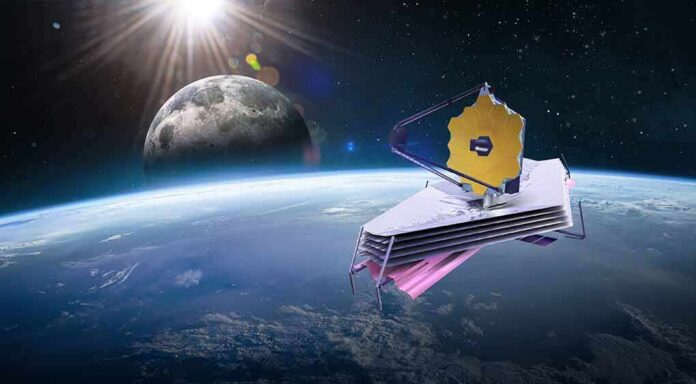
NASA has switched on the Roman Space Telescope’s 300‑megapixel infrared camera, clearing a major milestone for American science leadership.
Story Highlights
- NASA activated Roman’s Wide Field Instrument, a 300‑megapixel infrared camera built for fast, sharp sky surveys.
- The mission team also powered on and checked the planet‑imaging Coronagraph Instrument earlier in the month.
- Commissioning will continue with alignment and calibration before full science operations begin.
- The activation marks tangible progress for U.S. space leadership and future discoveries across the cosmos.
NASA Confirms Wide Field Instrument Activation
NASA reported that the Nancy Grace Roman Space Telescope team successfully activated the Wide Field Instrument, a 300‑megapixel infrared camera designed to map large areas of the sky with sharp detail. The agency said this instrument is Roman’s primary science camera and is now on the path to full operations. The activation means Roman can begin a careful sequence of tests and calibrations. This step moves the mission from safe deployments to real instrument work aimed at science data.
NASA explained that the Wide Field Instrument brings together 18 detectors to create one vast view, capturing Hubble‑like sharpness across a much wider field. That wide view will let scientists scan the universe faster than past missions. It will help chart dark matter, study dark energy, and find faraway supernovae. It will also help spot thousands of distant worlds through microlensing. This progress puts the United States in a strong position to lead new space discovery.
Coronagraph Instrument Powered On And Checked Out
Earlier in the month, the mission team powered on Roman’s Coronagraph Instrument, which is designed to block starlight so the telescope can image planets and dusty disks around nearby stars. NASA said the power‑on finished within an hour, marking a clean start to a months‑long technology demonstration. The coronagraph will test methods to see faint planets next to bright stars. Success here can shape future missions that aim to image Earth‑like worlds.
Independent trackers and trade coverage summarized the key dates and the status of both instruments, matching NASA’s reported timeline. They note the Coronagraph Instrument power‑on on September 1 and the Wide Field Instrument activation announcement on September 15. This outside tracking aligns with NASA’s own updates and helps the public follow each step. The clear paper trail shows a normal, steady commissioning ramp, not a rushed process.
What Commissioning Means And What Comes Next
NASA describes commissioning as the period when teams turn on, adjust, and calibrate systems to prepare for science operations. That means activation is an important step, not the finish line. Engineers will cool detectors, tune optics, verify thermal control, and check guidance. They will also take early test images that help set focus and calibrations. After that work, Roman will begin routine science programs that scan wide cosmic fields with high precision.
The agency and its partners use this careful approach to avoid waste and ensure quality data. That discipline respects taxpayers and supports long‑term success. Roman’s planned surveys could map billions of galaxies and sharpen measurements that test how the universe expands. They could also add to America’s edge in exoplanet science. Careful commissioning now prevents rework later and protects mission value for years.
Why This Milestone Matters For American Leadership
The Roman activation highlights what focused goals, clear engineering plans, and accountability can deliver. When agencies set firm milestones and meet them, the country gains. This telescope’s wide‑field power will help U.S. researchers answer big questions about dark energy and structure in the cosmos. It will also inspire students to pursue science and engineering. That return, built on a predictable schedule and transparent updates, is how government programs should work.
NASA’s Nancy Grace Roman Space Telescope, launched Aug. 30, has taken its first look at the sky.
On Sept. 11 it powered up its 300 megapixel Wide Field Instrument.The resulting test image released Sept. 15, is still far from focused.
I'm truly so excited to see what it… pic.twitter.com/1ix3MGhGfq
— Gina Beana Fofina (@Ginasassyass) September 20, 2026
The work ahead will stay steady. Teams will continue calibration and imaging tests before releasing the first full science images. NASA has been clear that months of fine‑tuning follow these activations, which is standard for a major space observatory. For now, the big takeaway is simple and solid: Roman’s main camera is on, the planet‑imaging coronagraph is on, and America’s next great space surveyor is waking up on schedule.
Sources:
sciencedaily.com, science.nasa.gov, romantelescope.info