

Virginia Democrats just advanced a first-of-its-kind school bill that tells teachers exactly how they may describe January 6—raising fresh alarms about government-directed “truth” in the classroom.
Quick Take
- Virginia’s General Assembly passed HB333, limiting how public schools can portray Jan. 6 and 2020 election-fraud claims if the topic is taught.
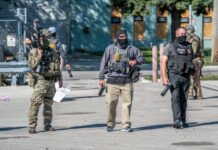
- The bill bans presenting Jan. 6 as a “peaceful protest” and requires describing it as an “unprecedented, violent attack” aimed at overturning the election.
- Republicans opposed the measure unanimously in the Virginia Senate, while Democrats pushed it through on mostly party-line votes.
- The legislation does not require schools to teach Jan. 6, but it sets mandatory framing if educators choose to cover it.
- Gov. Abigail Spanberger is expected to review the bill; it would take effect immediately upon signing.
What HB333 Would Regulate in Virginia Classrooms
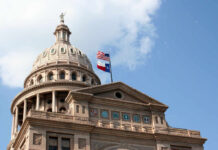
Virginia lawmakers approved House Bill 333, sponsored by Del. Dan Helmer, to restrict how public schools teach about the Jan. 6, 2021, U.S. Capitol events and claims of widespread 2020 election fraud. The bill prohibits teachers from presenting Jan. 6 as a “peaceful protest” or treating as credible the idea that election fraud could have changed the 2020 outcome. If taught, the bill requires describing Jan. 6 as an “unprecedented, violent attack” to overturn the election.
Supporters argue the measure creates “guardrails” and is not a mandate to teach the topic at all. That distinction matters for families already frustrated by years of politicized curricula: the bill is permissive on whether Jan. 6 must be covered, but prescriptive about what teachers may present as credible once it is covered. In practice, that means the state is stepping in to define boundaries for classroom discussion on a politically charged national event.
Party-Line Vote and the Governor’s Next Move
The bill cleared both chambers on March 2, 2026, with the Virginia Senate passing it 21–19 and all 19 Republicans voting no. Reports indicate the House vote also followed a mostly party-line pattern. The measure now heads to Gov. Abigail Spanberger, a Democrat, whose office has said she reviews legislation but has not committed publicly. If signed, the law would take effect immediately, a fast timeline that could force districts to adjust guidance midstream.
Opposition testimony during the bill’s path through committees captured the deeper political argument: critics called it “indoctrination” and warned it would push parents away from public schools. A representative of the Virginia Assembly of Independent Baptists criticized the approach as an unnecessary focus that “glorifies” a dark day rather than prioritizing core education goals. Supporters countered that letting politically motivated narratives into schools is exactly how societies lose a common factual baseline—and cited past examples of historical revisionism in Virginia as a cautionary tale.
Why Democrats Say the Bill Is Needed in 2026
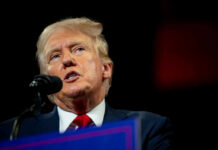
Backers tied HB333 to the renewed national fight over Jan. 6 narratives under President Trump’s second term. CBS reported that the White House posted material on Jan. 6, 2026, that blamed police and that Trump pardoned more than 1,500 defendants, including people charged with assaulting officers. Helmer and allies said those developments increase the risk that sympathetic portrayals could seep into lessons. Their argument is straightforward: if Washington is pushing a version of events they consider false, Virginia schools should be walled off from it.
The Conservative Concern: State-Directed Narratives Set a Precedent
Even though the bill is framed as “fact-based,” it still represents government directing how history is described—an approach conservatives typically distrust, regardless of which party holds power. The bill does not merely encourage accuracy; it prohibits a specific characterization (“peaceful protest”) and requires another (“violent attack” aimed at overturning the election). When politicians write curricular guardrails into law, teachers can feel pressure to avoid legitimate debate, context, or nuance for fear of crossing legal lines, especially on contested topics.
What Happens Next for Parents, Teachers, and Potential Legal Challenges
In the near term, the biggest change is practical: districts may issue new guidance, update materials, and train educators on what can and cannot be said if Jan. 6 comes up. Longer term, HB333 could become a model for other states seeking to legislate “approved” descriptions of politically sensitive events. The sources note the possibility of lawsuits or broader curriculum fights, but they do not provide details on any filed challenges yet. For families, the immediate question is whether this expands trust—or deepens the sense that public schools are an ideological battleground.
See what happens when nobody is charged? @AGPamBondi
Virginia Democrats Moving to Require Schools to Teach That January 6th Was an 'Insurrection' https://t.co/Mkq3VoD8Lm #gatewaypundit via @gatewaypundit
— Christos Blanco (@sickofdischit) March 8, 2026
Virginia’s debate also exposes a core tension in civic education: students need truthful, well-sourced history, but they also need transparent standards that don’t shift with election cycles. HB333 is now a test of whether a state can legislate accuracy without turning classrooms into an extension of partisan messaging. Gov. Spanberger’s decision will determine whether these “guardrails” become law—and whether Virginia sets a national precedent for using state power to police the framing of recent political history.
Sources:
Virginia passes legislation prohibiting schools from teaching Jan. 6 falsehoods
Bill to require factual teaching about U.S. Capitol attack clears Virginia General Assembly
Virginia Legislative Information System: HB333 (2026 Session)
Virginia LIS Committee Dockets (Session 2026)