

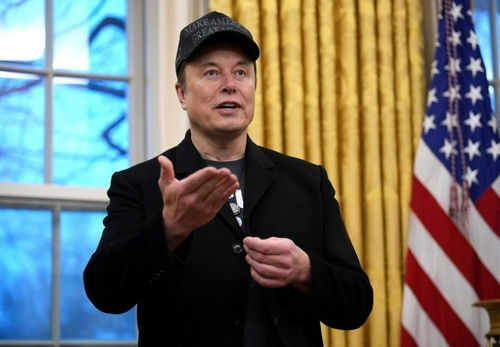
Elon Musk’s leap into trillionaire status shows how government power and mega-IPOs are quietly reshaping who really runs America.
Story Snapshot
- Elon Musk was declared the world’s first trillionaire after SpaceX’s record-shattering IPO.
- His fortune now depends on soaring tech valuations and huge U.S. government contracts, not cash in the bank.
- Media outlets and financial firms disagree on his true net worth, revealing how narratives are engineered.
- The rise of trillionaires raises serious questions about political influence, free markets, and everyday Americans’ future.
Musk’s Trillionaire Moment: What Actually Happened
On June 12, 2026, Elon Musk was widely declared the first person in history to cross a net worth of $1 trillion, driven by the initial public offering of SpaceX at a near $1.8 trillion valuation. Forbes and other outlets pegged Musk’s wealth at about $1.1 trillion, with most of it tied up in SpaceX shares and options rather than hard cash. Reports said he controlled roughly 42% of SpaceX, giving him an equity stake worth around $866 billion at IPO pricing. The stock then surged intraday toward valuations near $2 trillion, briefly lifting estimates of his fortune even higher.
Financial coverage stressed that Musk’s wealth is almost entirely “on paper,” based on market prices for SpaceX, Tesla, and other assets. Analysts noted that the IPO raised about $75 billion, but the headline net worth number rests on traders’ belief that SpaceX deserves a price of roughly ninety-plus times its trailing revenue. That means Musk’s trillionaire label depends on investor optimism in a single high‑risk tech company, not a pile of cash or steady profits. Commentators warned that this kind of valuation can swing sharply with market sentiment, turning historic “records” into temporary snapshots.
Why the Numbers Don’t Match: Media, Methods, and Spin
Even as Forbes and Reuters celebrated Musk’s trillionaire milestone, other major outlets gave lower figures and questioned the math. Yahoo Finance, citing Bloomberg data, put his SpaceX stake closer to $688 billion and total net worth near $971 billion, leaving him about $29 billion short of the trillion mark. CNBC, relying on the SpaceX prospectus, reported his share at $866.5 billion and said his fortune was “poised” to pass $1 trillion once trading began, suggesting the threshold depended on post‑IPO price action. These gaps show that different firms use different valuation methods and asset sets, making the trillionaire title more a judgment call than an audited fact.
Forbes itself later acknowledged that its estimate changed as it adjusted how much Tesla stock to count in Musk’s net worth, at one point “removing” roughly $116 billion from the tally and declaring that he had lost trillionaire status after a stock slide. Another Forbes piece detailed how a drop of just over six percent in SpaceX shares erased about $59 billion from Musk’s fortune, pulling him below the $1 trillion line. No Securities and Exchange Commission filing or audited balance sheet states, as a legal fact, that Elon Musk is a trillionaire; all such claims rest on private models and real‑time lists that can be revised overnight.
Government Contracts and the New Elite Power Structure
Behind SpaceX’s sky‑high valuation sits a massive stream of taxpayer money. Commentators point out that the U.S. government has awarded SpaceX tens of billions of dollars in launch, satellite, and defense contracts, even as reports say the company loses money overall and relies on Starlink for operating profits. Critics argue that this looks less like a free market and more like a system where regulators and agencies help prop up key corporate players, inflating their paper wealth and strategic power. When a single contractor’s stock price can swing a private fortune by hundreds of billions, Washington’s choices directly shape who enters the trillionaire club.
At the same time, Musk has poured hundreds of millions of dollars into U.S. elections, backing candidates and policies that align with large‑scale corporate interests. That level of spending gives him a voice far louder than any ordinary voter, deepening concern about “regulatory capture,” where giant firms and ultra‑rich individuals sway the rules they are supposed to obey. For conservatives who value limited government and equal treatment under the law, the blend of huge federal contracts, political spending, and concentrated tech wealth is a warning sign that the line between public power and private profit is fading fast.
What Trillionaires Mean for Regular Americans
Economic analysts note that Musk’s rise fits a broader pattern: private lists like Forbes, Bloomberg, and rich‑person rankings now drive public narratives about wealth milestones long before any official verification. In past years, similar hype around hundred‑billion‑dollar fortunes and trillion‑dollar companies was later dialed back when markets fell or new data came out. The Musk case pushes this pattern to a new extreme, blending mega‑IPOs, social media buzz, and complex financial models to declare a “first trillionaire” whose status can change with a few rough days of trading.
SpaceX's momentum has been nothing short of extraordinary.
The company debuted with a staggering $1.75 trillion IPO valuation—the largest in history—and within days, its valuation reportedly climbed to $2.5 trillion, making Elon Musk the world's first paper trillionaire.
The…
— UZEE STOCKS UPDATE LTD (@UpdateUzee) July 6, 2026
For families watching energy costs, food prices, and taxes, the age of the trillionaire raises hard questions. When one man’s net worth rivals the economies of mid‑sized countries, and when that wealth rests on government contracts and fragile tech valuations, who is government really serving? Conservative readers may see a deeper issue: a system where capital markets, bureaucrats, and media brands work together to crown new economic kings, while ordinary Americans fight to keep their savings ahead of inflation. Whether Musk’s net worth sits at $970 billion or $1.1 trillion on any given day, the rise of the trillionaire class makes it clear that the real struggle is to protect constitutional freedoms and fair competition in an era of extreme concentration of wealth and power.
Sources:
theatlantic.com, facebook.com, finance.yahoo.com, forbes.com, chosun.com