

America’s 250th birthday just delivered what organizers call the largest peacetime naval and tall‑ship spectacle ever seen in U.S. waters, right in New York Harbor.
Story Snapshot
- A record flotilla of 48 tall ships from 20 nations sailed past 50 U.S. and allied naval vessels for America’s 250th.
- Organizers say 46 nations, about 15,000 sailors, and millions of spectators joined a once‑in‑a‑generation show of strength and unity.
- More than 120 military aircraft, led by the U.S. Navy Blue Angels, roared over the Hudson in an International Aerial Review.
- The Trump administration used the event to revive classic naval tradition while keeping the focus on pride, not politics.
Historic Armada Marks America’s 250th
On July 4, New York Harbor became the stage for an armada that organizers describe as the largest maritime gathering in American history. Forty‑eight towering sailing vessels from 20 countries formed the heart of an International Parade of Sail, gliding from the Verrazzano‑Narrows Bridge, past the Statue of Liberty, and up the Hudson River to the George Washington Bridge. As they passed, they sailed by a powerful lineup of roughly 50 U.S. and allied naval vessels at anchor, turning the Hudson into a living picture of sea power and friendship.
Event planners report that 46 nations were represented in the port, with many top naval officers watching from the decks and reviewing stands. About 15,000 American and foreign sailors and service members came into New York and New Jersey for the week‑long celebration, which ran from July 3 through July 7 and included parades on the water, in the air, and on land. Local economic studies project roughly $2.85 billion in total economic impact tied to visitor spending and event operations, making this not just a patriotic display but also a major boost for the region’s working families and businesses.
Blue Angels, Aerial Review, and Naval Power on Display
The air above New York Harbor matched the spectacle on the water. More than 120 U.S. and allied aircraft, led by the U.S. Navy’s elite Blue Angels demonstration team, thundered over the harbor in an International Aerial Review coordinated with the Parade of Sail. Organizers and media reports framed this combined show as part of the “largest maritime and aerial gathering in American history,” linking modern American air power with centuries‑old sailing traditions in a single, tightly choreographed event.
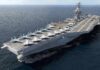
The naval presence went well beyond a few ceremonial ships. Planning documents and press releases describe about 40 “gray‑hull” vessels from the United States Navy and Coast Guard, joined by allied warships and even a British aircraft carrier. In some forecasts, Cunard’s ocean liner Queen Mary 2 was expected to anchor in the harbor as part of the review, underscoring how both military and civilian sea power were woven into the spectacle. This broad multinational naval assembly has been compared by organizers to the 1976 Bicentennial review, suggesting it is the largest peacetime naval gathering in U.S. waters since that Cold War‑era show of strength.
Tradition, Diplomacy, and Questions About “Largest Ever” Claims
The Sail4th 250 project presents itself as an official multi‑state, high‑profile international tall‑ship and government effort, tracing its heritage back to Operation Sail in 1964, which President John F. Kennedy endorsed to mark earlier national milestones. For many organizers and commentators, this year’s event is meant to “heal” divisions by bringing Americans together around shared symbols like the U.S. Coast Guard training ship Eagle, which traditionally leads tall‑ship parades as “America’s tall ship.” Vice President JD Vance publicly thanked President Trump for reviving this naval tradition, tying the show directly to the current administration’s push for renewed pride in the armed forces and the nation’s founding.
A naval review of tall ships and military vessels from multiple nations sailed through New York Harbor on July 4, 2026. Aerobatic teams and bombers conducted flyovers during the Sail4th 250 event. Vice President JD Vance attended and spoke aboard the USS……
— Substrate News (@substratenews) July 4, 2026
At the same time, nearly all of the “largest ever” language still rests on organizer and media descriptions, not yet on a full, published historical audit. Local and national outlets repeat phrases like “largest maritime gathering in U.S. history” and “largest peacetime naval assembly” while citing projected numbers for ships, aircraft, and crowds. Attendance estimates in the six‑to‑eight‑million range come from economic and tourism studies, not confirmed counts, and there is no public record so far of an official U.S. Navy registry comparing this flotilla to every past gathering. For readers who care about honest numbers as much as patriotic feeling, that means the pride in this impressive event is fully justified, but the specific “largest ever” label still needs future verification from naval historians and official data.
Sources:
washingtontimes.com, fox5ny.com, cbsnews.com, iloveny.com, sail4th.org, youtube.com, govisland.com, facebook.com, sail250neworleans.com, instagram.com, sail250virginia.com