
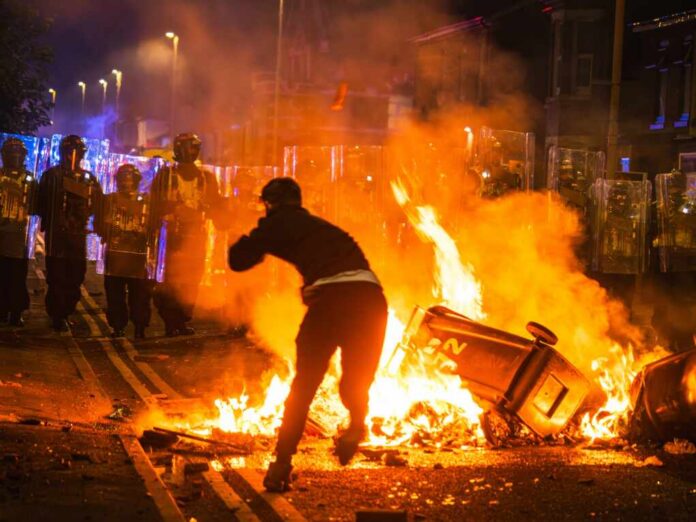
British media tiptoed around the cause of Belfast’s fiery riots, while police confirmed the stabbing suspect was a Sudanese asylum seeker.
Story Highlights
- Police and reports identified a Sudanese asylum seeker as the stabbing suspect [1][3].
- Violent anti-immigration protests erupted after the arrest, with fires and clashes [1][3].
- Officials linked unrest to online incitement, urging calm as the probe continued [1].
- Some protesters said migrant crime fears drove them to the streets [2].
Police Identification And Immediate Unrest
Police Service of Northern Ireland leaders said the stabbing suspect was a 30-year-old Sudanese man who claimed asylum after arriving via Dublin. Reporting says he entered the United Kingdom in 2023 and was not known to police databases at the time. The arrest was followed by street unrest labeled anti-immigration protests. Demonstrators torched property and clashed with officers. Newsrooms described widespread damage as tempers flared over public safety and migration concerns [3].
German public broadcasting reported that the suspect appeared in court after the stabbing. Their coverage, like others, tied the riots to anger that followed the arrest. The outlet characterized the events as anti-immigrant riots. That framing, seen across several reports, underscored a visible grievance-to-unrest chain. It also set the tone for national leaders to respond with calls for calm and order. Those appeals did little to cool tensions in the hours after the arrest [1].
Claims Of Online Incitement And Gaps In The Record
Officials said online incitement helped drive demonstrations that turned violent, and the media regulator warned platforms about content that could spark attacks. That focus on social media risk met pushback from locals who said policy failures allowed danger into their streets. Police also noted some facts were still being confirmed, including route and status details. That uncertainty leaves room for debate and demands primary records to settle key questions about timeline and process [1][3].
Reporters captured protesters saying they feared migrants coming to the United Kingdom and committing crime. Video interviews showed that fear as a direct motive for taking to the streets. These on-the-ground statements matter because they explain why people mobilized so fast after the suspect’s arrest. The grievance was simple: protect the neighborhood. Whether every claim online was accurate or not, the core concern voiced on camera was clear and consistent with the street reaction [2].
Media Framing, Policy Responsibility, And Public Trust
Major outlets leaned on the “anti-immigrant riots” label, which risks burying the policy debate under a public-order headline. Leaders condemned violence and warned about “bad faith actors,” but they offered few details on how border and asylum systems will prevent similar cases. That narrow framing can feel like evasion to communities that see immediate risks. Readers deserve clarity on vetting, placement, and how officials will handle threats tied to system gaps [1][3].
THE BELFAST ‘STABBING’ – WHAT IT REALLY WAS
On Monday June 8th 2026, at approximately 10:30 pm British time, Stephen Ogilvie (a man in his 40s) was set upon by Hadi Alodid, a 30-year old Sudanese refugee.
Stephen was pinned down and repeatedly stabbed and slashed across his… pic.twitter.com/sRYvdE5Gsq
— Mark Rowley (@MarkWRowley) June 12, 2026
Facts remain that demand answers. Police publicly identified the suspect’s nationality and asylum claim, and unrest followed almost at once. At the same time, some details remain unverified and should be confirmed with court files and custody records. Both truths can stand together: a real community fear and a record still forming. Responsible coverage should press for documents, not dismiss concerns, and should separate disorder from the valid call for firm, fair immigration control [1][3].
What Comes Next: Accountability Without Evasion
Local officials should publish the full police briefing transcript, the charge sheet, and relevant court filings. Those records would confirm the suspect’s status, route, and timeline, and help the public judge policy performance. Lawmakers should also release data on asylum placements, housing strain, and service capacity in Belfast. Transparent facts can cool rumors, guide better policy, and show respect for citizens who want safe streets, honest media, and a government that tells the full story [1][3].
Sources:
[1] Web – Belfast Is Burning, and the Media Won’t Say Why
[2] Web – Belfast stabbing suspect in court after night of protests
[3] YouTube – Horrific stabbing attack sparks anti-immigration protests in …