
A brutal quake doublet exposed Venezuela’s weak infrastructure as U.S.-led rescue help fights clogged logistics and closed airports.
Story Highlights
- Death and injury counts soared as buildings collapsed in Caracas and La Guaira [1].
- Caracas airport damage slowed aid flights and rescue logistics, compounding delays [6].
- United States teams deployed urban search and rescue units and pledged major relief [1].
- United States Geological Survey projected very high fatality risk, signaling deep vulnerability [9].
Confirmed Casualties And Collapsed Buildings In Key Cities
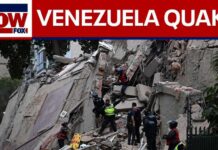
Reports from Caracas and La Guaira confirmed widespread building failures and heavy casualties. Acting President Delcy Rodríguez announced rising deaths and injuries as rescuers searched for people trapped in rubble. Local coverage and international outlets described collapsed structures across dense neighborhoods. The government labeled La Guaira a disaster zone to channel resources there. The scope of the damage suggested years of neglect in key systems and weak building safety, now visible in fallen concrete and buckled roads [1].
Casualty figures varied as counting continued in chaotic streets. Early official tallies cited hundreds dead and thousands injured. Search teams faced unstable debris, blocked streets, and power outages. Families waited near pancaked apartments, listening for signs of life. Crews worked through aftershocks that raised the risk of secondary collapses. Authorities warned that confirmed numbers would climb. Photographs and video showed entire facades torn away and hospitals straining to treat crush injuries [5].
Airport Damage And Broken Lifelines Slowed The Response
Government statements confirmed that the main Caracas airport suffered damage and closed. That closure limited runway access, slowed cargo handling, and forced detours for aid flights. Water and sewer damage made urban search and rescue work harder by fouling streets and cutting basic services. These failures turned every hour into a race against time. United States officials acknowledged the airport problem as a major barrier for rapid aid delivery and heavy equipment staging [6].
Road access also complicated relief. Trucks with generators, shoring gear, and water systems moved slowly past buckled pavement and debris. Fuel supplies ran tight. Radios and cell towers failed in pockets, making unit coordination difficult. These are the predictable costs when critical infrastructure lacks resilience. When the lights go out and the runway cracks, rescue turns from hard to brutal. The country needed external lift, logistics, and field hospitals fast to stabilize operations [1].
What The Science Said About Risk And Why It Matters Now
The United States Geological Survey issued a red alert for high casualties. That alert estimated a strong chance the death toll could grow far beyond early counts. Such models weigh building stock, population density, and shaking intensity. Their warning underscored how vulnerable many structures likely were. It also explained why the rescue window was so tight. When old concrete fails, void spaces crush fast, and survival time drops sharply without air and water [9].
For readers, the lesson is clear: earthquakes punish weak systems. Countries that enforce strong codes and retrofit older buildings save lives. Those that do not pay later in blood and treasure. Emergency stockpiles, redundant water lines, and rapid runway repair units are not luxuries. They are lifelines. The science did not cause the damage; it predicted it. Leaders who ignore those signals gamble with families, businesses, and national security when the ground moves [9].
U.S. Aid: Speed, Scale, And The Limits Of Government
The United States moved fast with urban search and rescue teams, bulldozers, and water treatment units. A large relief pledge supported United Nations operations and trusted local partners. These steps focused on saving lives first and restoring basic services next. The deployment showed how America can project skill and mercy at the same time. It also showed the value of heavy airlift, specialty teams, and private charity working alongside federal assets on the ground [1].
💔 UTTER DEVASTATION: Shocking before-and-after satellite footage reveals the catastrophic scale of the twin earthquakes that just leveled north-central Venezuela. Whole high-rises and neighborhoods in Caracas and La Guaira have literally been flattened into dust. The ground… pic.twitter.com/lCkbJObmzX
— Asia Strategic Eye (@AsiaStratEye) June 27, 2026
Conservatives should track two truths at once. First, swift help saves lives, and the United States delivered. Second, big agencies often stumble under red tape, mission creep, and central control. Past reviews warned that large bureaucracies can waste time and money in disasters. The better path blends federal support with strong local leadership and private initiative. That approach respects federalism, cuts waste, and gets aid to victims faster when every minute counts [11].
Sources:
[1] YouTube – Venezuela quake toll tops 900, search intensifies for hundreds trapped
[5] YouTube – DEATH TOLL surges to 188 after devastating twin EARTHQUAKES rock …
[6] Web – Venezuela Reeling After Powerful Twin Earthquakes Kill at Least 164
[9] Web – Powerful Twin Earthquakes Hammer Venezuela, Killing at Least 164
[11] Web – Destruction in Caracas: A Twin Earthquake Tragedy