
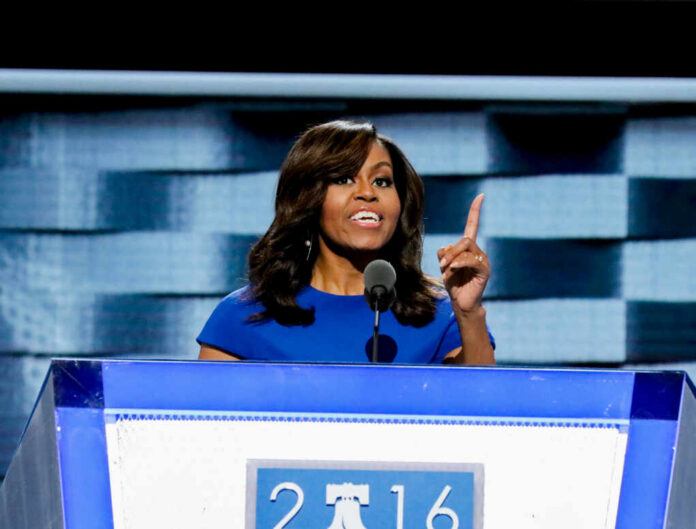
Michelle Obama now claims media focus on her clothes was a tactic to blunt Barack Obama’s rise, while she also admits she used fashion to shape her own message.
Story Highlights
- Michelle Obama’s new book and interviews blame media “fixation” on her look for “otherizing” her.
- She says fashion coverage worked as a political tactic against Barack Obama’s momentum.
- Past reporting shows she leveraged fashion to spotlight causes and people she supported.
- No hard data audit proves newsrooms chose fashion over speeches at scale.
What Michelle Obama Now Says About Media Focus
Michelle Obama argues that the press and public obsessed over her arms and outfits to “otherize” her. She makes the case in her photo book The Look and in recent interviews. She also links the attention to an effort that slowed Barack Obama’s political momentum. These claims center on intent by media actors, but she does not provide documents or named sources to prove planning inside newsrooms. That leaves the charge as her perspective, not verified fact.
Obama also calls the coverage a double standard for women. She says women in public roles carry extra burdens about wardrobe and appearance. That argument tracks with broader research on gendered coverage, but her specific charge about a tactic against her husband still lacks proof from inside outlets. She does not cite internal emails, producer notes, or an audit of segments and headlines that would show a deliberate plan at scale.
What The Record Shows She Did With Fashion
Reports from her time as first lady show a more mixed picture. Michelle Obama used fashion as a tool. Coverage from 2018 details how she redirected the buzz toward people and causes she wanted to lift up. She chose designers and settings to send messages, highlight American makers, and support military families and education themes. That shows agency over her image and an awareness that fashion could work for her, not only against her.
That approach undercuts the idea that attention to style only harmed her voice. If fashion attention always muted her speeches, using it would be a mistake. Yet she did use it, and often. The key question then is scale: how much coverage was fashion, and how much was substance? On that, neither her critics nor her defenders have presented a rigorous count of stories, air time, or headlines from the years she served.
The Missing Evidence And Why It Matters
Claims about a coordinated media tactic need evidence. A credible case would show internal guidance, editorial logs, or a content study across major outlets. So far, there is no cited audit that measures the ratio of fashion versus speech coverage for Michelle Obama during 2009 to 2017. Without that, readers are left with assertions on both sides. Strong opinions are not the same as proof. A study using archived databases could settle the matter with numbers.
Complain Campaign: Michelle Obama Is Angry the Media Treated Her As a Fashion Icon, Not a Great Orator https://t.co/TrR6vBfCYq
— JT Badenov (@cbinflux) July 16, 2026
Conservative readers know this pattern: big media pick the angles that sell clicks and shape emotions. Style stories are easy traffic. That does not mean a secret plan. It means incentives. If Michelle Obama wants to show a political tactic, she should open the files and name names. Until then, the fairest read is this: coverage was often shallow, she sometimes turned it to her advantage, and the unproven “tactic” claim overreaches the facts on hand.
Why This Debate Lands Now
The new book tour revives old fights over elite media double standards. It also distracts from issues voters care about in 2026: prices, borders, energy, and schools. The press love a wardrobe dust-up because it keeps the focus off policy failures from the past. Our readers want accountability, not celebrity grievances. If the former first lady wants a real debate, let’s see data, not vibes. Until then, this looks like another media story about the media, not about Americans’ daily lives.
Sources:
twitchy.com, foxnews.com, theguardian.com