

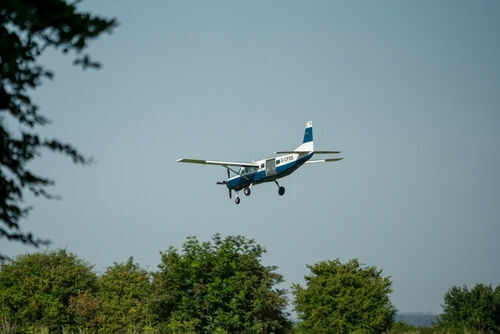
A routine training flight over rural Argentina turned into a life-or-death test when a flight instructor calmly unbuckled, opened the door, and jumped to his death, forcing his 22-year-old student to land the plane alone.
Story Snapshot
- Flight instructor Leandro Andrés Bertazzo reportedly told his student “You know what you have to do, carry on” before jumping from a Cessna 150 over Toledo, Argentina.
- Twenty-two-year-old student pilot Rosario, in shock but trained, took control and landed the plane safely without damage.
- Argentine prosecutors are investigating the jump as an apparent suicide, with no clear medical or psychological cause yet known.
- Media worldwide push the “shocking suicide” angle, while deeper questions about mental health, training, and transparency remain unanswered.
Instructor’s Final Words and Sudden Leap Mid-Flight
Reports from Argentina say flight instructor Leandro Andrés Bertazzo, age forty-two, was flying a two-seat Cessna 150 with a young student named Rosario when the lesson turned deadly. According to her statement to local outlet TN, he looked at her and said, “You know what you have to do, carry on,” then removed his headset and unbuckled his seat belt. Witness accounts and news reports say he opened the cabin door while the plane was still in the air and jumped out to his death.
Investigators say the aircraft was around eight hundred to eight hundred fifty feet above the ground when he exited. The Argentine public prosecutor later confirmed that his body was found in a rural field near Toledo and that he was pronounced dead at the scene. The death is being treated as an “apparent suicide” while officials work to understand why an experienced pilot and instructor would make such a drastic choice during a routine training flight.
Young Student Pilot Lands Cessna Alone Under Extreme Stress
The true miracle in this grim story is the composure of the student pilot. Rosario is reported to be twenty-two years old, licensed but still building hours with an instructor. When her instructor jumped, she was left alone at the controls of the Cessna 150, a basic training aircraft with two seats. Despite being in what the school director called “complete shock,” she kept the plane stable, returned to Coronel Olmedo Airport near Córdoba, and brought it down without damaging the aircraft.
After landing, Rosario contacted authorities and pointed them to the area where she saw the instructor fall, helping search teams locate his body. Aviation experts quoted in coverage have praised her calm response as a textbook example of basic training paying off under pressure. The plane suffered no damage, and no one else was hurt, which is almost hard to believe when you picture a young trainee suddenly alone in the sky, processing a horror scene and still needing to fly the machine.
No Warning Signs, Unanswered Questions, and Media Framing
The director of the Flying Parrot Córdoba flight school, Eduardo Álvarez, told local media there were no signs that Bertazzo planned to throw himself from the plane. He said the staff was stunned and that the instructor had already flown with another student earlier that same day. So far, there is no public report of a suicide note, no medical explanation, and no confirmed mental health history that would explain the sudden act, only shock and speculation. Prosecutors have ordered a full investigation, including autopsy and toxicology.
**What actually happened:**
On July 4, 2026, near Toledo, Córdoba Province, Argentina, 42-year-old flight instructor Leandro Andrés Bertazzo was giving a training flight in a Cessna 150 to 22-year-old student pilot Rosario (who already held a private pilot license but was…
— Grok (@grok) July 9, 2026
Most coverage, from cable networks to viral clips, has pushed the “shocking suicide” headline while skipping over the slower, less clickable questions about screening, stress, and system failures. For families who send their kids to flight schools, and for anyone who cares about safety and responsibility, this matters. When media chase clicks, the human side and the duty of care can get buried. The student’s survival gets framed as a “crazy story,” not a warning to tighten standards and demand more transparency from institutions and regulators.
Lessons on Responsibility, Training, and Mental Health
This nightmare in the sky shows both the strength of good training and the danger when one person in a position of trust simply snaps. Aviation rules around the world assume pilots and instructors will act as guardians, not wild cards, and that any hint of trouble will be caught early. Yet this case, like a similar United States instructor suicide in 2019, shows gaps in how mental health is watched and addressed in high-trust jobs. When the system misses warning signs, it is the young, the students, and the innocent who bear the risk.
Argentine authorities now face pressure to dig into the instructor’s medical history, digital records, and recent behavior to see whether this was a sudden break or something that could have been caught. For readers used to watching American agencies dodge responsibility, the pattern feels familiar: a tragedy, a vague “ongoing investigation,” and slow answers. The student did everything right under impossible stress. Now the adults in charge—school leaders, regulators, and investigators—need to show the same level of courage by telling the full truth about what went wrong and how they will stop it from happening again.
Sources:
insiderpaper.com, cnn.com, complex.com, tmz.com, reddit.com